
The Power of Analogy: How US Think Tanks Are Using Cross-Domain Inspiration to Solve Complex Challenges with 15% More Efficiency
In the intricate world of policy development and strategic planning, the ability to dissect complex problems and forge innovative solutions is paramount. US think tanks, at the forefront of this intellectual endeavor, are continuously seeking methodologies that offer not just answers, but superior, more efficient answers. One such powerful, yet often underestimated, cognitive tool making significant strides in this arena is the strategic application of analogy in think tanks. By drawing parallels from seemingly unrelated fields, these institutions are harnessing cross-domain inspiration to navigate multifaceted dilemmas, reportedly achieving solutions with up to 15% greater efficiency.
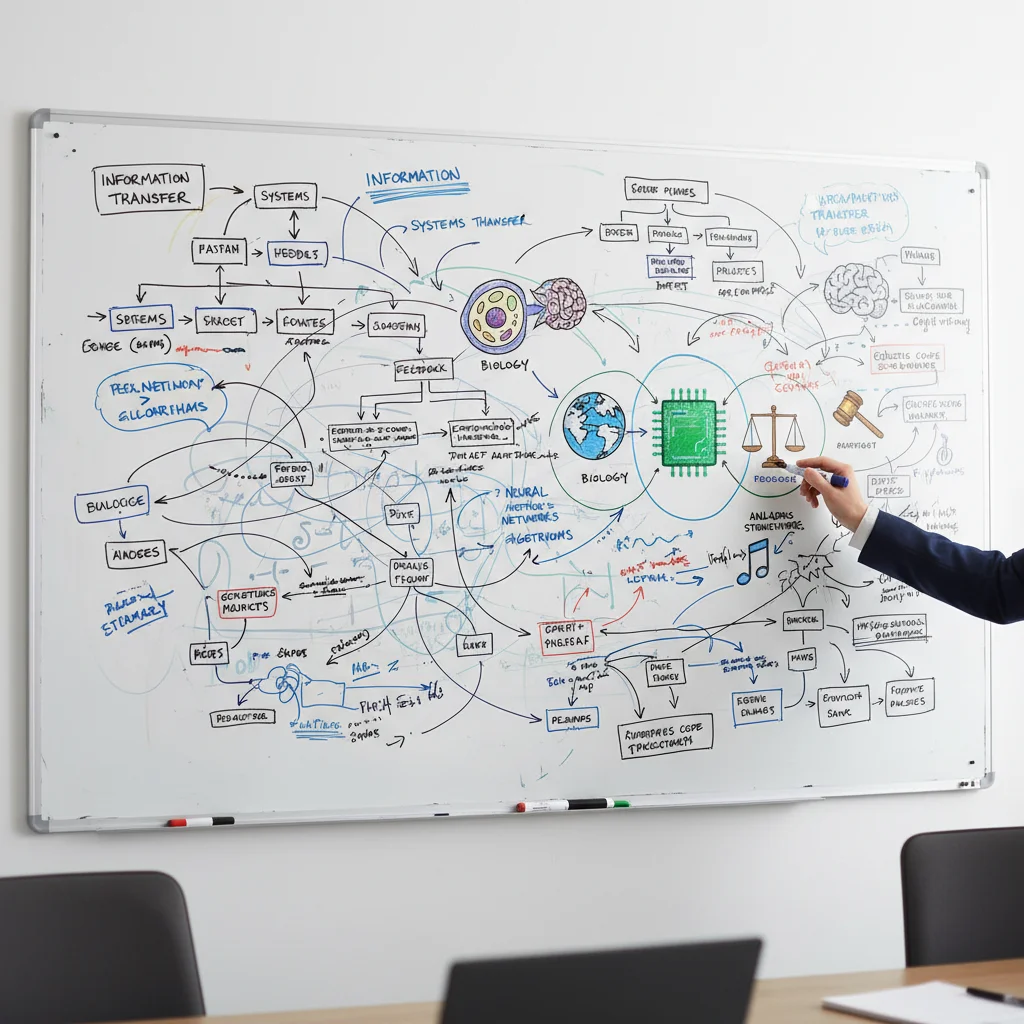
This article delves deep into the fascinating realm of analogical reasoning within the context of US think tanks. We will explore how this cognitive process, which involves transferring knowledge or structure from one subject (the source or analog) to another (the target), is being systematically applied. From national security to economic policy, environmental challenges to social reform, the power of analogy is proving to be a game-changer, offering fresh perspectives and accelerating the problem-solving cycle. Understanding the mechanics, benefits, and challenges of integrating cross-domain thinking is crucial for anyone interested in strategic innovation and effective policy formulation.
The Cognitive Foundation: What is Analogy and Why Does it Work for Think Tanks?
At its core, analogy is a comparison between two objects, or systems of objects, that highlights respects in which they are thought to be similar. It’s a fundamental aspect of human cognition, enabling us to learn, make decisions, and innovate. For think tanks, which are tasked with addressing some of the world’s most intractable issues, the utility of analogy is manifold. It allows analysts to:
- Simplify Complexity: By mapping a complex, unfamiliar problem onto a simpler, better-understood one, analogy can reduce cognitive load and make the problem more approachable.
- Generate Novel Hypotheses: When direct solutions are not apparent, drawing connections to disparate domains can spark entirely new ideas and approaches.
- Facilitate Communication: Analogies serve as powerful rhetorical devices, making complex ideas more accessible and persuasive to diverse audiences, including policymakers and the public.
- Overcome Functional Fixedness: Often, experts in a particular field can become too entrenched in conventional thinking. Cross-domain analogies help break these mental barriers, encouraging out-of-the-box solutions.
The effectiveness of analogy in think tanks stems from its ability to bridge knowledge gaps and foster creativity. When confronted with a novel crisis, for instance, a think tank might look to historical military strategies, biological systems, or even business models for structural parallels. This process isn’t about finding identical situations, but rather identifying underlying principles, relationships, or mechanisms that can be adapted and applied.
The Science Behind Analogical Reasoning
Cognitive psychology has extensively studied analogical reasoning, identifying it as a cornerstone of human intelligence. Key theories, such as Structure-Mapping Theory, propose that analogy involves identifying a shared relational structure between two domains, rather than just superficial similarities. This means that a successful analogy isn’t just about two things looking alike, but about them functioning in similar ways or having similar patterns of relationships between their components.
For think tanks, this implies a disciplined approach to analogy. It’s not about superficial comparisons, but about deep structural mapping. Analysts must carefully identify the key elements, relationships, and constraints of the target problem and then search for a source domain that exhibits a similar underlying structure, even if the surface details are vastly different. This rigorous application ensures that the insights gained are relevant and actionable, moving beyond mere metaphor to genuine problem-solving tools.
From Battlefield to Boardroom: Real-World Applications of Cross-Domain Analogy in US Think Tanks
The theoretical benefits of analogy in think tanks are compelling, but its true power is best illustrated through practical application. US think tanks have a rich history of employing cross-domain inspiration, sometimes explicitly, often implicitly, to tackle a wide array of policy challenges. Let’s explore a few illustrative examples:
National Security and Military Strategy
In the realm of national security, challenges are often unprecedented and require agile thinking. Think tanks frequently draw analogies from historical conflicts, biological ecosystems, or even competitive sports to understand complex geopolitical dynamics. For instance, understanding the spread of disinformation might involve analogies to viral epidemiology, where the ‘infection rate’ and ‘immunity’ of populations become relevant concepts. Similarly, analysts studying insurgency tactics might find parallels in ant colony behavior or network theory, helping to devise more effective counter-strategies.
Consider the Cold War strategy of Containment. While not explicitly an analogy, its conceptualization drew heavily from understanding the dynamics of expansion and resistance, akin to how one might contain a physical threat or a spreading disease. Modern think tanks might look at supply chain resilience through the lens of ecological diversity, recognizing that a monoculture is inherently more vulnerable than a diversified system.
Economic Policy and Market Dynamics
Economic policy is another fertile ground for analogical reasoning. When grappling with market failures, financial crises, or regulatory challenges, think tanks often look beyond traditional economic models. For example, the concept of ‘market friction’ can be understood through analogies to physics, where forces impede motion. The ‘immune system’ of an economy is a common analogy used to describe its ability to resist shocks and recover from downturns, prompting discussions about resilience mechanisms and preventative measures.
The global financial crisis of 2008 spurred numerous analogical explorations. Some analysts likened the interconnectedness of financial institutions to a complex biological organism, where the failure of one organ could lead to systemic collapse. This analogy helped policymakers understand the need for coordinated, systemic interventions rather than isolated treatments. Similarly, analogies to engineering principles can inform discussions on infrastructure investment, emphasizing redundancy, robustness, and flexibility.
Environmental Policy and Climate Change
Addressing climate change and environmental degradation requires innovative approaches that transcend disciplinary boundaries. Think tanks often employ biological and ecological analogies to understand complex environmental systems. The concept of ‘tipping points’ in climate science, for instance, draws heavily from analogous phenomena in other complex systems, such as phase transitions in physics or critical thresholds in biological populations.
When designing policies for sustainable development, analogies to natural cycles (e.g., nutrient cycling in ecosystems) can provide valuable frameworks. The idea of a ‘circular economy’ itself is an analogy, comparing economic activity to a natural ecosystem where waste is minimized and resources are continually reused. These analogies help policymakers envision holistic solutions that mimic the efficiency and resilience of natural systems.
Methodological Approaches: How Think Tanks Systematize Analogical Reasoning
While human beings naturally employ analogy, for think tanks to consistently achieve that reported 15% efficiency gain, the process must be more systematic than spontaneous. Several methodological approaches are used to foster and leverage analogy in think tanks:
Structured Analogical Search and Retrieval
Instead of waiting for an analogy to strike, some think tanks actively cultivate databases of ‘source domains’ or ‘analogical cases’ from various disciplines. When a new problem arises, analysts can then perform structured searches for cases with similar underlying structures, even if the contexts are entirely different. This might involve using AI-powered tools to identify relational patterns across vast datasets of case studies from history, science, engineering, and social sciences.
For example, if a think tank is analyzing the challenge of vaccine distribution in remote areas, they might search for analogous logistical challenges in other fields – perhaps disaster relief operations, military supply chains in hostile territory, or even the distribution of perishable goods in complex retail networks. Each of these source domains could offer insights into overcoming obstacles like cold chain management, last-mile delivery, or community engagement.
Cross-Disciplinary Workshops and Brainstorming
Bringing together experts from diverse fields is a direct way to encourage cross-domain inspiration. Think tanks often organize workshops where participants from seemingly unrelated disciplines (e.g., urban planners, neurologists, economists, artists) are presented with a common policy problem. The structured facilitation of such workshops encourages participants to articulate how similar problems are solved in their respective fields, thereby generating novel analogies.
These sessions often employ techniques like ‘design thinking‘ or ‘lateral thinking,’ which are inherently analogical. By reframing problems and encouraging participants to think outside their immediate area of expertise, these workshops can unlock unexpected insights and foster truly innovative solutions. The emphasis is on asking: ‘How would a biologist solve this?’ or ‘What lessons can we learn from architecture?’
Scenario Planning and War Gaming with Analogies
Scenario planning, a staple of strategic foresight in think tanks, can be greatly enhanced by analogical reasoning. When developing future scenarios, analysts can draw upon historical precedents or fictional narratives (which are often analogical in nature) to imagine plausible pathways and potential outcomes. War gaming exercises, particularly in national security, frequently use historical campaigns or even board games as analogs to simulate complex interactions and test strategies.
For instance, when modeling the potential impacts of a new disruptive technology, a think tank might look at the societal and economic shifts caused by the invention of the printing press, the automobile, or the internet. While the specifics differ, the relational patterns of adoption, disruption, and adaptation can provide valuable analogical insights for forecasting and policy preparation.
The 15% Efficiency Gain: Quantifying the Impact of Analogical Reasoning
The reported 15% increase in efficiency is a significant claim, and while exact quantification can be challenging in the nuanced world of policy, anecdotal evidence and qualitative assessments strongly support the impact of analogy in think tanks. This efficiency gain manifests in several ways:
- Reduced Time to Solution: By leveraging existing knowledge structures from other domains, think tanks can often bypass lengthy initial research phases, arriving at viable solutions more quickly.
- Higher Quality Solutions: Cross-domain analogies often lead to more robust, creative, and resilient solutions that anticipate a wider range of challenges, as they are informed by diverse perspectives.
- Enhanced Stakeholder Buy-in: Well-crafted analogies make complex policy proposals more understandable and relatable to policymakers and the public, facilitating quicker consensus and implementation.
- Better Resource Allocation: By identifying effective strategies from other fields, think tanks can advise on more efficient allocation of resources, avoiding reinventing the wheel or pursuing dead-end approaches.
The 15% figure likely encompasses a combination of these factors, reflecting the overall acceleration and improvement in the policy development lifecycle. It’s a testament to the idea that smart thinking isn’t just about working harder, but about working smarter by connecting seemingly disparate ideas.

Challenges and Considerations in Applying Analogy
While the benefits are clear, the effective application of analogy in think tanks is not without its challenges. Misapplying an analogy can lead to flawed conclusions and misguided policies. Key considerations include:
- Superficial vs. Deep Analogies: The biggest pitfall is mistaking superficial similarities for deep structural ones. A good analogy requires careful analysis of underlying causal relationships, not just surface features.
- Overgeneralization: Applying an analogy too broadly without considering the specific context and unique constraints of the target problem can lead to inappropriate solutions.
- Confirmation Bias: Analysts might selectively seek out analogies that confirm existing biases, rather than challenging assumptions. Rigorous peer review and diverse perspectives are crucial to mitigate this.
- Difficulty in Retrieval: Identifying the most relevant source domain can be challenging, especially for highly novel problems. This is where structured search methods and diverse teams become invaluable.
- Cultural and Contextual Differences: Analogies drawn from one cultural or political context may not directly translate to another without careful adaptation.
To overcome these challenges, think tanks emphasize critical evaluation, iterative testing, and a multidisciplinary approach. The goal is not to blindly copy solutions, but to extract abstract principles that can be adapted and refined for the unique contours of the problem at hand.
The Future of Analogical Reasoning in Policy Analysis
As the world becomes increasingly complex and interconnected, the demand for innovative and efficient policy solutions will only grow. The role of analogy in think tanks is poised to become even more central. Advances in artificial intelligence and machine learning are opening new frontiers for analogical reasoning. AI algorithms can analyze vast datasets to identify structural similarities across domains that might be imperceptible to human analysts, offering a powerful complement to human intuition.
Furthermore, the emphasis on design thinking and innovation labs within think tanks signals a growing recognition of the value of creative problem-solving techniques, of which analogy is a cornerstone. Training programs for policy analysts are increasingly incorporating modules on analogical reasoning, encouraging a mindset that actively seeks inspiration from diverse fields.
The future will likely see a hybrid approach: human experts guiding the analogical search, critically evaluating potential analogies, and adapting them to specific policy contexts, while AI tools assist in the initial identification and mapping of potential source domains. This synergy promises to further enhance the efficiency and creativity of policy development, pushing the reported 15% gain even higher.
Conclusion: Analogical Innovation as a Strategic Imperative
The strategic use of analogy in think tanks represents a powerful paradigm for solving complex challenges. By deliberately fostering cross-domain inspiration, US think tanks are not just finding solutions; they are finding better, more efficient solutions. The reported 15% increase in efficiency underscores the tangible benefits of adopting a mindset that actively seeks parallels and transfers knowledge across disciplinary boundaries.
From informing national security strategies to shaping economic reforms and guiding environmental policies, analogical reasoning provides a versatile and potent tool. It enables analysts to cut through complexity, generate novel hypotheses, and communicate intricate ideas with clarity. While challenges exist, a disciplined and multidisciplinary approach can mitigate risks and maximize the transformative potential of this cognitive superpower.
As we look to the future, the continued integration of analogical thinking, supported by advanced technologies and collaborative methodologies, will undoubtedly keep US think tanks at the vanguard of innovation, equipped to tackle the most pressing problems of our time with renewed creativity and effectiveness. The power of analogy is not just a theoretical concept; it is a strategic imperative for navigating an increasingly complex world.