Edge Computing’s Impact on U.S. Data Centers: A 2026 Analysis of 3 Key Operational Shifts
Edge Computing’s Impact on U.S. Data Centers: A 2026 Analysis of 3 Key Operational Shifts
The digital landscape is in perpetual motion, driven by an insatiable demand for faster processing, lower latency, and more robust data management. At the forefront of this evolution is edge computing, a paradigm shift that is fundamentally reshaping how data is processed, stored, and analyzed. As we look towards 2026, the impact of Edge Computing Data Centers on the operational fabric of U.S. digital infrastructure is becoming increasingly clear, ushering in a new era of distributed intelligence and efficiency. This comprehensive analysis delves into the three pivotal operational shifts that U.S. data centers are undergoing, driven by the relentless march of edge computing.
For decades, the traditional data center model has been characterized by large, centralized facilities designed to house vast amounts of data and computing power. These colossal structures, often located in remote or less populated areas due to land availability and power considerations, have served as the backbone of the internet and enterprise IT. However, the rise of new technologies—such as the Internet of Things (IoT), artificial intelligence (AI) at the edge, 5G networks, and real-time applications—has exposed the inherent limitations of this centralized model. The latency introduced by transmitting data over long distances to a central data center is no longer acceptable for applications demanding instantaneous responses, such as autonomous vehicles, smart city infrastructure, and augmented reality.
This is where edge computing steps in, bringing computation and data storage closer to the sources of data generation and consumption. By doing so, it dramatically reduces latency, conserves bandwidth, and enhances the reliability of services. The U.S., with its vast geographical expanse and diverse industrial base, is particularly well-suited to benefit from the distributed nature of edge computing. From bustling urban centers to remote industrial sites, the deployment of smaller, localized data processing units—often referred to as micro data centers or edge nodes—is transforming the operational dynamics of traditional data centers. This isn’t just about adding more servers; it’s about fundamentally rethinking the architecture, management, and strategic role of data infrastructure.
By 2026, these shifts will not merely be theoretical discussions but tangible realities influencing investment, operational strategies, and competitive advantage across industries. The transition is complex, involving significant technological upgrades, new skill sets, and a re-evaluation of security and sustainability practices. Understanding these changes is crucial for businesses and IT professionals alike to navigate the evolving digital frontier successfully. The operational shifts catalyzed by Edge Computing Data Centers are multifaceted, touching upon infrastructure design, network architecture, cybersecurity paradigms, energy consumption, and regulatory compliance. Let’s explore these three key operational shifts in detail, offering a forward-looking perspective on what U.S. data centers will look like in just a few short years.
Shift 1: From Centralized Monoliths to Distributed Micro-Infrastructures
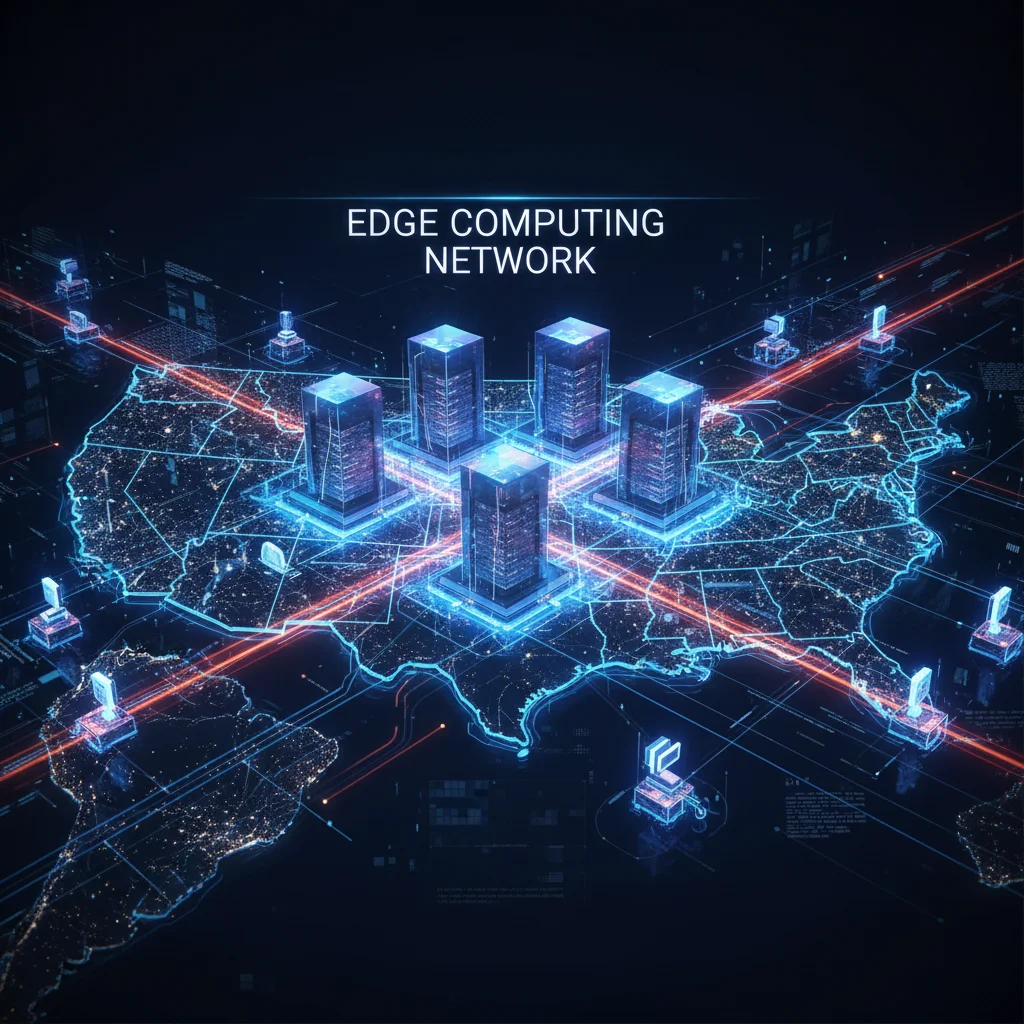
The most immediate and profound impact of Edge Computing Data Centers is the decentralization of IT infrastructure. Traditionally, data centers were conceived as monolithic structures, housing thousands of servers and networking equipment in a single, secure location. While these mega-data centers will continue to play a crucial role for hyperscale cloud providers and large enterprises, their dominance is being challenged by the proliferation of smaller, distributed edge facilities. These micro-infrastructures are designed to be deployed closer to the data source, whether that’s a factory floor, a retail store, a smart traffic intersection, or a remote oil rig.
By 2026, we anticipate a significant increase in the number of edge data centers across the U.S. These won’t be mini versions of traditional data centers; instead, they will be purpose-built, often modular, and highly automated units optimized for specific workloads. Think of them as intelligent outposts, capable of processing data locally, making real-time decisions, and only sending aggregated or critical data back to the central cloud or data center for further analysis and long-term storage. This architectural shift has several profound implications for the operational models of data centers.
Redefining Site Selection and Deployment
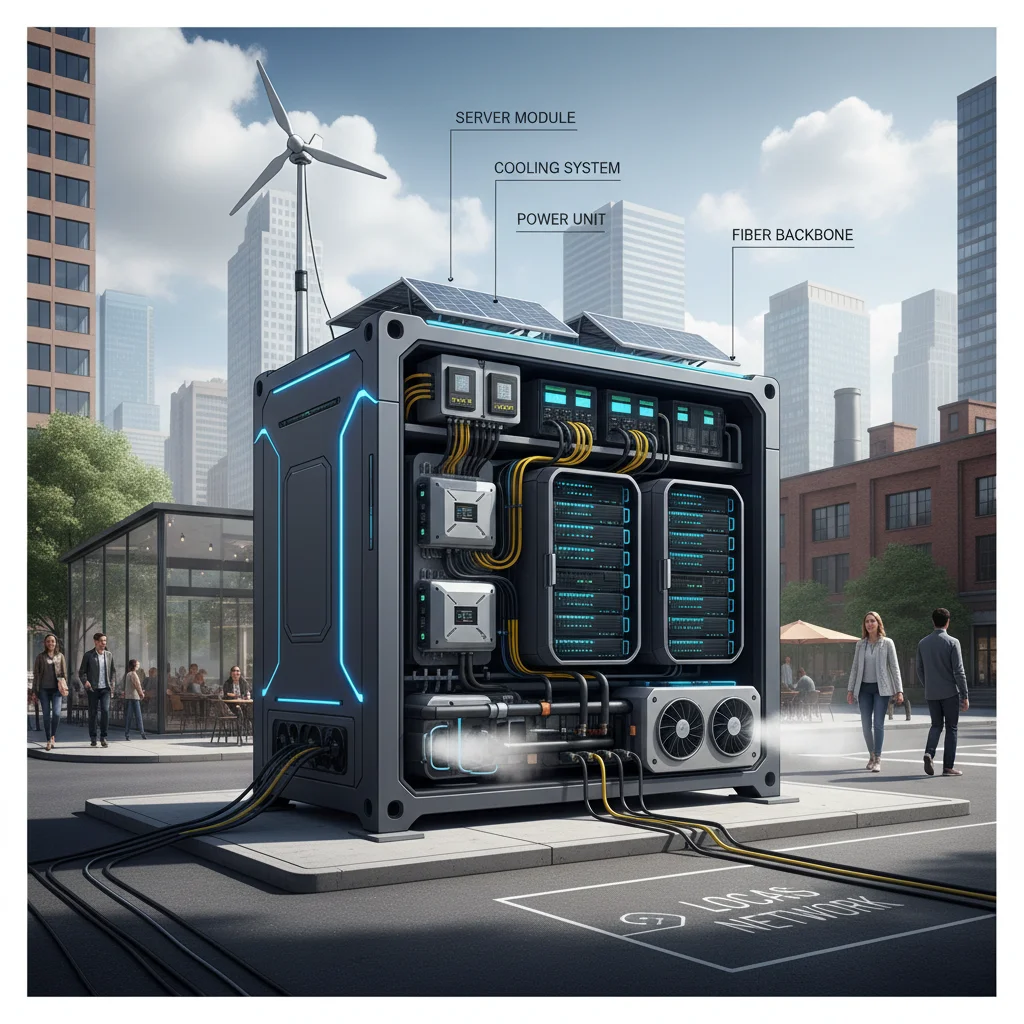
The criteria for site selection for edge data centers are drastically different from traditional facilities. Proximity to end-users and data sources becomes paramount, often placing these units in unconventional locations such as cell towers, industrial complexes, smart buildings, or even in urban environments with limited space. This necessitates innovative approaches to physical security, power management, and environmental controls. The deployment will increasingly rely on prefabricated, modular data center solutions that can be rapidly deployed and scaled, reducing construction time and costs. Companies will need to develop expertise in managing a geographically dispersed fleet of smaller data centers, rather than a few large ones.
Network Architecture Overhaul
The shift to distributed infrastructure demands a complete overhaul of network architecture. Instead of a hub-and-spoke model where all data flows to a central point, edge computing necessitates a meshed network where data can be processed and exchanged locally. This requires advanced networking capabilities, including software-defined networking (SDN) and network function virtualization (NFV), to dynamically manage traffic, prioritize critical applications, and ensure seamless connectivity between edge nodes, regional data centers, and the core cloud. 5G technology will play a pivotal role here, providing the high-bandwidth, low-latency connectivity required to link these distributed edge nodes effectively.
Automated Management and Orchestration
Managing hundreds or even thousands of geographically dispersed edge data centers manually is simply not feasible. Automation will be key. By 2026, U.S. data centers will increasingly adopt sophisticated orchestration platforms that can remotely monitor, manage, and update edge devices and infrastructure. This includes automated provisioning, patching, troubleshooting, and even self-healing capabilities. AI and machine learning will be embedded into these management systems to predict failures, optimize resource utilization, and ensure continuous operation with minimal human intervention. The operational focus will shift from hands-on maintenance to strategic oversight and policy enforcement.
The implications for staffing are also significant. While fewer on-site technicians may be required at each edge location, there will be a greater demand for skilled professionals capable of designing, implementing, and managing these complex, automated, and distributed systems. This includes experts in network engineering, cybersecurity, cloud orchestration, and AI operations.
Shift 2: Enhanced Security and Compliance in a Fragmented Landscape
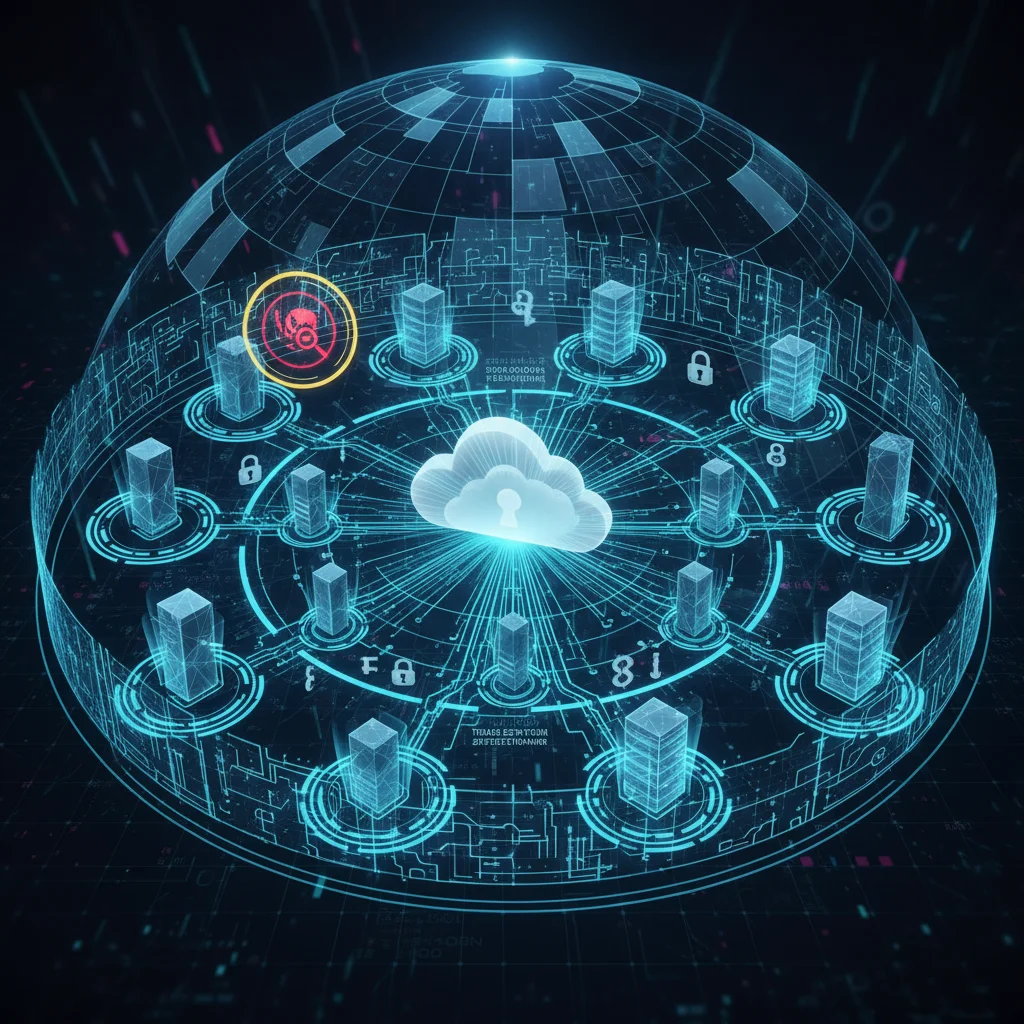
As Edge Computing Data Centers proliferate, the attack surface expands dramatically, presenting new and complex security challenges. In a centralized model, security efforts could be concentrated on a few perimeter defenses. With data processing happening at the edge, often in less controlled environments, the paradigm shifts from securing a fortress to securing a vast, interconnected network of smaller, distributed outposts. By 2026, U.S. data centers will have to adopt a holistic and highly adaptive approach to security and compliance.
Zero-Trust Architecture Becomes Paramount
The traditional perimeter-based security model is inadequate for edge environments. A zero-trust architecture, where no user or device is inherently trusted, regardless of their location, will become the default. This means implementing rigorous authentication and authorization protocols for every access request, whether it originates from within the edge data center or from an external source. Micro-segmentation will be crucial, isolating workloads and applications within edge nodes to limit the lateral movement of threats in case of a breach. This requires sophisticated identity and access management (IAM) systems that can span across the core data center, the cloud, and all edge locations.
Integrated Threat Detection and Response
Monitoring security across a distributed landscape is a monumental task. By 2026, U.S. data centers will leverage advanced AI and machine learning-driven security analytics to detect anomalies and potential threats at the edge. Security information and event management (SIEM) and security orchestration, automation, and response (SOAR) platforms will need to be capable of ingesting data from thousands of edge devices, correlating events, and automating responses. This includes real-time threat intelligence sharing across the entire infrastructure, enabling a proactive defense posture. The ability to rapidly identify and isolate compromised edge nodes without impacting the broader network will be critical.
Data Governance and Regulatory Compliance at the Edge
The distribution of data processing at the edge introduces complexities for data governance and regulatory compliance. Different edge locations might fall under various local, state, or federal regulations regarding data privacy, residency, and security. For instance, an edge node in California might be subject to CCPA, while another in New York might have different requirements. Data centers will need robust data governance frameworks that can track data lineage, enforce retention policies, and ensure compliance with a myriad of regulations across all edge locations. This necessitates granular control over data encryption, access controls, and auditing capabilities at each edge node. Tools for automated policy enforcement and compliance reporting will become indispensable.
The security challenges also extend to the physical security of edge devices. Many edge deployments are in less secure environments, making them vulnerable to tampering or theft. Robust physical security measures, including tamper-proof enclosures, environmental sensors, and remote monitoring, will be standard. Furthermore, the supply chain security of edge hardware and software will be under increased scrutiny to prevent the introduction of vulnerabilities before deployment.
Shift 3: Sustainability and Energy Efficiency as a Core Operational Imperative
The exponential growth of data and computing power has long raised concerns about energy consumption and environmental impact. While traditional data centers have made strides in energy efficiency, the proliferation of Edge Computing Data Centers presents both new challenges and opportunities for sustainability. By 2026, sustainability will move from a desirable feature to a core operational imperative for U.S. data centers, driven by regulatory pressures, corporate social responsibility, and economic incentives.
Optimizing Power Consumption at Scale
Each individual edge data center might consume less power than a hyperscale facility, but their sheer number means that cumulative energy consumption can be substantial. The focus will be on designing highly energy-efficient edge nodes. This includes leveraging low-power hardware, optimizing cooling systems for smaller footprints, and utilizing advanced power management software. Technologies like direct liquid cooling, which is more efficient for high-density racks, will become more prevalent even in smaller edge deployments. The ability to dynamically scale power consumption based on workload demands will be crucial, ensuring that edge nodes are not over-provisioned or wasting energy during periods of low activity.
Renewable Energy Integration and Grid Optimization
The distributed nature of edge computing offers unique opportunities for integrating renewable energy sources. Many edge locations, particularly in rural or industrial settings, can be powered by localized solar, wind, or micro-grid solutions, reducing reliance on the main grid and lowering carbon footprints. By 2026, we will see an increased adoption of hybrid power solutions for edge data centers, combining grid power with on-site renewables and battery storage. Furthermore, edge data centers can play a role in grid optimization by providing demand response capabilities, adjusting their power consumption during peak hours to stabilize the energy grid. This transforms them from mere energy consumers into active participants in the energy ecosystem.
Lifecycle Management and Circular Economy Principles
The rapid deployment and potential shorter lifecycles of edge devices raise concerns about electronic waste. By 2026, U.S. data centers will need to adopt more robust lifecycle management strategies for edge infrastructure, embracing circular economy principles. This includes designing edge hardware for repairability and upgradability, implementing effective recycling programs for end-of-life equipment, and exploring opportunities for repurposing components. The emphasis will shift from a linear ‘take-make-dispose’ model to a more sustainable ‘reduce-reuse-recycle’ approach. Companies will also invest in metrics and reporting tools to accurately measure the environmental impact of their distributed infrastructure, from energy consumption to carbon emissions.
The Future is Distributed: Preparing for 2026 and Beyond
The transformation of U.S. data centers by Edge Computing Data Centers is not a distant future but an ongoing reality rapidly accelerating towards 2026. The shift from centralized monoliths to distributed micro-infrastructures, the imperative for enhanced security in a fragmented landscape, and the core operational focus on sustainability and energy efficiency are not isolated trends but interconnected facets of a holistic evolution. These shifts demand a proactive approach from businesses, technology providers, and policymakers.
For businesses, this means re-evaluating their IT strategy, understanding where disruptive innovation can deliver the most value, and investing in the necessary infrastructure and talent. It involves a strategic assessment of application architectures to determine which workloads are best suited for the edge, which for the cloud, and which for traditional data centers. The hybrid and multi-cloud models will become even more prevalent, with edge computing acting as a critical extension.
Technology providers will need to continue innovating, developing more robust, secure, and energy-efficient edge hardware and software solutions. This includes advancements in AI at the edge, specialized processors, and integrated security platforms designed for distributed environments. The ecosystem of edge computing is still maturing, and collaboration across hardware manufacturers, software developers, network operators, and data center providers will be essential to realize its full potential.
Policymakers and regulators will also play a crucial role, ensuring that the deployment of edge computing adheres to environmental standards, data privacy laws, and critical infrastructure security guidelines. The legal and ethical implications of processing sensitive data closer to the source will require careful consideration and the development of appropriate frameworks.
In conclusion, the journey to 2026 will see U.S. data centers fundamentally redefined by edge computing. This isn’t just an incremental change but a paradigm shift that promises to unlock new levels of efficiency, responsiveness, and innovation across every sector of the economy. Embracing these operational shifts will be key to staying competitive and resilient in an increasingly connected and data-driven world. The future of digital infrastructure is undoubtedly distributed, intelligent, and sustainable, with Edge Computing Data Centers at its very heart.