The Future of Work: How 4-Day Workweeks and Remote-First Models Will Affect 40% of U.S. Companies by 2028 – A Comprehensive Analysis
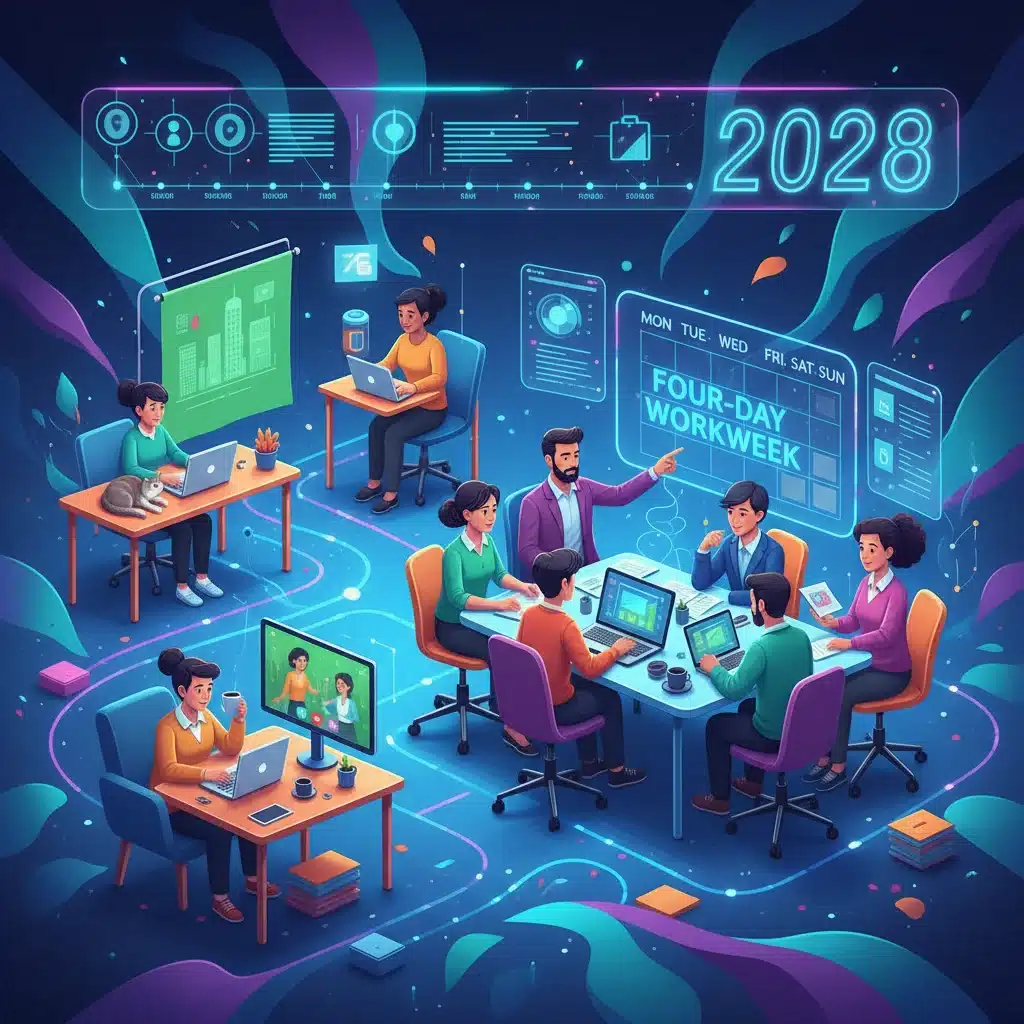
The landscape of work is undergoing an unprecedented transformation, driven by technological advancements, shifting employee expectations, and a re-evaluation of traditional productivity paradigms. Among the most significant changes emerging are the widespread adoption of 4-day workweeks and remote-first operating models. These aren’t merely fleeting trends; they represent a fundamental reshaping of how businesses operate and how individuals engage with their careers. By 2028, it is projected that a remarkable 40% of U.S. companies will have embraced one or both of these innovative work structures, signaling a new era for the American workforce. This comprehensive analysis delves into the driving forces behind this shift, the profound implications for businesses and employees, and the strategic considerations necessary for successful implementation.
The Genesis of Change: Why Now?
The seeds of these modern work models were sown long before the recent global disruptions, but the COVID-19 pandemic acted as a powerful accelerator. Forced into remote work arrangements, many companies discovered that productivity not only remained stable but often improved, challenging long-held assumptions about the necessity of physical office presence. This period of forced experimentation proved to be a catalyst, opening the door for more deliberate explorations into flexible work arrangements.
Technological Advancements Paving the Way
The rapid evolution of collaboration tools, cloud computing, and high-speed internet has made remote work not just feasible, but highly efficient. Platforms like Zoom, Microsoft Teams, Slack, and various project management software have enabled seamless communication and collaboration across geographical distances. These tools have effectively dismantled the traditional barriers to remote work, allowing teams to function cohesively regardless of their physical location. The continuous development of AI-powered assistants and automation further streamlines workflows, making the concept of a compressed workweek more attainable by optimizing tasks and reducing manual effort.
Evolving Employee Expectations and Priorities
Today’s workforce, particularly younger generations, places a high value on work-life balance, flexibility, and autonomy. The desire to integrate personal pursuits, family responsibilities, and professional growth seamlessly has become a significant driver in career choices. A rigid 9-to-5, five-day workweek no longer aligns with these aspirations for many. The promise of a 4-day workweek offers an enticing prospect of more personal time, while remote-first models provide the flexibility to live and work from anywhere, reducing commuting stress and improving overall quality of life. Companies that ignore these evolving expectations risk losing top talent to competitors who offer more progressive work environments.
The Quest for Enhanced Productivity and Well-being
The traditional 40-hour, five-day workweek was largely a product of the industrial era, not necessarily optimized for knowledge work. Research and pilot programs on the 4-day workweek have consistently shown promising results: employees report higher levels of job satisfaction, reduced stress and burnout, and often, an increase in productivity. The idea is that with a compressed work schedule, employees are more focused and efficient during their working hours, knowing they have a longer break awaiting them. This enhanced well-being translates into lower absenteeism, higher retention rates, and a more engaged workforce – all critical factors for business success.
The 4-Day Workweek: A Deep Dive into its Mechanics and Impact
The concept of a 4-day workweek is gaining significant traction globally, moving from a niche experiment to a viable operational model for a growing number of businesses. It typically involves employees working 32 hours over four days, often with no reduction in pay, though some models may involve longer working days to achieve 40 hours in four days.
Benefits for Businesses
- Increased Productivity: Counterintuitively, many companies report an increase in output. Employees, motivated by the extra day off, become more efficient and focused during their working hours. They are less likely to procrastinate and more inclined to streamline their tasks.
- Enhanced Employee Well-being and Morale: The most cited benefit is improved work-life balance. An extra day off allows for better rest, personal development, family time, and leisure activities, leading to happier, healthier, and more engaged employees. This directly translates to lower stress and burnout rates.
- Reduced Absenteeism and Turnover: Happy employees are less likely to call in sick and more likely to stay with their current employer. The 4-day workweek acts as a powerful retention tool in a competitive job market.
- Attraction of Top Talent: Companies offering a 4-day workweek stand out as progressive and employee-centric, making them highly attractive to skilled professionals seeking better work-life integration.
- Lower Operational Costs: For businesses with physical offices, a shorter workweek can lead to reduced utility costs (electricity, heating/cooling) and potentially lower office supply expenses.
- Improved Brand Reputation: Adopting such a forward-thinking model enhances a company’s public image, positioning it as an innovator and a responsible employer.
Challenges and Considerations for Implementation
- Client and Customer Service: Ensuring continuous client coverage can be a hurdle, especially for businesses with 24/7 operations or international clientele. This often requires careful scheduling, rotating shifts, or rethinking service delivery models.
- Workload Management: Condensing 40 hours of work into 32 (or even 36) can be challenging. It necessitates a rigorous review of processes, elimination of unnecessary meetings, and a strong focus on priority tasks.
- Industry-Specific Limitations: Certain industries, like healthcare, manufacturing, or retail, face unique challenges in implementing a 4-day workweek due to operational requirements and customer demand.
- Employee Adjustment: While generally positive, some employees might struggle with the initial adjustment to a compressed schedule, especially if it means longer workdays.
- Legal and Regulatory Hurdles: Depending on the state and specific industry, there might be legal considerations regarding overtime pay, benefits, and labor laws that need careful navigation.
Successful implementation requires meticulous planning, clear communication, and a willingness to iterate and adapt. It’s not a one-size-fits-all solution, and companies must tailor the model to their specific needs and culture.
Remote-First Models: Redefining the Workplace
A remote-first model signifies that a company’s default mode of operation is remote work. While offices may exist, they serve as optional hubs for collaboration, social events, or focused work, rather than mandatory daily attendance. This differs from a hybrid model, where a balance between office and remote work is expected.
Advantages of Embracing Remote-First
- Access to a Global Talent Pool: By removing geographical limitations, companies can recruit the best talent from anywhere in the world, fostering diversity and bringing in specialized skills that might not be available locally.
- Reduced Overhead Costs: Significant savings can be realized from smaller office spaces, reduced utility bills, and fewer expenses related to office maintenance, supplies, and amenities.
- Increased Employee Autonomy and Satisfaction: Remote work offers employees greater control over their work environment and schedules, leading to higher job satisfaction and a better work-life balance.
- Improved Business Continuity: Remote-first models are inherently more resilient to disruptions like natural disasters, pandemics, or local emergencies, as operations can continue uninterrupted from diverse locations.
- Environmental Benefits: Reduced commuting means a smaller carbon footprint, contributing to corporate social responsibility goals.

Navigating the Challenges of Remote-First
- Maintaining Company Culture: Building and sustaining a strong, cohesive company culture can be challenging without regular in-person interactions. This requires intentional effort through virtual team-building activities, clear communication of values, and consistent leadership messaging.
- Effective Communication and Collaboration: While tools exist, ensuring clear, timely, and effective communication across different time zones and without the benefit of informal office interactions requires discipline and robust processes.
- Employee Isolation and Mental Health: Some remote employees may experience feelings of isolation or loneliness. Companies must implement strategies to support mental well-being, encourage virtual social interactions, and provide resources for psychological support.
- Onboarding and Training: Integrating new hires into a remote-first environment requires a well-structured virtual onboarding process to ensure they feel connected, supported, and quickly become productive.
- Cybersecurity and Data Protection: Managing a distributed workforce introduces new cybersecurity risks. Robust security protocols, employee training, and secure infrastructure are paramount.
- Performance Management: Shifting focus from ‘face time’ to outcomes and results is crucial. Managers need training in managing remote teams effectively, focusing on clear goals, regular check-ins, and performance metrics.
The Convergence: 4-Day Workweeks in Remote-First Environments
The most progressive companies are exploring the powerful synergy of combining both 4-day workweeks and remote-first models. This combination offers the ultimate flexibility and autonomy, potentially unlocking unparalleled levels of employee satisfaction and productivity. Imagine a team member working four days a week from their home in a different state, enjoying a three-day weekend every week, free from the daily commute. This scenario, while aspirational, is becoming a reality for many.
However, integrating these two models also amplifies existing challenges. Communication and collaboration become even more critical, and companies must invest heavily in asynchronous communication strategies, robust project management tools, and regular, intentional virtual touchpoints. The focus must shift entirely to results and impact, rather than hours logged or physical presence.
Strategic Implications for U.S. Companies by 2028
The projected adoption rate of 40% of U.S. companies by 2028 signifies a significant paradigm shift. Businesses that fail to adapt risk falling behind in the race for talent, innovation, and market relevance.
Talent Acquisition and Retention
Companies offering these flexible models will have a distinct competitive advantage in attracting and retaining top talent. As these models become more commonplace, they will evolve from a ‘perk’ to an ‘expectation’ for many job seekers. Businesses that cling to traditional models will find it increasingly difficult to fill critical roles and prevent their best employees from seeking opportunities elsewhere.
Leadership and Management Development
The shift to 4-day workweeks and remote-first environments demands a new style of leadership. Managers must evolve from supervisors to facilitators, focusing on empowerment, trust, and results. Training in remote team management, empathetic leadership, and performance-based evaluation will be crucial. Leaders must learn to foster connection and culture without the benefit of daily in-person interaction.
Technology Infrastructure and Investment
Robust and secure technological infrastructure will be non-negotiable. Companies must invest in state-of-the-art collaboration tools, cybersecurity measures, and reliable cloud-based systems to support a distributed workforce. The IT department will move from a support function to a strategic partner, enabling the very fabric of the organization.
Real Estate and Office Strategy
The traditional office space will likely transform. Instead of large, sprawling headquarters, companies may opt for smaller, flexible co-working spaces, ‘collaboration hubs,’ or even eliminate physical offices entirely. Real estate strategies will need to be re-evaluated to align with a remote-first or hybrid approach, potentially leading to significant cost savings or reinvestment into employee benefits and technology.
Legal and HR Policy Overhaul
Existing HR policies, compensation structures, and legal frameworks will need a thorough review. Questions around fair wage for a 4-day week, state-specific labor laws for remote employees across different locations, data privacy, and intellectual property in a distributed environment will require careful consideration and adaptation. HR will play a pivotal role in guiding organizations through these complex changes.

Measuring Success: Metrics Beyond Hours
In these new work models, traditional metrics like ‘hours worked’ become less relevant. Success will be measured by:
- Output and Outcomes: Focus on tangible results, project completion rates, and achievement of KPIs.
- Employee Engagement and Satisfaction: Regular surveys, feedback mechanisms, and retention rates will indicate employee well-being and commitment.
- Innovation and Creativity: A more rested and engaged workforce often leads to increased creativity and problem-solving abilities.
- Customer Satisfaction: Ultimately, the success of any work model must translate into positive customer experiences.
- Profitability and Growth: The ultimate business metric, demonstrating the sustainable viability of these models.
The Road Ahead: Preparing for 2028 and Beyond
For companies looking to embrace these future work models, a strategic, phased approach is recommended:
- Assess Readiness: Evaluate current operational models, technological capabilities, and organizational culture to identify strengths and areas for improvement.
- Pilot Programs: Start with smaller teams or departments to test the waters, gather feedback, and identify best practices before a wider rollout.
- Invest in Technology: Ensure the right tools are in place for seamless communication, collaboration, project management, and cybersecurity.
- Train Leaders and Employees: Provide comprehensive training for managers on leading remote and flexible teams, and for employees on effective time management and communication in these new environments.
- Define Clear Policies and Expectations: Establish clear guidelines for communication, availability, performance metrics, and work-life boundaries.
- Foster a Culture of Trust and Autonomy: These models thrive on trust. Empower employees, give them autonomy, and focus on results rather to micro-managing.
- Continuous Feedback and Iteration: The work landscape is constantly evolving. Regularly solicit feedback from employees, analyze data, and be prepared to adapt and refine policies and practices.
The shift to 4-day workweeks and remote-first models is not without its complexities, but the benefits for businesses and employees are substantial. Companies that proactively adapt will not only survive but thrive in this new era of work, attracting the best talent, fostering innovation, and building resilient, human-centric organizations. By 2028, the companies that successfully navigate this transformation will be those that have embraced flexibility, trust, and a genuine commitment to employee well-being as core tenets of their operational strategy. The future of work is not just about where or when work gets done, but how it empowers individuals and drives collective success.
Conclusion
The transformation of the U.S. workplace is not a distant possibility but a rapidly unfolding reality. The projection that 40% of U.S. companies will adopt 4-day workweeks and remote-first models by 2028 underscores a fundamental re-evaluation of traditional work structures. This shift is driven by a confluence of technological advancements, evolving employee expectations for work-life balance, and a growing body of evidence demonstrating the productivity and well-being benefits of these flexible approaches. While the journey presents its share of challenges, including maintaining company culture, ensuring seamless communication, and adapting management styles, the strategic advantages are profound.
Businesses that embrace these future work models stand to gain a significant competitive edge in talent acquisition and retention, reduce operational costs, and foster a more engaged, innovative, and resilient workforce. The imperative for leaders is clear: to invest in robust technology, develop adaptable HR policies, train managers in empathetic and results-oriented leadership, and cultivate a culture built on trust and autonomy. The future of work is not merely about implementing new schedules or locations; it is about fundamentally redefining the relationship between work and life, ultimately leading to more sustainable, productive, and human-centric organizations. As we move towards 2028, the companies that proactively champion these changes will be the ones that lead the way in shaping a more flexible, fulfilling, and prosperous working world for all.