Creative Thinking Frameworks: Which One Drives the Most Innovation for US Teams in 2026?
In the rapidly evolving landscape of 2026, innovation is not just a buzzword; it’s the lifeblood of competitive advantage for US teams across every industry. As businesses grapple with unprecedented challenges and opportunities, the ability to think creatively and solve problems effectively has become paramount. But how do you systematically foster such an environment? The answer often lies in adopting robust creative thinking frameworks. These structured approaches provide a roadmap for individuals and teams to navigate complex problems, generate novel ideas, and ultimately drive significant innovation.
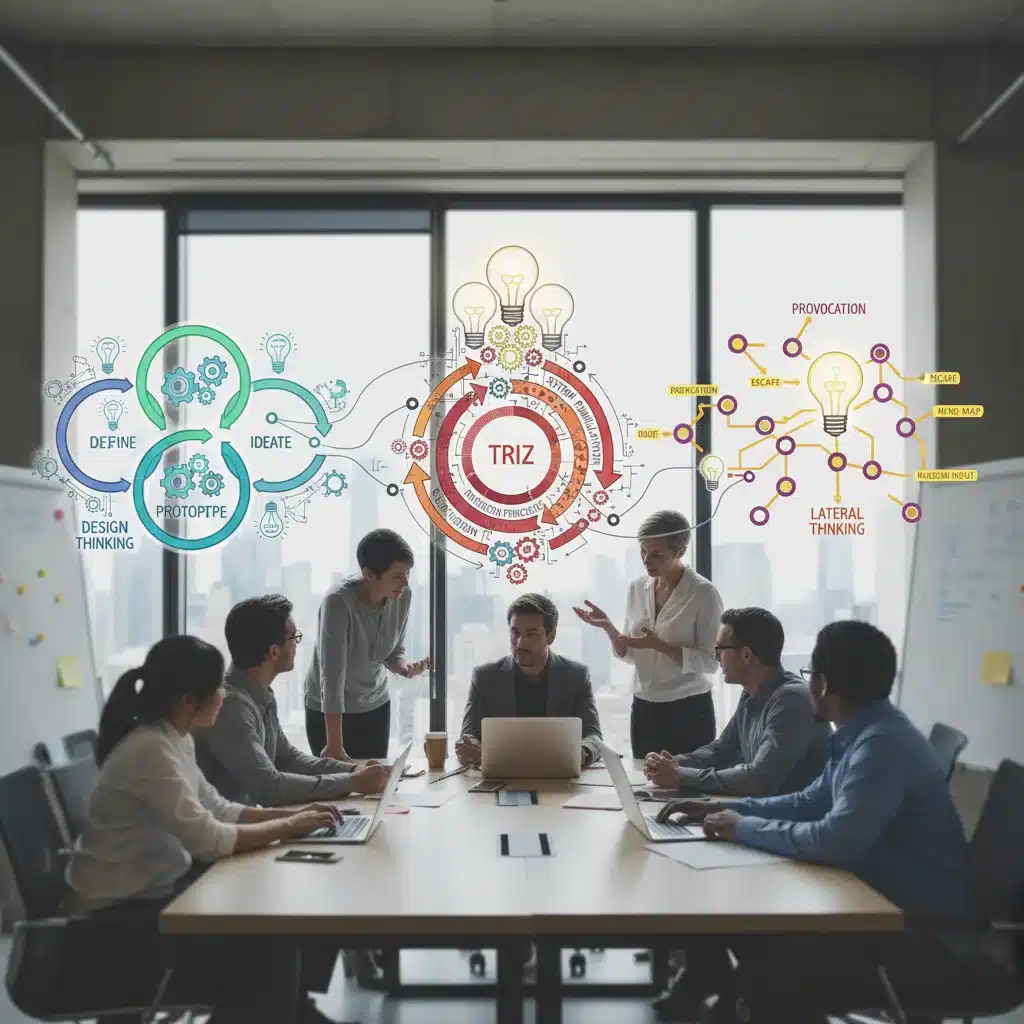
This article delves into three of the most influential creative thinking frameworks: Design Thinking, TRIZ (Theory of Inventive Problem Solving), and Lateral Thinking. We will dissect their core principles, explore their practical applications, and critically compare their strengths and weaknesses, specifically through the lens of US teams aiming for sustained innovation in 2026. By the end, you’ll have a clearer understanding of which framework, or combination thereof, might best suit your organization’s unique needs and propel your team towards groundbreaking achievements.
The Imperative of Creative Thinking for US Businesses
Before we dive into the specifics of each framework, it’s crucial to understand why creative thinking frameworks are more vital than ever for US businesses. The global market is characterized by volatility, uncertainty, complexity, and ambiguity (VUCA). Disruptive technologies emerge at an accelerated pace, consumer expectations are constantly shifting, and global competition is fierce. In this environment, relying on traditional, linear problem-solving methods is simply not enough. Organizations need to cultivate a culture where new ideas are not just welcomed but actively sought out and developed. This requires moving beyond incremental improvements to fostering truly radical innovation.
US teams, in particular, face unique pressures. There’s a strong emphasis on speed to market, technological leadership, and maintaining a competitive edge in a highly capitalized and dynamic economy. Therefore, equipping teams with the tools to systematically generate and implement innovative solutions is not a luxury, but a strategic necessity. Creative thinking frameworks offer these tools, providing a structured yet flexible approach to unlock collective intelligence and drive forward-thinking initiatives.
Design Thinking: Empathy-Driven Innovation
Design Thinking has emerged as one of the most popular and widely adopted creative thinking frameworks globally, and its influence continues to grow within US corporations and startups. At its heart, Design Thinking is a human-centered approach to innovation that integrates the needs of people, the possibilities of technology, and the requirements for business success. It’s not just for designers; it’s a methodology for solving complex problems and creating new value across all disciplines.
Core Principles and Stages of Design Thinking
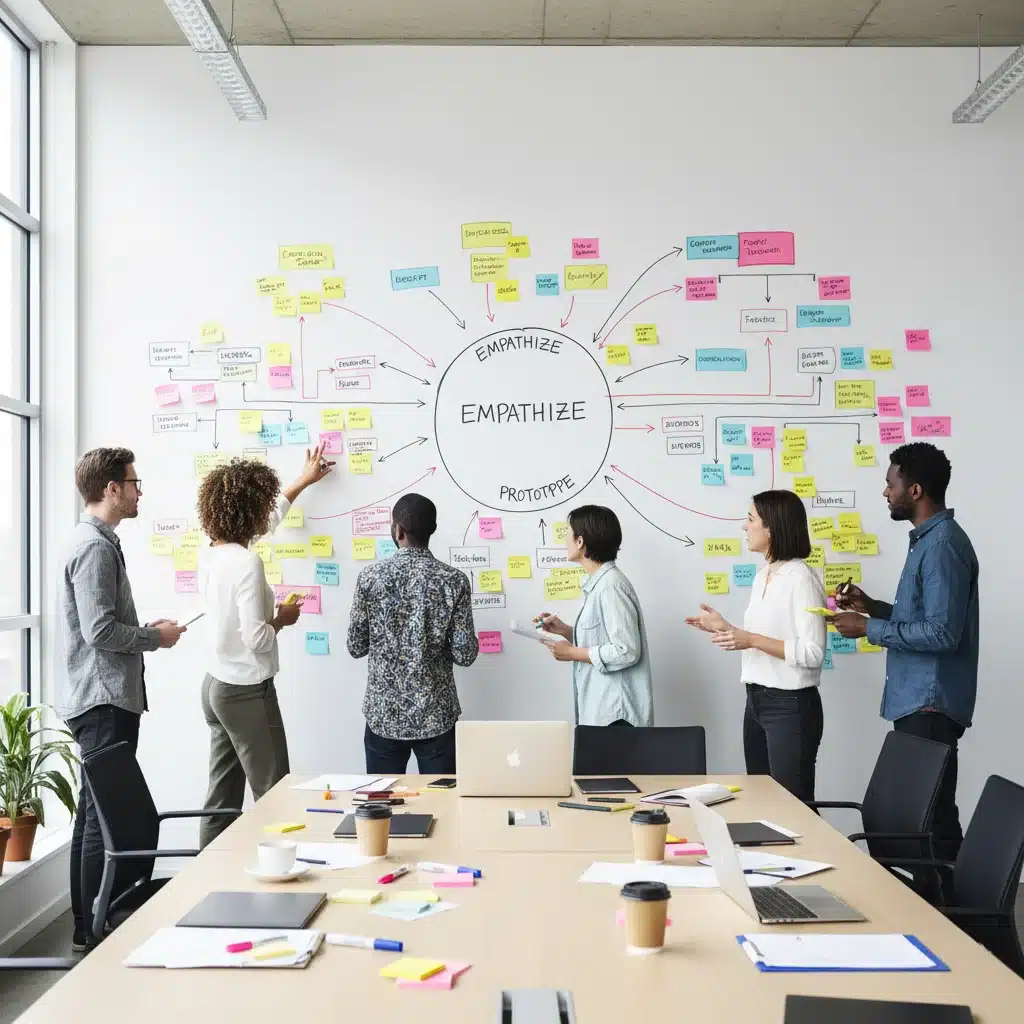
The Design Thinking process is typically broken down into five non-linear stages:
- Empathize: This initial stage involves gaining a deep understanding of the users’ needs, desires, and pain points. This often means conducting interviews, observations, and immersing oneself in the user’s experience. For US teams, this translates to understanding diverse consumer bases, regional nuances, and cultural factors that influence user behavior.
- Define: Based on the empathy stage, the team synthesizes the gathered information to clearly define the core problem statement from the user’s perspective. This ensures that the team is solving the right problem.
- Ideate: With a well-defined problem, the team brainstorms a wide range of potential solutions. This stage encourages divergent thinking, where quantity over quality is initially prioritized to explore all possibilities. Techniques like brainstorming, mind mapping, and SCAMPER are often employed.
- Prototype: Selected ideas are then transformed into tangible prototypes. These can be low-fidelity models, mock-ups, storyboards, or even role-playing scenarios. The goal is to quickly create a representation of the solution that can be tested.
- Test: Prototypes are presented to real users to gather feedback. This stage is crucial for identifying flaws, refining ideas, and ensuring the solution truly meets user needs. The iterative nature of Design Thinking means teams often cycle back to earlier stages based on testing insights.
Strengths of Design Thinking for US Teams
- User-Centricity: Its strong emphasis on understanding the end-user ensures that solutions are relevant, desirable, and ultimately adopted. This is particularly valuable in competitive US markets where customer satisfaction is a key differentiator.
- Collaboration and Cross-Functional Teams: Design Thinking thrives on diverse perspectives, making it ideal for fostering collaboration among different departments within US organizations. It breaks down silos and encourages interdisciplinary problem-solving.
- Iterative and Agile: The framework’s iterative nature allows for continuous learning and adaptation, reducing the risk of large-scale failures and enabling quicker pivots, which aligns well with the agile methodologies prevalent in many US tech and innovation hubs.
- Tangible Outcomes: The prototyping stage helps teams visualize and test ideas quickly, leading to concrete, actionable results rather than abstract concepts.
Weaknesses and Challenges
- Time and Resource Intensive: Deep ethnographic research and multiple iterations can be time-consuming and resource-heavy, which might be a challenge for smaller US businesses or those with tight deadlines.
- Requires Cultural Shift: Adopting Design Thinking often demands a significant cultural shift towards empathy, experimentation, and a tolerance for failure, which can be difficult to implement in traditionally hierarchical US corporate structures.
- May Lack Technical Depth: While excellent for understanding user needs, it might not always provide the deepest technical solutions for highly complex engineering or scientific problems, where more specialized creative thinking frameworks might be needed.
TRIZ: Systematic Inventive Problem Solving
TRIZ, an acronym for the Russian "Teoriya Resheniya Izobretatelskikh Zadach" (Theory of Inventive Problem Solving), stands in stark contrast to the more human-centered Design Thinking. Developed by Genrich Altshuller and his colleagues in the Soviet Union, TRIZ is a highly structured, systematic methodology for generating inventive solutions to technical problems. It’s one of the most powerful creative thinking frameworks for engineering and scientific challenges, focusing on eliminating contradictions rather than making compromises.
Core Principles and Tools of TRIZ
TRIZ is built upon the premise that problems and solutions repeat across different industries and scientific fields. Altshuller and his team analyzed hundreds of thousands of patents to identify patterns of invention. Key components of TRIZ include:
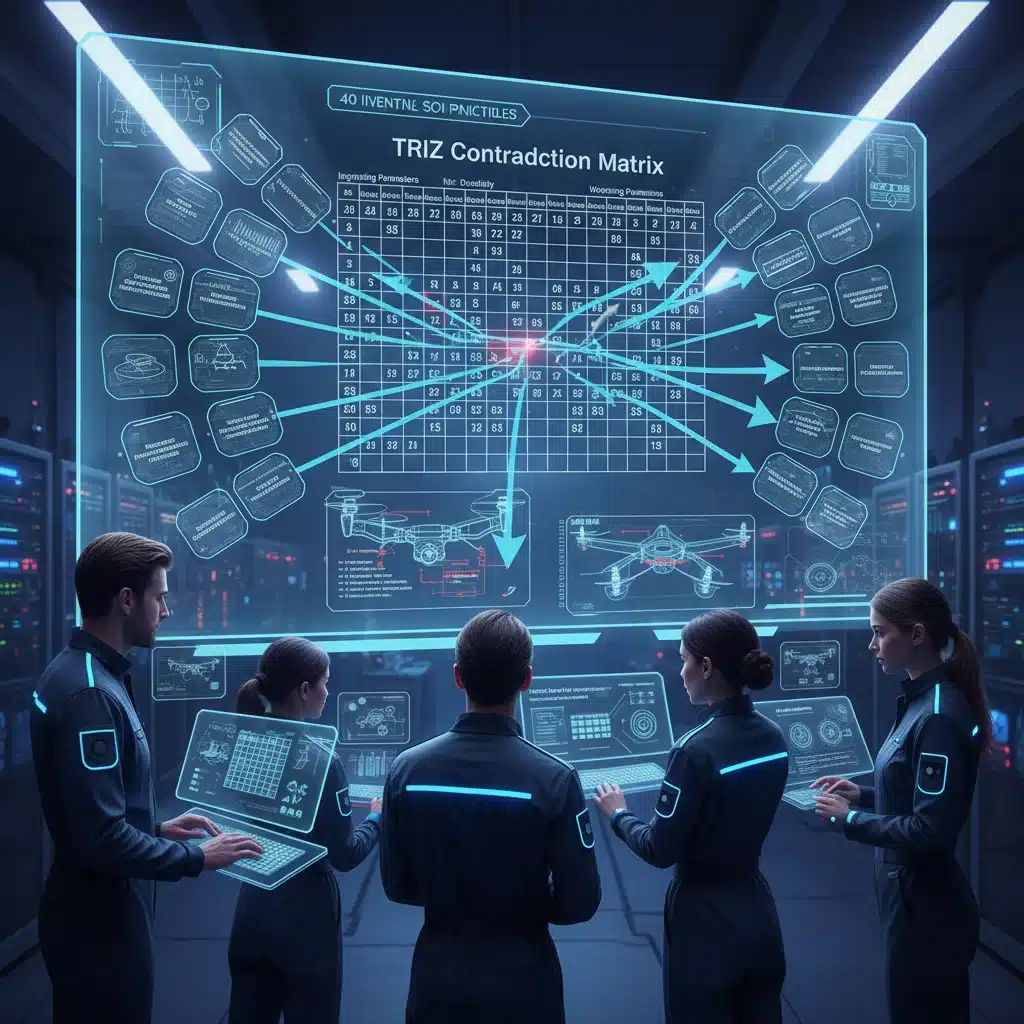
- Contradiction Matrix: This is arguably the most famous TRIZ tool. It identifies 39 standard engineering parameters and maps out which inventive principles (there are 40) can be used to resolve a contradiction between two parameters. For example, if improving one parameter (e.g., speed) worsens another (e.g., reliability), the matrix suggests principles to overcome this.
- 40 Inventive Principles: These are generalized solutions that have been observed repeatedly in successful inventions. Examples include "Segmentation," "Extraction," "Asymmetry," and "Dynamicity."
- Separation Principles: These help resolve contradictions by separating conflicting properties in space, time, or upon condition.
- Ideal Final Result (IFR): A core concept where the problem solver imagines the ideal solution where the system performs its function perfectly without any drawbacks or costs. This helps to overcome psychological inertia and think beyond current limitations.
- Patterns of Evolution: TRIZ also identifies predictable patterns in how technical systems evolve over time, which can be used to forecast future innovations.
Strengths of TRIZ for US Teams
- Systematic Innovation: TRIZ provides a highly structured and repeatable process for generating innovative solutions, reducing reliance on trial-and-error or pure brainstorming. This is highly valued in US industries focused on efficiency and measurable outcomes.
- Overcoming Technical Contradictions: Its unique ability to identify and resolve technical contradictions is unparalleled among creative thinking frameworks, making it invaluable for R&D and engineering teams.
- Predictive Power: The patterns of evolution can help US companies anticipate future trends and develop disruptive technologies proactively, gaining a significant competitive edge.
- Reduces "Psychological Inertia": By providing generalized solutions, TRIZ helps engineers and scientists break free from conventional thinking and explore unconventional paths.
Weaknesses and Challenges
- Technical Learning Curve: TRIZ requires a significant investment in learning its principles, tools, and terminology. It’s not as intuitively accessible as Design Thinking.
- Less Suited for "Soft" Problems: While powerful for technical challenges, TRIZ is less effective for problems involving human behavior, organizational culture, or abstract concepts, where Design Thinking might excel.
- Can Feel Mechanistic: Some argue that its highly structured nature can stifle pure creativity, though proponents would argue it provides a powerful framework to channel creativity effectively.
- Data-Intensive: Effective application of the contradiction matrix often requires a deep understanding of engineering parameters and their relationships, which might not be readily available for novel problems.
Lateral Thinking: Breaking Free from Linear Constraints
Developed by Edward de Bono, Lateral Thinking is a distinct approach to problem-solving that focuses on generating new ideas by breaking away from traditional, linear, and logical patterns of thought. Unlike vertical thinking, which builds upon existing ideas in a sequential manner, Lateral Thinking encourages exploring multiple possibilities and perspectives, often through unconventional means. It’s a fundamental creative thinking framework for disrupting entrenched thought patterns.
Core Principles and Techniques of Lateral Thinking
Lateral Thinking emphasizes:
- Challenging Assumptions: Questioning deeply held beliefs and assumptions that constrain problem-solving.
- Provocation: Introducing seemingly absurd or impossible ideas (PO) to disrupt conventional thinking and open new pathways. This can involve making deliberate errors, wishful thinking, or exaggeration.
- Random Entry: Introducing a random word or object into the problem space to force new connections and perspectives.
- Focus: Deliberately choosing a point of focus to direct the creative effort, even if it’s an unusual one.
- Harvesting: Extracting value from the ideas generated, even if they seem outlandish at first.
- Alternatives: Actively seeking out alternative ways of looking at a problem, even when a seemingly good solution has been found.
Strengths of Lateral Thinking for US Teams
- Generates Radical Ideas: Lateral Thinking is exceptionally good at producing truly novel and disruptive ideas by forcing teams to think outside the box. This is crucial for US companies looking to innovate beyond incremental improvements.
- Overcomes Mental Blocks: Its techniques are specifically designed to bypass mental blocks and established thought patterns, fostering breakthroughs where conventional methods fail.
- Accessible and Engaging: Many Lateral Thinking techniques are easy to understand and can be quickly applied in workshops, making them highly engaging for diverse teams.
- Promotes "Big Picture" Thinking: It encourages teams to look at problems from entirely new angles, potentially revealing hidden opportunities or overlooked solutions.
Weaknesses and Challenges
- Lack of Structure for Implementation: While excellent for idea generation, Lateral Thinking doesn’t provide a clear framework for evaluating, developing, or implementing those ideas, often requiring other creative thinking frameworks to follow up.
- Can Be Perceived as "Fluffy": Its unconventional nature might be met with skepticism in more traditional or data-driven US corporate environments that prefer structured, quantifiable processes.
- Requires Facilitation Skills: Effective application often benefits from a skilled facilitator who can guide the team through the techniques and manage the flow of ideas.
- Risk of Irrelevant Ideas: Without proper guidance, the random nature of some techniques can lead to a high volume of irrelevant or impractical ideas.
Comparing the Creative Thinking Frameworks: Which Drives Most Innovation?
Now that we’ve explored each framework individually, let’s directly compare Design Thinking, TRIZ, and Lateral Thinking to understand their distinct contributions to innovation for US teams in 2026.
Problem Type and Suitability
- Design Thinking: Best suited for "wicked problems" – complex, ill-defined challenges with human-centric aspects, where understanding user needs is paramount. Ideal for product development, service design, and improving user experiences.
- TRIZ: Unrivaled for technical and engineering problems, particularly those involving physical or technical contradictions. Excellent for process optimization, patent generation, and overcoming technological limitations.
- Lateral Thinking: Most effective for breaking mental blocks, generating truly novel concepts, and finding completely new approaches to existing problems, especially when conventional methods have failed. It’s a great catalyst for radical innovation.
Innovation Output
- Design Thinking: Tends to yield user-validated, desirable, and feasible innovations. Often leads to incremental or evolutionary improvements, but can also lead to disruptive innovations when user needs are unmet in radical ways.
- TRIZ: Aims for inventive, often patentable solutions that resolve technical contradictions without compromise. Can lead to significant breakthroughs in product functionality and performance.
- Lateral Thinking: Excels at generating truly revolutionary, "out-of-the-box" ideas that can redefine markets or create entirely new ones. The challenge is often in translating these radical ideas into actionable plans.
Team Dynamics and Culture
- Design Thinking: Fosters collaboration, empathy, and a culture of experimentation. It’s highly inclusive and encourages diverse perspectives.
- TRIZ: Appeals to analytical, technically-minded teams. Requires a disciplined approach and a willingness to learn a structured methodology.
- Lateral Thinking: Encourages playful exploration, challenging norms, and a willingness to embrace absurdity. It can be highly energizing for teams but might require a facilitator to keep discussions focused.
Measuring Impact for US Teams in 2026
The "most innovation" is subjective and depends on what kind of innovation an organization seeks. For US teams in 2026:
- If your goal is to create highly desirable products and services that resonate deeply with diverse American consumers and solve their real-world problems, Design Thinking is likely to drive the most impactful innovation. Its focus on market fit and user adoption directly translates to commercial success.
- If your US team is in a technology-intensive industry (e.g., aerospace, biotech, advanced manufacturing) and needs to overcome complex engineering hurdles, develop groundbreaking patents, or optimize highly technical processes, then TRIZ will be the primary driver of innovation.
- If your team is stuck in a rut, facing seemingly intractable problems, or needs to envision entirely new business models or market opportunities, then Lateral Thinking can provide the spark for the most radical and transformative innovation.
Hybrid Approaches: The Synergy of Creative Thinking Frameworks
It’s important to recognize that these creative thinking frameworks are not mutually exclusive. In fact, many successful US organizations are increasingly adopting hybrid approaches, leveraging the strengths of each framework at different stages of the innovation process. For example:
- A Design Thinking process might identify a critical user need that requires a novel technical solution. At this point, a TRIZ approach could be employed to systematically generate inventive concepts for that technical challenge.
- Lateral Thinking techniques could be used at the ideation stage of a Design Thinking project to generate a broader and more diverse set of initial ideas before prototyping begins.
- For a highly technical problem, TRIZ could be used to generate potential solutions, and then Design Thinking principles could be applied to validate these solutions with users and ensure their desirability and usability.
This integrated approach allows US teams to be agile, adaptable, and comprehensive in their innovation efforts, tapping into the power of each framework where it is most effective. The key is to understand the strengths and limitations of each and strategically deploy them.
Implementing Creative Thinking Frameworks in US Organizations
Successfully integrating any of these creative thinking frameworks into US organizations requires more than just understanding the methodology; it demands strategic implementation:
- Leadership Buy-in: Innovation initiatives must have strong support from senior leadership to allocate resources, manage expectations, and champion cultural change.
- Training and Development: Invest in training programs to equip employees with the necessary skills and knowledge for each framework. This is particularly true for TRIZ, which has a steeper learning curve.
- Dedicated Time and Space: Provide teams with dedicated time and appropriate physical or virtual spaces to engage in creative problem-solving without daily operational pressures.
- Pilot Projects: Start with small, manageable pilot projects to demonstrate success, learn from challenges, and build momentum before scaling up.
- Foster a Culture of Experimentation: Encourage a psychologically safe environment where failure is seen as a learning opportunity, and experimentation is rewarded. This is critical for all creative thinking frameworks to flourish.
- Measure and Iterate: Establish metrics to measure the impact of innovation efforts and continuously refine the application of frameworks based on results and feedback.
Conclusion: Powering US Innovation in 2026 and Beyond
The choice of the "best" creative thinking framework for US teams in 2026 is not a one-size-fits-all answer. Each framework – Design Thinking, TRIZ, and Lateral Thinking – offers distinct advantages for different types of problems and innovation goals. Design Thinking excels in human-centered innovation, TRIZ provides systematic solutions for technical challenges, and Lateral Thinking unlocks radical new ideas by breaking conventional thought patterns.
For US teams aiming to lead in 2026, the most powerful strategy will likely involve a flexible and integrated approach. By understanding when and how to apply each of these frameworks, organizations can build a robust innovation ecosystem that addresses diverse challenges, fosters a culture of creativity, and consistently delivers groundbreaking solutions. The future of innovation for US businesses lies not in choosing one framework, but in strategically leveraging the collective power of these potent creative thinking frameworks to navigate complexity and seize opportunities in an ever-changing world.