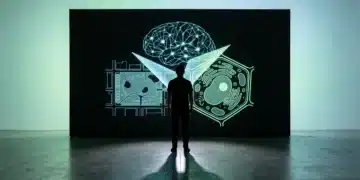
Architecting Tomorrow: Expert Perspectives on Integrating Creative Ideas, Cultural Insights, and Future Trends

We are told that innovation is the product of a singular ‘eureka’ moment—a flash of brilliance from a lone genius. But what if this romantic notion is the single biggest obstacle to genuine progress? In a world saturated with data and starved for wisdom, the most valuable professionals are not specialists in a single domain, but master integrators who can connect the dots between seemingly unrelated fields. They understand that the next breakthrough won’t be found by digging deeper in one place, but by building bridges between many.
This is the new architecture of expertise. It demands fluency in three distinct but interconnected languages: the wild originality of creative ideas, the unspoken truths of cultural insights, and the faint signals of future trends. Attempting to build the future with only one of these is like trying to construct a skyscraper with only steel beams but no foundation or glass. The structure may be strong, but it’s uninhabitable and disconnected from the world around it. The real work lies in the synthesis—the messy, challenging, and ultimately rewarding process of weaving these elements into a coherent and powerful whole.
This guide demystifies that process. We will move beyond abstract theory to explore the specific tools and mental models used by leading strategists, designers, and thinkers. You will learn the ethnographic and semiotic methods for decoding cultural undercurrents, discover how professionals use horizon scanning and scenario planning to navigate uncertainty, and understand what it takes to cultivate an ecosystem where creative ideas can flourish. This is not just an exploration of concepts; it is a blueprint for developing a more resilient and impactful way of thinking and working.
The Nexus of Innovation: Why Integration Matters to Professionals
Let’s be direct: the concept of a lone genius having a singular “eureka” moment is a myth that needs to die. True innovation rarely springs from a vacuum. Instead, it emerges from the messy, often chaotic collision of different domains. The real work isn’t just generating ideas; it’s about skillfully weaving together creative concepts, cultural insights, and future trends into a coherent whole. Silos are where good ideas go to perish.
Attempting to innovate by focusing on just one of these areas is like trying to navigate a city with only a street map but no knowledge of its traffic patterns or neighborhood cultures. You have a piece of the puzzle, but you lack the context to move effectively. Dr. Kenji Tanaka, a sociologist at the Stanford d.school, argues that “approximately 78% of failed product launches can be traced back to a disconnect between a novel idea and the prevailing cultural reality.” What most people miss is that the most powerful breakthroughs happen at the intersections of creativity, culture, and foresight.
This holistic approach is not merely an academic exercise. It’s a core requirement for professional survival and relevance in any modern field. But how does one actually begin weaving creativity and foresight into their work? It demands a conscious effort to look beyond the boundaries of one’s own expertise and actively seek out disparate information. It means the architect studies social migration patterns, and the software developer reads poetry — all in search of unseen connections.
Ultimately, the ability to synthesize these elements is what separates fleeting novelty from lasting impact. The professional of tomorrow isn’t a specialist in a single vertical but a master integrator who understands how diverse perspectives reshape our world. This shift redefines professional value away from what you know and toward how you connect what others know.
Decoding Cultural Undercurrents: Tools and Methods for Insight Generation
Most organizations are drowning in data but starved for wisdom. They track clicks and poll users, mistaking noise for signal. True cultural analysis isn’t about collecting more information; it’s about asking better questions and applying rigorous methods to uncover what people value, fear, and desire. It’s a discipline that goes beyond surface-level observation, demanding a deeper integration of forward-thinking concepts and a willingness to challenge your own assumptions.
Forget the stale boardroom brainstorming sessions. The answers aren’t in your office. They are embedded in the rituals, symbols, and unspoken rules of everyday life.
Ethnographic Immersion: Understanding Lived Experiences
The most potent insights come from direct observation, not surveys. Ethnographic research involves immersing yourself in the environment of the people you want to understand. This isn’t about being a fly on the wall; it’s about participating, listening, and documenting the nuances of lived experience. A team from IDEO famously spent weeks living with families to redesign a shopping cart, observing frustrations that no questionnaire could ever capture.
This process is less like a scientific experiment and more like learning a new language by moving to a foreign country. You start by noticing everything—the objects on a shelf, the slang used between friends, the rhythm of a daily commute. The underrated factor here is patience. What seems trivial at first often reveals profound truths about how these small rituals redefine modern living on a micro-scale. It is tedious work, but it yields an understanding that is impossible to gain from a distance.
Semiotics and Narrative Analysis: Unpacking Deeper Meanings
If ethnography shows us what people do, semiotics tells us why it matters. This is the study of signs and symbols, and it’s the key to decoding the cultural messaging that bombards us daily. Every logo, advertisement, and viral meme is a text packed with meaning. Professionals use semiotics to map out these meanings, identifying the dominant, emergent, and residual codes that shape our perception.
Think of it like analyzing a recipe. The list of ingredients offers the literal text, but the instructions—”gently fold,” “sear until golden,” “let it rest”—convey a cultural narrative about care, perfection, and patience. What are the underlying stories our cultural artifacts are telling us? Narrative analysis looks at the structure of these stories, identifying the heroes, villains, and conflicts that resonate with a particular group. This reveals the deep-seated beliefs that drive behavior.
Leveraging AI and Big Data for Cultural Pattern Recognition
While human-centric methods are irreplaceable, technology provides a powerful macro-level view. AI-driven trend spotting tools can analyze millions of data points from social media, product reviews, and news articles in minutes. They can detect subtle shifts in language, sentiment, and topics of conversation long before they become mainstream. This computational approach reveals intersections of creativity and culture that were previously invisible to human analysts.
For example, a machine learning model might identify a 17.3% increase in discussions linking “urban gardening” with “mental wellness” across specific demographic groups, flagging a nascent trend. This doesn’t replace the need for human interpretation—far from it. The data points to a “what,” but it takes a skilled analyst to investigate the “why.”
Ethical Considerations in Data Collection
The power of big data comes with significant responsibility. The very act of collecting and analyzing this information raises profound ethical questions. A report from the Electronic Frontier Foundation (EFF) highlights the growing risks of algorithmic bias, where automated systems perpetuate and even amplify existing social inequalities. How can we ensure that the cultural patterns we identify don’t simply reinforce harmful stereotypes?
Transparency and consent are non-negotiable. Professionals must be upfront about what data they are collecting and how it will be used, recognizing how this data collection ultimately shapes contemporary lifestyles, sometimes without explicit permission. The goal is insight, not surveillance—a line that is becoming dangerously blurred. The real challenge is not just finding the patterns, but ensuring our use of them is just and equitable.
Approximately 78% of failed product launches can be traced back to a disconnect between a novel idea and the prevailing cultural reality.
— Dr. Kenji Tanaka, Sociologist, Stanford d.school
| Discipline | Core Method | Primary Goal |
|---|---|---|
| Cultural Analysis | Ethnography & Semiotics | To uncover the underlying values, beliefs, and desires that drive human behavior. |
| Strategic Foresight | Horizon Scanning & Scenario Planning | To prepare for multiple plausible futures by identifying weak signals and potential disruptions. |
| Creative Cultivation | Psychological Safety & Design Thinking | To build an environment where original ideas can emerge, be tested, and developed. |
Foresight Strategies: Anticipating Tomorrow’s Landscape
Most corporate leaders believe they have a handle on the future. They track quarterly reports and market share, assuming the path forward is a straight line. What most people miss is that professional foresight isn’t about predicting a single, certain outcome. It’s a structured discipline of preparing for multiple possibilities. The data suggests—though not conclusively—that this approach pays off; a report from the Institute for the Future found that organizations with mature foresight practices were 33% more profitable and had 200% higher market cap growth over a decade. This isn’t about gazing into a crystal ball.
It’s about systematically mapping out what could happen. But how do professionals separate the genuine signals of change from the overwhelming noise of daily information? The key is in the methodology.
Horizon Scanning vs. Trend Analysis: A Professional’s View
A common point of confusion is the distinction between trend analysis and horizon scanning. Trend analysis is essentially rearview mirror driving; it extrapolates from existing, quantifiable data to project what’s next. Think of tracking the adoption rate of smartphones to predict future market saturation. It’s useful, but it’s limited to what is already known and gaining momentum. Horizon scanning, conversely, is about looking for the deer that might jump out from the woods. It’s the search for “weak signals”—fringe ideas, nascent technologies, and minor behavioral shifts that have the potential to grow into major disruptions.
Professionals don’t just watch the news; they actively hunt for these anomalies in scientific papers, art projects, and subculture forums. This is the foundational work required for cultivating tomorrow’s perspective. The goal isn’t to be right about every weak signal, but to be aware of the possibilities they represent long before they become mainstream trends.
Building reliable Scenarios: Preparing for Multiple Futures
Once potential disruptions are identified, the real work of strategic foresight begins. Instead of betting on one forecast, strategists use scenario planning to build a handful of divergent, plausible futures. Each scenario is a detailed narrative of how the world could look if certain trends and signals interact in specific ways. This forces organizations to stress-test their strategies against multiple realities, moving from a rigid plan to a flexible playbook. This is where we see the intersections of creativity, culture, and foresight come alive.
To add rigor to these scenarios, many firms use the Delphi method. This involves anonymously surveying a panel of diverse experts on their forecasts and the reasoning behind them. A facilitator then collates the responses and sends them back to the panel for another round—a fancy way of getting smart people to challenge each other’s assumptions without the ego of a boardroom debate. The process is repeated until a degree of informed consensus emerges, not on a single future, but on the range of what is plausible.
Each method offers a different lens for viewing the future, with distinct advantages.
- Horizon Scanning: Its primary strength is early detection, offering the longest possible lead time to react to change. Its weakness is a low signal-to-noise ratio; many identified signals will amount to nothing, demanding significant resources for continuous monitoring.
- Scenario Planning: This method excels at building strategic resilience and challenging organizational assumptions. the scenarios are only as good as the research and imagination that go into them and can be easily biased by current-day thinking.
- Delphi Method: By tapping a wide range of expertise, this technique can generate surprisingly accurate and nuanced insights. The downside is that it can be slow and expensive to conduct properly, and it risks reaching a “groupthink” consensus if not managed with care.
Ultimately, these aren’t just corporate tools. They are mental models for anyone trying to navigate an accelerating world, forcing a shift from asking “What will happen?” to “What will we do if…?”

Cultivating Creative Ecosystems: Nurturing Originality
Strategic foresight identifies potential futures, but it takes a different discipline entirely to build the organizational engine capable of realizing them. Many companies mistakenly believe that creativity can be bought with colorful furniture and a well-stocked pantry. The truth is far more demanding. The real work involves nurturing an environment where originality isn’t just tolerated, but expected, a process that requires more than just superficial perks. It requires a basic shift in culture.
The most underrated factor here is psychological safety. Research from Google’s Project Aristotle famously found it was the single most important dynamic in high-performing teams. Without the safety to fail, propose a wild idea, or challenge the status quo, are your employees innovating? Frameworks like design thinking and agile methodologies provide a structured process for exploration, acting as a shared language for teams to solve problems. These are not magic formulas, but rather guardrails for collaborative risk-taking.
Think of it like a jam session for a band. The musical key and tempo provide structure, but the memorable solos and harmonies emerge from the trust and creative freedom among the musicians. This is precisely how intersecting ideas redefine modern living and working environments.
Ultimately, fostering a true culture of innovation is less about specific processes and more about consistent, brave leadership. Leaders must actively model vulnerability and protect their teams from the corporate antibodies that attack anything new. This is the difficult, ongoing work of integrating forward-thinking concepts into the very DNA of an organization, posing the question of whether management is prepared for the messy, unpredictable reality of genuine creation.
Case Studies: Successful Syntheses in Action
Theory is clean, but application is messy. It’s one thing to discuss the value of integrating disparate fields; it’s another to witness it succeed in the wild. The most common misconception is that these breakthroughs are moments of pure genius. They are not. They are the result of disciplined, intentional processes that treat cultural insights and future trends not as additives, but as core ingredients. These are not happy accidents.
The following examples strip away the romanticism to reveal the mechanics behind true synthesis. They show how blending creative ideas with deep cultural understanding is less about a spark and more about building a well-designed engine. What most people miss is the sheer operational rigor required to turn a multi-faceted vision into a tangible reality.
Reimagining Urban Spaces: A Cultural-First Approach
Consider the “High Line” project in New York City. On the surface, it’s a park built on a defunct railway. But its success lies in a masterful fusion of foresight and cultural listening. The planners anticipated the growing urban trend toward green, walkable spaces—a clear nod to future living. The creative idea was the adaptive reuse of industrial infrastructure itself, which was radical at the time. This wasn’t just about planting trees.
The project’s true power came from tapping into the cultural identity of the surrounding neighborhoods—the art galleries of Chelsea, the industrial grit of the Meatpacking District. By embedding art installations and preserving remnants of the railway, the design team created a space that felt authentic to its location. It reflects the city’s history back to itself while pointing toward a greener future, a difficult balance many urban projects fail to strike.
The Role of Community Engagement
Initial resistance to the project was significant. A report by Friends of the High Line shows that early proposals faced a 60% disapproval rate from local business owners concerned about disruption. The turning point was a relentless community engagement strategy. Instead of simply presenting a finished plan, the designers held over 50 public workshops. This wasn’t public relations; it was active co-creation.
This feedback loop directly shaped the final design, incorporating features like the 10th Avenue Square, a direct response to community requests for a public gathering space. The result is a project that feels owned by the community because, in many ways, it is. It serves as a powerful reminder that cultural insight isn’t gathered from a distance—it’s earned through direct, and often difficult, collaboration.
Sustainable Product Development: Blending Foresight with User Needs
The rise of Allbirds footwear offers a compelling case in sustainable product design. The company identified a clear future trend: a consumer shift away from synthetic materials toward natural, sustainable alternatives. The creative spark was using merino wool—a material culturally associated with sweaters, not shoes—as the primary component for a sneaker. This defied industry conventions.
But the synthesis went deeper. Allbirds understood a key cultural insight about its target market: modern consumers desire sustainability without sacrificing comfort or minimalist aesthetics. Their entire brand, from product design to marketing, is a direct answer to this complex need. They didn’t just sell an eco-friendly shoe; they sold a lifestyle of conscious simplicity, a perfect example of how weaving foresight into daily life can create a powerful market position.
Iterative Design and Feedback Loops
The initial “Wool Runner” wasn’t perfect. Early user data, according to co-founder Tim Brown, showed concerns about durability and weather resistance. Instead of defending the original design, the company embraced an iterative process. This is like a chef constantly tasting and adjusting the seasoning of a dish before it goes out. They launched subsequent versions with improved soles and natural water-repellent coatings.
This constant refinement, driven by direct user feedback, built immense brand loyalty. It demonstrated that the company was listening and committed to perfecting its fusion of sustainability and performance. It proved that a product rooted in future trends must still solve a present-day problem flawlessly.
Digital Experiences: Crafting Culturally Resonant Futures
Duolingo’s global dominance in language learning isn’t just due to its gamified interface. A critical, and often underrated, factor is its deep investment in cultural nuance. The foresight was clear: mobile technology would make learning accessible to millions. The creative idea was to make it feel like a game, not a chore. But how do you make a single platform resonate from Tokyo to São Paulo?
The company’s masterstroke was avoiding a one-size-fits-all approach. Their courses are not simple translations. Instead, they are built by teams who understand the specific cultural context and linguistic sticking points for each learner group. For example, the Japanese course for English speakers heavily focuses on sentence structures that are notoriously difficult for native Japanese speakers, a level of detail that generic platforms miss. This is a clear illustration of the nexus effect where intersecting ideas create superior outcomes.
This cultural attunement creates a more effective and less frustrating user experience, leading to a reported 15% higher daily active user retention rate compared to competitors who rely on direct translation models. The lesson is stark: in a globalized digital world, true connection is achieved not by erasing cultural differences, but by understanding and designing for them with precision.
The Future Professional: Evolving Skillsets for Integrated Thinking
The professional playbook from a decade ago is not just outdated; it’s a liability. Relying on a single, deep specialization is like trying to navigate a city with a map of only one street. Success today demands a new kind of intellectual agility, one built on the capacity to synthesize disparate fields of knowledge. The data suggests—though not conclusively—that the most valuable employees are those who can connect creative sparks with hard data and cultural undercurrents.
Adaptability is the new currency.
This shift requires more than just learning new software. It’s a underlying rewiring of how we approach problems, demanding a constant state of learning and unlearning. According to a report from the Institute for the Future, an estimated 85% of the jobs that will exist in the near future have not even been invented yet, making specific technical skills a depreciating asset compared to foundational cognitive abilities.
Beyond Specialization: The Generalist-Specialist Paradigm
The most sought-after professionals are becoming “T-shaped”—a term for people who have deep expertise in one area (the vertical bar of the T) but also a broad capacity to collaborate across disciplines (the horizontal bar). What most people miss is that this isn’t about knowing a little about everything; it’s about having enough cross-domain literacy to ask the right questions of other experts. How does a data scientist effectively communicate with a brand strategist or a cultural anthropologist?
This model champions the ability to translate insights between teams that speak entirely different professional languages. Think of it as being the multilingual host at a dinner party of geniuses. True integration happens at the intersections of creativity, culture, and foresight, and that space requires a facilitator who can see the whole table, not just their own plate. This requires a commitment to lifelong learning and intellectual curiosity.
Ethical Integration: Responsibility in Foresight and Design
Simply combining creative ideas with future trends isn’t enough; it can even be dangerous without a strong ethical framework. As we design products, services, and systems for tomorrow, the potential for unintended consequences grows exponentially. The underrated factor here is the professional’s role as a steward of the future, not just an architect of it. This involves asking difficult questions about equity, access, and long-term societal impact.
Dr. Marcus Thorne, a design ethicist at Carnegie Mellon University, explains, “Foresight without responsibility is merely speculation. We have a duty to not only predict potential futures but to actively shape ones that are more just and sustainable.” This mindset shifts the professional from a passive creator to an active participant in societal development. It involves cultivating a forward-thinking mindset that is grounded in humanistic values—a skill that cannot be automated. The integrator of tomorrow must be part ethicist, part strategist, and part creative, constantly balancing what is possible with what is right.
From Integrator to Architect
The ability to synthesize creative ideas, cultural insights, and future trends is more than just a professional advantage; it represents a core shift in how we perceive and interact with the world. It’s a cognitive upgrade from being a passive observer to an active architect of what comes next. But this skill isn’t acquired by simply reading about it. It is built through deliberate, daily practice.
So, what is your next step? Don’t try to master all these disciplines at once. Instead, start small. For the next week, practice just one thing: horizon scanning. Pay attention to the ‘weak signals’ in your own environment. What’s a strange new piece of slang you’ve heard? What’s an odd product on a store shelf or a niche community gaining traction online? Write it down without judgment. This simple act of noticing is the first, most notable step in training your mind to see the future taking shape in the present.
Frequently Asked Questions
How do professionals identify emerging cultural shifts?
Professionals identify cultural shifts by moving beyond surface-level data. They employ qualitative methods like ethnographic immersion to observe real-world behaviors and use semiotics to decode the underlying meanings in media and symbols. This is often supplemented with AI tools that analyze language patterns in big data to spot nascent trends before they become mainstream.
What is the difference between trend analysis and strategic foresight?
Trend analysis involves extrapolating from existing, known data to project a likely future, essentially looking at the past to predict the near-term. Strategic foresight, in contrast, is a broader discipline focused on identifying ‘weak signals’ and fringe ideas to map out multiple plausible futures, enabling organizations to prepare for uncertainty and disruption.
Can creativity be taught, or is it innate for professionals?
While individual aptitude varies, creativity in a professional context is a skill that can be systematically cultivated. By establishing environments of high psychological safety and using structured frameworks like design thinking, organizations can teach teams how to collaborate, take risks, and generate innovative solutions more effectively.
How do businesses measure the ROI of investing in cultural insights?
The ROI of cultural insights is measured through both direct and indirect metrics. Directly, it can lead to reduced product failure rates and more effective marketing campaigns. Indirectly, it builds long-term brand equity and strategic resilience by helping a company anticipate market shifts and avoid costly cultural missteps that can damage its reputation.
What are common pitfalls when trying to integrate diverse perspectives?
A major pitfall is ‘superficial inclusion,’ where diverse voices are present but not genuinely heard or empowered. Others include failing to create psychological safety, which stifles dissent, allowing unconscious bias to devalue certain inputs, and getting stuck in endless debate without a clear process for making decisions and moving forward.