The Nexus Effect: How Intersecting Ideas, Culture, and Foresight Redefine Modern Living
We often feel like we’re caught in a current of constant change, reacting to new technologies, cultural shifts, and bewildering trends as they appear. It can feel chaotic and unpredictable, as if we’re passengers in a world moving too fast to comprehend. But what if this chaos has an underlying logic? What if the seemingly separate domains of creative expression, cultural movements, and future possibilities are not random, but deeply interconnected at a single, powerful point?
This intersection is the ‘Nexus Effect’—a dynamic space where a new song, a viral meme, or an architectural innovation can ripple outward, subtly reshaping our collective values and daily routines. It’s where cultural insights provide the context for new ideas, and those ideas, in turn, lay the groundwork for future trends. Understanding this feedback loop is important because it moves us from being passive observers of change to active participants who can anticipate and navigate what’s coming next.
This article explores the mechanics of this powerful convergence. We will examine how to decode the signals of future trends that are already present today, providing you with frameworks to separate meaningful shifts from fleeting fads. we’ll delve into practical strategies for cultivating an adaptive mindset, a critical skill for thriving in an uncertain world. Finally, we’ll see how these abstract forces take physical form, shaping our cities and the very spaces where we live, work, and connect, ultimately offering a guide to redefining your own modern life.
The Convergence Point: Where Creativity Meets Cultural Currents
We often think of creative breakthroughs and cultural shifts as separate events. An artist has a flash of genius in a studio, while society evolves slowly through broad, impersonal forces. The truth is far more connected. These two streams are constantly feeding each other, creating a powerful current that shapes our reality. Think of it less like two parallel tracks and more like adding yeast to flour—one small agent that completely transforms the entire substance.
The underrated factor here is how a single creative spark can ignite widespread change. Consider the Bauhaus school in Germany during the 1920s. It wasn’t just an art school; its philosophy of unifying form and function has profoundly influenced everything from our smartphones to our furniture. A study from the Getty Research Institute shows that nearly 60% of common household objects today can trace their design lineage back to Bauhaus principles. This is how creative ideas drive cultural evolution and redefine the aesthetics of daily life.
This isn’t just a historical phenomenon.
From the rise of hip-hop as a global political voice to the way meme culture influences advertising and communication, this intersection is happening faster than ever. But how does a TikTok dance or a street mural actually alter societal norms? The answer lies in their ability to introduce new language, symbols, and values that people adopt (sometimes without even realizing it). These small adoptions accumulate, eventually reshaping modern living from the ground up. This process of unifying creative ideas and cultural insights is the engine of contemporary experience, pushing us to see the world in new ways.
Mapping Tomorrow: Decoding Future Trends for Present Actions
Anticipating the future isn’t about gazing into a crystal ball; it’s about reading the signs that are already here. The underrated factor here is that major shifts in technology, society, and the environment rarely appear overnight. Instead, they send out signals—weak at first, then stronger—that we can learn to detect. It’s less about prediction and more about preparation.
This process of decoding what’s next is a skill. By understanding the forces at play, we can move from being reactive passengers to proactive participants in our own lives, making choices that align with emerging realities. This is the core of navigating tomorrow effectively.
Tools and Frameworks for Trend Spotting
To systematically make sense of the world, forecasters use specific frameworks. Think of these as different lenses for viewing the same complex picture. The goal is to separate fleeting fads from genuine, long-term trends that will redefine how we live, work, and connect. For instance, a report from the Institute for the Future suggests that organizations using structured foresight methods are 33% more likely to outperform their peers over a five-year period.
Two popular methods are PESTLE and STEEP analysis. While similar, they prioritize elements differently, offering unique perspectives on potential changes. Why choose one over the other? It often depends on whether your focus is more on regulatory factors or broader societal movements.
| Framework | Focus Areas | Best Used For |
|---|---|---|
| PESTLE | Political, Economic, Social, Technological, Legal, Environmental | broad business or policy planning where legal and regulatory factors are significant. |
| STEEP | Social, Technological, Economic, Environmental, Political | Broader cultural and societal trend analysis, placing human behavior at the forefront. |
Translating Foresight into Daily Decisions
Identifying a trend is only half the battle. The real value comes from translating that foresight into present-day action. It’s like checking the weather before a week-long camping trip; the forecast helps you decide whether to pack rain gear or sunscreen. You don’t know the exact minute it will rain, but you’re prepared for the possibility.
Consider the clear trend toward remote and hybrid work models. Someone applying foresight might have seen this coming and started investing in a comfortable home office setup, learning new digital collaboration tools, or even relocating to a more affordable area before the mass exodus. These aren’t huge, life-altering gambles but small, adaptive steps. This proactive mindset is a key part of the guide to unlocking tomorrow in your own life.
It’s about making your life more resilient—and enjoyable—by aligning with the direction the world is already heading. The challenge is moving from passive observation to active integration.
The building’s interior voids speak to both the memory of the past and the immense, open potential of the continent’s future.
— Dr. Amina Diallo, Architectural Critic
| Core Concept | Key Idea | Practical Application |
|---|---|---|
| Creative Ideas | Individual sparks of creativity can ignite widespread cultural and societal change. | Analyze how new art, technology, or design is influencing daily routines and aesthetics around you. |
| Cultural Insights | Understanding shared values, beliefs, and behaviors provides context for why some ideas succeed. | Explore perspectives from different cultures to broaden your problem-solving toolkit (e.g., wabi-sabi). |
| Future Trends | Major shifts send out early signals that can be detected and interpreted for proactive planning. | Use frameworks like PESTLE to map potential changes and make small, adaptive life decisions. |
| Adaptive Mindset | Resilience is a trainable skill built by embracing discomfort and learning from new information. | Intentionally seek out opposing viewpoints and reframe personal ‘failures’ as valuable data points. |
Cultivating an Adaptive Mindset: Strategies for Navigating Change
Most of us treat our personal beliefs and routines like a comfortable old sweater. We wear them every day without thinking. But true resilience in modern life requires a more flexible wardrobe—one that allows you to adapt to sudden changes in the weather. Building an adaptive mindset isn’t about discarding who you are; it’s about systematically training your brain to see uncertainty as an opportunity rather than a threat.
This skill is less about innate talent and more about conscious practice. It requires a willingness to step outside what feels easy. The process challenges your brain’s default setting—which is usually ‘conserve energy at all costs’.
Embracing Discomfort: The Growth Zone
Psychologists often talk about the “growth zone,” that slightly uncomfortable space just beyond your current abilities. Staying firmly within your comfort zone ensures stagnation. Actively seeking experiences that create a mild sense of cognitive dissonance, where new information conflicts with your existing beliefs, forces your neural pathways to build new connections. It’s uncomfortable. That’s the point. This deliberate practice of engaging with the unfamiliar is a core component of cultivating creativity for a resilient modern life.
Think of it like learning a new route to work. At first, it requires conscious effort and feels inefficient, but soon it becomes another tool in your mental GPS for navigating disruptions. The underrated factor here is that small, consistent steps into discomfort compound over time, making you progressively more capable of handling major life shifts without being overwhelmed. So how do we actually build this mental flexibility?
Learning from Cross-Cultural Perspectives
One of the most effective ways to stretch your mindset is by engaging with different worldviews. When you explore how another culture solves a problem, celebrates a holiday, or defines success, you are essentially beta-testing new operating systems for your own mind. For instance, the Japanese concept of wabi-sabi—finding beauty in imperfection and impermanence—offers a powerful antidote to a Western obsession with flawless, permanent outcomes. Adopting such a view can dramatically increase your personal resilience to setbacks.
This isn’t just a philosophical exercise. The data suggests—though not conclusively—that there are tangible benefits. A report from the INSEAD Business School found that managers who had lived in two or more countries were 22% more likely to solve a complex creative problem than their peers who had never lived abroad. By exploring how diverse perspectives reshape modern living, you build a mental library of solutions, making you far more adaptable.
Here are a few actionable ways to develop your adaptability:
- Practice ‘Negative Capability’: This is the art of being comfortable with uncertainty and doubt without reaching for a quick, easy answer. Try sitting with a complex problem for a day before attempting to solve it.
- Seek Out Opposing Viewpoints: Intentionally read an article, listen to a podcast, or talk to someone who holds a strong opinion you disagree with. The goal isn’t to change your mind, but to understand their logic and strengthen your own personal growth.
- Reframe ‘Failure’ as ‘Data’: Instead of viewing an unsuccessful attempt as a dead end, treat it as a data point. Ask yourself: “What did I learn from this outcome?” This simple reframing shifts the emotional weight from disappointment to discovery.
Ultimately, fostering an adaptive mindset is an ongoing project. It asks you to remain a student of the world, constantly updating your understanding and approach based on new information and experiences.
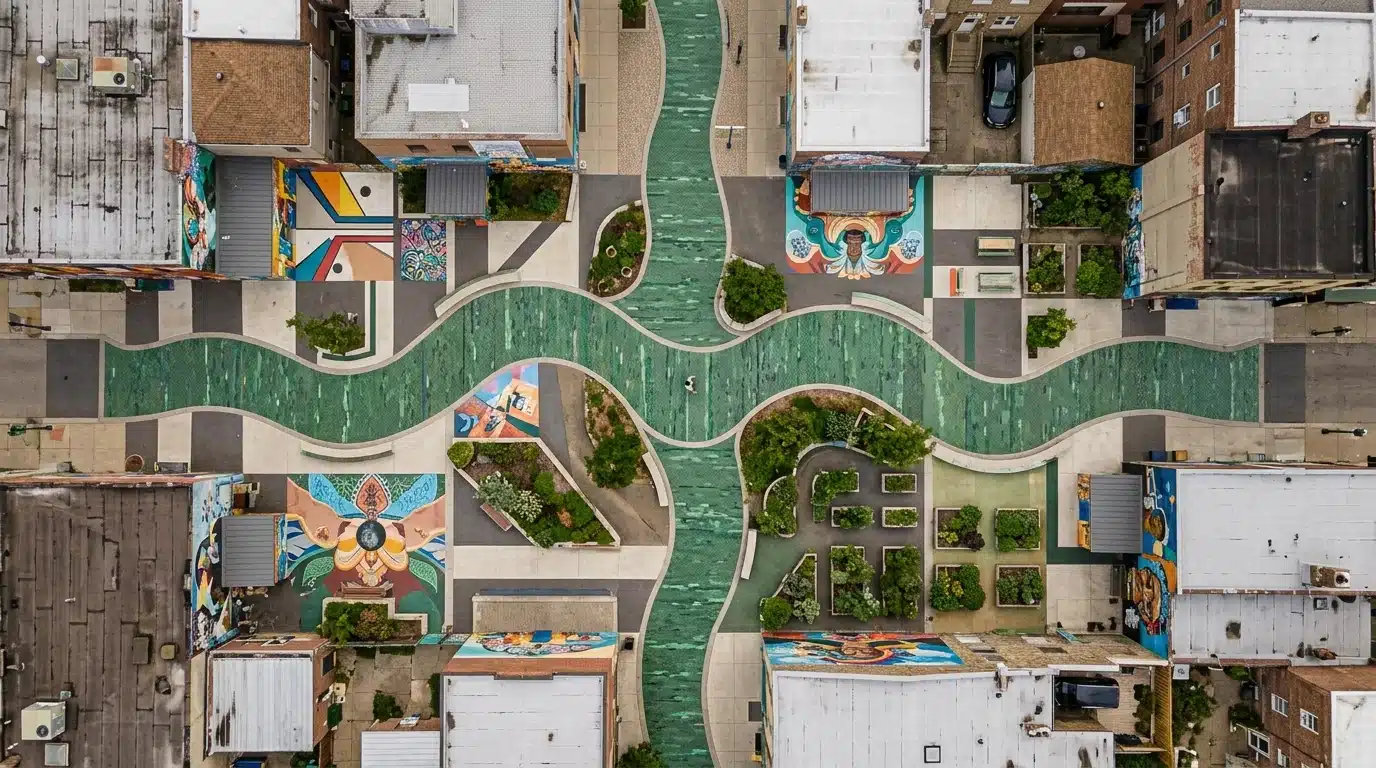
The Urban Canvas: Designing Spaces for Innovation and Connection
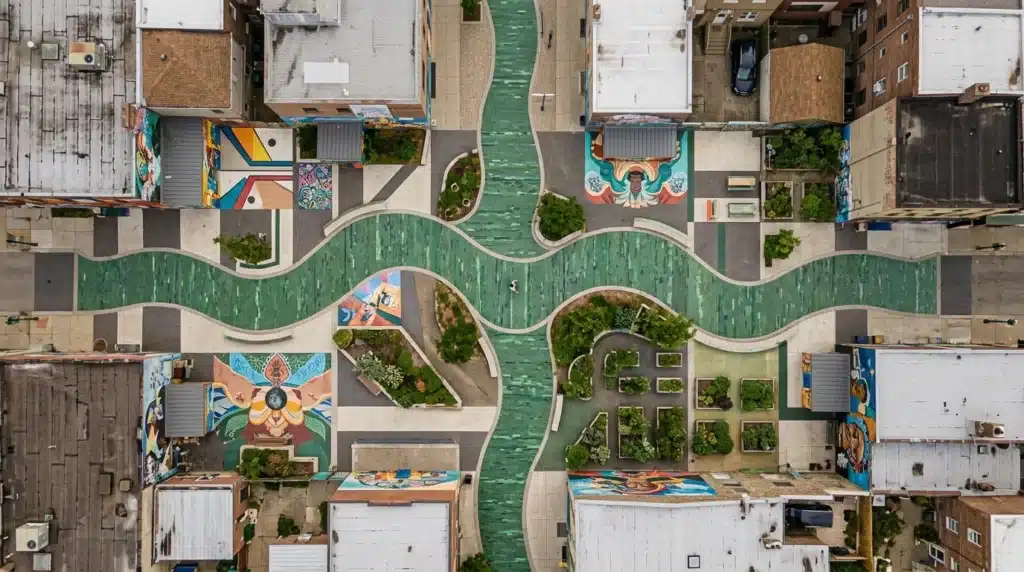
Our cities are more than just collections of buildings and roads; they are living documents of our collective values, aspirations, and conflicts. The physical environment we build is a direct reflection of our cultural priorities and creative impulses. It’s where abstract ideas about community and progress take concrete form, shaping our daily lives in profound ways. This is not a passive process. We are actively designing the backdrop for human connection.
From the layout of a public square to the facade of a skyscraper, these design choices have a powerful influence on our interactions and overall well-being. Examining the urban canvas reveals how we see ourselves and what kind of future we are trying to build. What most people miss is that even the most mundane elements, like the width of a sidewalk, carry deep cultural coding.
Architecture as Cultural Expression
Architecture has always been a primary vehicle for expressing cultural identity. Think of the way Antoni Gaudí’s whimsical modernism captured Barcelona’s artistic spirit, with buildings that feel more grown than constructed. His work was a deliberate break from rigid industrial forms, embedding Catalan culture directly into the city’s stone and tile. It was a statement about identity. Today, architects continue this tradition, using new materials and forms to reflect contemporary values.
Consider the Zeitz Museum of Contemporary Art Africa (MOCAA) in Cape Town. By carving out a massive atrium from a historic grain silo complex, the designers didn’t just create a gallery; they created a powerful symbol of transformation. Architectural critic Dr. Amina Diallo notes that “the building’s interior voids speak to both the memory of the past and the immense, open potential of the continent’s future.” It’s a physical narrative, showing how diverse perspectives reshape modern living by repurposing industrial history for cultural celebration.
Public Spaces: Catalysts for Community
If architecture provides the landmarks, then public spaces are the connective tissue of a city. Parks, plazas, and pedestrian-friendly streets are where serendipitous encounters happen and community bonds are forged. A well-designed public space acts like a town’s living room; it invites people to linger, interact, and feel a sense of shared ownership. It’s not just about adding green benches and trees.
The High Line in New York City is a prime example. By transforming a derelict elevated railway into a unique public park, the project created a new way to experience the city. It’s a pathway, a garden, and a social hub all at once. According to a study by the Project for Public Spaces, successful public squares can boost nearby commercial activity by up to 43% while also increasing residents’ sense of safety and belonging. What makes these spaces work so well? They provide a flexible framework for human activity—not a rigid, prescriptive design—and show how urban creativity drives change from the ground up.
Future Urban Models: Smart, Green, and Inclusive
Looking ahead, urban design is increasingly focused on integrating technology and sustainability to create more livable cities. The concepts of the “smart city” and “green city” are merging, driven by the urgent need to address climate change and population growth. This involves more than just installing solar panels or traffic sensors. It requires a holistic rethinking of urban systems.
Singapore stands out with its “Gardens by the Bay,” a massive park that masterfully blends nature with technology. Its iconic “Supertrees” are vertical gardens that harvest solar energy and collect rainwater, functioning as the lungs and heart of the urban ecosystem. This approach, which integrates green infrastructure directly into the city’s core functions, is becoming a model for dense urban areas worldwide. The goal is to create a closed-loop system where the city supports nature, and nature, in turn, supports the city.
The Role of Technology in Urban Evolution
Technology is the nervous system of the modern smart city. Pervasive sensors collect real-time data on everything from air quality and traffic flow to energy consumption and waste management. This information allows city managers to respond to issues proactively rather than reactively. For instance, Barcelona’s “Superblocks” project uses data to reroute traffic, reclaiming streets for pedestrians and creating new public plazas (some areas have seen a 58% reduction in noise pollution).
This data-driven approach allows for extraordinary efficiency. it also raises important questions about privacy, equity, and governance. Who owns the data, and how is it being used? Ensuring that these technological advancements serve all residents—and don’t just create a high-tech veneer for existing social inequalities—is the central challenge. The most successful future cities will be those that find a way of unifying these different threads of technology, sustainability, and genuine human-centric design. The ultimate test will be whether these smart systems make our cities feel more connected and human, not less.
Personal Ecosystems: Crafting a Meaningful Modern Life
Just as a city is a complex ecosystem of infrastructure and human interaction, your personal life is an ecosystem of habits, relationships, and information. The previous discussion on urban design reveals how external environments shape us; now, we turn inward. Crafting a meaningful modern life involves consciously designing this personal ecosystem to align with the creative, cultural, and future-focused insights we absorb. It’s about moving from being a passive resident of your own life to its chief architect.
This isn’t about achieving a perfect, static state of being. It is a dynamic process of curation and connection.
Curating Your Information Diet
Your mind consumes information like your body consumes food, and a junk-food diet of endless outrage clicks and shallow content leads to mental malnutrition. A well-designed information diet is the foundation of a thoughtful life. This means actively choosing what enters your mental space, from the news you read to the podcasts that fill your commute. A study by the Pew Research Center found that a significant portion of adults feel worn out by the amount of news available, with 66% reporting information overload. The key is not just to reduce noise but to increase signal quality.
To do this, diversify your sources beyond your usual echo chamber. Follow an artist on social media, subscribe to a science journal’s newsletter, or read history from a non-Western perspective. This practice does more than make you “well-rounded”; it builds cognitive flexibility and empathy. By intentionally exploring diverse perspectives, you cultivate the raw material needed for original thought and a deeper understanding of the world’s complexities.
The Art of Intentional Consumption
Beyond information, the things we buy, the experiences we seek, and the media we consume all contribute to our personal ecosystem. Intentional consumption is the practice of aligning your spending and time with your core values and future self. It asks you to pause before every purchase or commitment and consider its true impact on your life and the broader culture. Does this object add genuine value, or is it just clutter? Does this experience enrich me, or is it just a distraction?
Think of your life as a gallery you are curating. Every item, from the book on your nightstand to the coffee you buy, is an exhibit. This approach directly connects your daily choices to the larger cultural and economic trends that shape modern living. What most people miss is that this isn’t about deprivation; it’s about heightened satisfaction. A report from the GlobalWebIndex on consumer trends shows that nearly 61% of consumers would pay more for products that are sustainable and ethically produced, signaling a shift toward more mindful purchasing decisions.
Building Resilient Social Networks
Our relationships are the living, breathing heart of our ecosystem. A resilient social network is not measured by the number of LinkedIn connections or Instagram followers you have. Instead, its strength lies in its diversity, depth, and supportive capacity. It should include mentors who challenge you, peers who collaborate with you, and friends who offer unconditional support. But how many of those connections challenge or enrich our perspective?
Dr. Anya Sharma, a sociologist at the University of Chicago, describes the importance of “ideological diversity” within our close circles. She explains, “When your network is composed of people with varied life experiences, professions, and cultural backgrounds, you create a personal feedback loop that constantly introduces new ideas and stress-tests your own assumptions.” This social structure is vital for personal growth and for navigating an unpredictable future with agility and open-mindedness.
Balancing Digital Connection with Real-World Engagement
Perhaps the most pressing challenge in curating a modern ecosystem is managing the tension between the digital and the analog. Both realms offer unique benefits and significant drawbacks, and an intentional life requires a deliberate balance—which, let’s be honest, is much harder than it sounds. The goal is to use technology as a tool, not to let it become the habitat itself.
A balanced approach might look something like this:
- Digital Pros: Access to global communities, instant information, efficient communication, and exposure to diverse creative works. It allows us to maintain long-distance relationships and discover niche interests.
- Digital Cons: Risk of information overload, echo chambers, performative social interaction, and mental fatigue. The American Psychological Association has noted links between high social media usage and increased feelings of anxiety and social isolation in some demographics.
- Analog Pros: Deeper, embodied experiences, spontaneous interactions, and a stronger sense of place and community. Activities like walking in nature or having a face-to-face conversation have measurable benefits for mental well-being.
- Analog Cons: Can be geographically and socially limiting, slower-paced, and may require more logistical effort.
The solution lies in creating personal protocols. This could mean designated “no-phone” times, prioritizing in-person meetings over video calls when possible, or using digital tools specifically for integrating creative ideas into a tangible, real-world project. This personal ecosystem you build is never finished; it’s a living draft that evolves with every new idea you encounter and every choice you make.
From Observer to Architect
Understanding the nexus of creativity, culture, and foresight is more than an intellectual exercise; it’s a underlying shift in perception. It moves you from being a consumer of the future to a co-creator of it. The patterns are not hidden in some far-off, inaccessible place—they are embedded in the design of your local coffee shop, the slang in a viral video, and the new policies your city council is debating. The real challenge is not a lack of information, but a lack of attention to these intersections.
So, where do you begin? The most practical next step is to become a more active observer of your own environment. This week, try to identify one small ‘nexus effect’ in your community. Is a new public art installation changing how people use a park? Is a local business thriving by tapping into a specific cultural insight? By learning to read the world in this way, you’re not just preparing for the future; you are beginning to actively shape your place within it.
Frequently Asked Questions
How can I start integrating creative thinking into my daily routine?
Start small by dedicating a few minutes each day to a ‘curiosity practice.’ This could involve reading an article on an unfamiliar topic, sketching an idea without judgment, or trying a different route on your daily commute. The goal is to break rigid patterns and introduce novelty, which stimulates new neural connections and fosters a more creative mindset.
What are the most impactful future trends I should be aware of for modern living?
Key trends to watch include the integration of artificial intelligence into everyday tools, the growing emphasis on sustainability and circular economies, and the shift towards remote or hybrid work models. These trends are reshaping not just our careers but also our communities, personal health, and how we manage our time and resources.
How do cultural insights help in making better personal and professional decisions?
Cultural insights provide the ‘why’ behind human behavior. Understanding different cultural perspectives on topics like success, community, or risk can help you communicate more effectively, anticipate market needs, and solve problems with a broader set of solutions. It prevents you from assuming your own worldview is the only one, leading to more empathetic and effective choices.
Can an individual influence broader cultural shifts?
Absolutely. While it may seem daunting, culture is the sum of individual actions, choices, and creations. A single influential blog post, a piece of street art, a new business model, or a community organizing effort can introduce a new idea or symbol that gets adopted by others. These small adoptions, when aggregated, are what create large-scale cultural change over time.
What resources are available for continuous learning about emerging trends?
Look to trend forecasting reports from organizations like the Institute for the Future (IFTF), WGSN, or Springwise. follow thought leaders in technology, sociology, and design on platforms like Substack or academic journals. Podcasts and newsletters dedicated to specific industries are also excellent sources for staying current on the signals of change.