Creative Problem Solving: A 4-Step Methodology for US Professionals in 2026

In the dynamic and ever-evolving professional landscape of 2026, the ability to engage in effective creative problem solving is no longer a mere advantage; it’s an absolute necessity. US professionals are constantly confronted with unprecedented challenges, from rapid technological advancements to shifting market demands and complex global issues. Relying solely on conventional approaches can lead to stagnation, while embracing a structured yet flexible methodology for creative problem solving can unlock innovative solutions and drive sustained success. This comprehensive guide will delve into a robust 4-step methodology designed to empower you with the skills and mindset needed to master creative problem solving in today’s fast-paced environment.
The essence of creative problem solving lies in its capacity to move beyond obvious answers, encouraging individuals and teams to explore novel perspectives and generate breakthrough ideas. It’s about combining logical analysis with imaginative thinking, transforming obstacles into opportunities for growth and innovation. For US professionals, this means not just addressing immediate issues but also anticipating future challenges and proactively developing inventive strategies. Let’s embark on a journey to understand and implement this powerful methodology.
Understanding the Core of Creative Problem Solving
Before we dive into the specific steps, it’s crucial to grasp what creative problem solving truly entails. It’s not just about being “creative” in the artistic sense; it’s about applying creativity in a structured way to achieve tangible results. Many professionals believe creativity is an innate trait, but in reality, it’s a skill that can be developed and honed through practice and the application of proven techniques. In the context of business and professional development, creative problem solving involves:
- Divergent Thinking: Generating a wide array of potential solutions without immediate judgment. This “thinking outside the box” phase is critical for breaking free from conventional thought patterns.
- Convergent Thinking: Evaluating and refining the generated ideas to select the most promising and viable solutions. This phase requires critical analysis and strategic decision-making.
- Empathy: Understanding the needs, perspectives, and pain points of stakeholders involved in the problem. This human-centered approach often leads to more effective and sustainable solutions.
- Iteration: Recognizing that the first solution isn’t always the best. Creative problem solving often involves cycles of trial, error, learning, and refinement.
For US professionals, mastering these elements means being able to navigate uncertainty, adapt to change, and consistently deliver innovative value. Whether you’re in tech, finance, healthcare, or any other sector, the demand for individuals who can effectively engage in creative problem solving is at an all-time high in 2026.
The 4-Step Methodology for Creative Problem Solving
This methodology provides a clear, actionable framework to approach any challenge. While presented sequentially, remember that these steps often involve recursive loops and continuous refinement. The goal is not rigid adherence but a flexible application that suits the specific context of your problem.
Step 1: Define the Problem (Clarify)
The first and arguably most critical step in effective creative problem solving is accurately defining the problem. A well-defined problem is half-solved. Often, what appears to be the problem is merely a symptom of a deeper issue. Rushing into solutions without a clear understanding of the root cause is a common pitfall that wastes time and resources.
Techniques for Problem Definition:
- The “Why” Technique (5 Whys): Ask “why” repeatedly (typically five times) to drill down to the fundamental cause of the problem.
- Problem Statement Formulation: Craft a concise statement that clearly articulates the problem. A good problem statement often includes:
- Who is affected?
- What is the problem?
- Where does it occur?
- When does it occur?
- Why is it important to solve? (What are the consequences if not solved?)
- Gathering Data and Perspectives: Collect relevant information from various sources. This might involve surveys, interviews with stakeholders, data analysis, or observations. The more diverse the perspectives, the richer your understanding will be.
- Framing the Problem as a Question: Rephrase the problem as an open-ended question starting with “How might we…?” or “In what ways could we…?” This encourages solution-oriented thinking from the outset. For example, instead of “Sales are declining,” try “How might we increase sales engagement with our target demographic?”
Example for US Professionals: Imagine a marketing team in 2026 experiencing declining engagement rates on their social media campaigns. Instead of immediately suggesting “post more often,” they would define the problem by asking: “Why are engagement rates declining? Is it content relevance, platform changes, audience fatigue, or competitor strategies?” By drilling down, they might discover the core issue is a mismatch between content format and the preferred consumption habits of their Gen Z audience on a new emerging platform.
Step 2: Generate Ideas (Ideate)
Once the problem is clearly defined, the next step is to generate a wide range of potential solutions. This is the divergent thinking phase, where quantity trumps quality. The goal is to produce as many ideas as possible, no matter how wild or unconventional they may seem. Judgment and criticism are suspended during this stage to encourage free-flowing thought and prevent premature dismissal of potentially brilliant ideas.
Techniques for Idea Generation:
- Brainstorming: A classic technique where a group freely contributes ideas. Key rules include:
- No criticism.
- Encourage wild ideas.
- Go for quantity.
- Build on others’ ideas.
- Mind Mapping: Start with the central problem and branch out with related concepts, ideas, and keywords. This visual technique helps organize thoughts and reveal connections.
- SCAMPER Method: A powerful checklist of prompts to spark new ideas:
- Substitute: What can be replaced?
- Combine: What can be merged?
- Adapt: What can be adjusted or re-contextualized?
- Modify (Magnify, Minify): What can be changed, made bigger, or smaller?
- Put to another use: How can it be used differently?
- Eliminate: What can be removed or simplified?
- Reverse (Rearrange): What if we did the opposite or changed the order?
- Random Word Association: Pick a random word and try to connect it to your problem. This can force your brain to make unusual connections, leading to fresh perspectives.
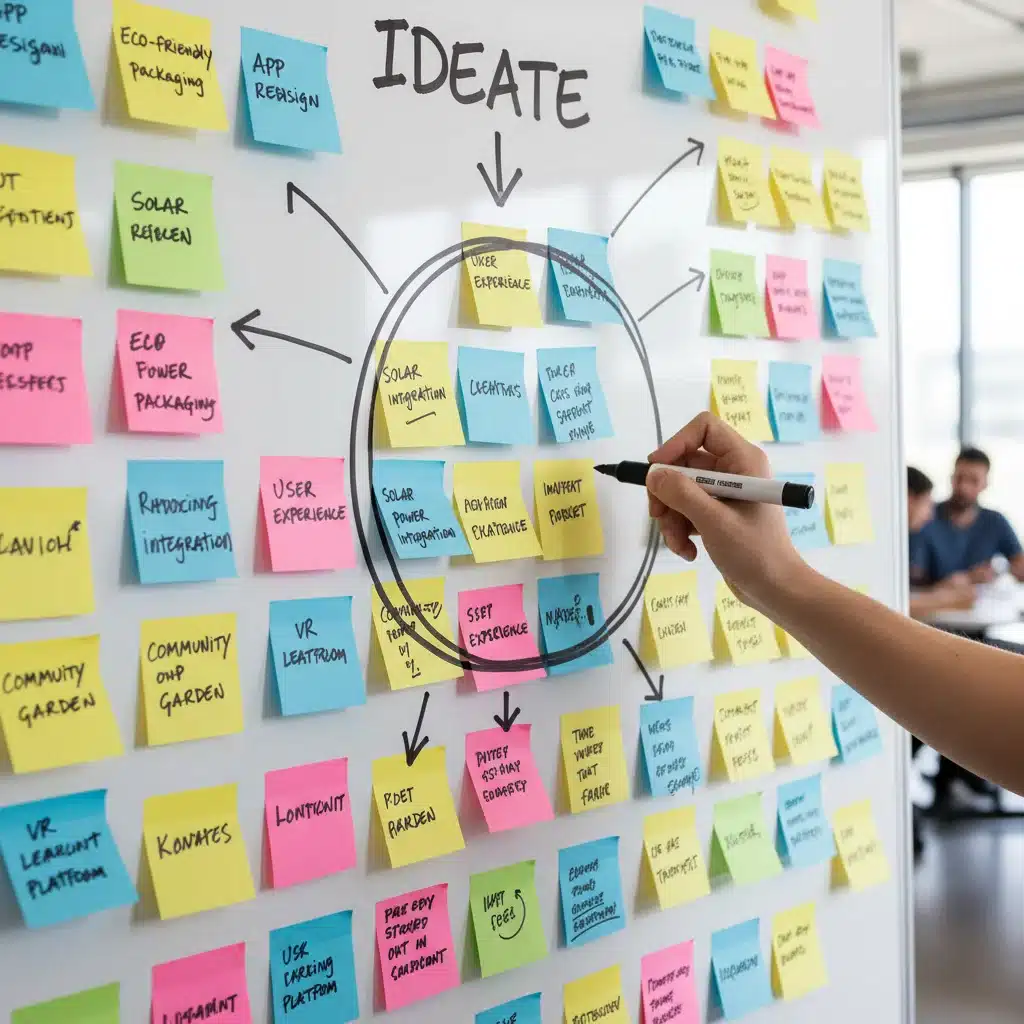
Example for US Professionals: Continuing with the social media engagement problem, the team would brainstorm ideas. Instead of just “new content,” they might use SCAMPER: “How can we substitute our current video format?” “What if we combine live Q&A sessions with user-generated content?” “Can we adapt successful strategies from gaming communities?” This process would yield dozens of diverse ideas, from interactive AR filters to micro-influencer collaborations and AI-personalized content feeds.
Step 3: Evaluate and Select Solutions (Develop)
After generating a plethora of ideas, the next step is to sift through them, evaluate their feasibility and potential impact, and select the most promising ones. This is where convergent thinking comes into play. The goal is to move from a broad range of possibilities to a focused set of actionable solutions.
Techniques for Evaluation and Selection:
- Impact/Effort Matrix: Plot ideas on a matrix with “impact” on one axis and “effort” on the other. This helps prioritize ideas that offer high impact with manageable effort.
- Pros and Cons List: For each promising idea, list its advantages and disadvantages. This simple technique provides a balanced view.
- SCAMPER Method (Applied to Evaluation): Revisit SCAMPER elements, but this time, apply them to refine and strengthen selected ideas, or to identify potential weaknesses.
- Feasibility Analysis: Assess each idea based on resources (time, budget, personnel), technical viability, organizational fit, and potential risks.
- Voting and Ranking: In a group setting, allow team members to vote on their top choices or rank ideas based on predefined criteria.
- Pilot Programs/Prototyping: For more complex or risky ideas, consider developing a small-scale pilot or prototype to test its viability before full implementation.
Example for US Professionals: From the generated ideas for social media engagement, the team would evaluate them. An idea like “launch a complex VR experience” might be high impact but also high effort and cost. An idea like “partner with 5 micro-influencers for authentic content” might be high impact and moderate effort. They would prioritize solutions that align with their budget, timeframe, and strategic objectives, potentially selecting a mix of short-term wins and a few more ambitious projects to prototype.
Step 4: Implement and Learn (Execute)
The final step in the creative problem solving methodology is to put the chosen solution(s) into action and continuously monitor their effectiveness. Implementation is not the end of the process; it’s a new beginning for learning and adaptation. Even the best-laid plans can encounter unforeseen challenges, and a commitment to continuous improvement is key.
Techniques for Implementation and Learning:
- Action Planning: Develop a detailed plan outlining who will do what, by when, and with what resources. Assign clear responsibilities and deadlines.
- Communication Strategy: Inform all relevant stakeholders about the chosen solution and the implementation plan. Transparency fosters buy-in and cooperation.
- Monitoring and Measurement: Establish key performance indicators (KPIs) to track the progress and effectiveness of the implemented solution. Regularly collect and analyze data.
- Feedback Loops: Create mechanisms for gathering feedback from users, customers, or internal teams. This feedback is invaluable for identifying areas for improvement.
- Adaptation and Iteration: Be prepared to adjust the solution based on the feedback and data collected. Creative problem solving is an iterative process; rarely is the first implementation perfect.
- Documentation and Knowledge Sharing: Document the process, the challenges encountered, the solutions implemented, and the lessons learned. This institutional knowledge is crucial for future problem solving.

Example for US Professionals: The marketing team implements their chosen solutions, such as launching micro-influencer campaigns and A/B testing new content formats. They set up analytics dashboards to track engagement rates, reach, and conversions. Weekly meetings are held to review data and gather qualitative feedback from the influencers and internal teams. If a specific content format performs poorly, they quickly pivot and try another, using the lessons learned to refine their strategy. They also document best practices for future campaigns.
Cultivating a Creative Problem-Solving Mindset in 2026
Beyond the steps, fostering a mindset conducive to creative problem solving is paramount for US professionals. This involves a blend of personal attributes and organizational culture.
Embrace Curiosity and Continuous Learning
A curious mind is a fertile ground for creative solutions. Always ask “why” and “what if.” Stay updated on industry trends, emerging technologies, and best practices. In 2026, this means understanding AI’s capabilities, blockchain’s implications, and the nuances of remote collaboration tools. Continuous learning expands your mental toolkit and provides new perspectives for tackling problems.
Challenge Assumptions and Status Quo
Many problems persist because underlying assumptions are never questioned. A creative problem solver dares to challenge the status quo, asking if there’s a fundamentally different, better way of doing things. This requires courage and a willingness to step outside comfort zones.
Foster Collaboration and Diversity
Diverse teams bring diverse perspectives, which is a superpower in creative problem solving. Encourage cross-functional collaboration, listen actively to different viewpoints, and create an inclusive environment where everyone feels safe to contribute unconventional ideas. A marketing professional might find a solution to a logistical problem, and an engineer might offer a fresh perspective on customer service.
Practice Empathy
Understanding the human element behind any problem is crucial. Whether it’s a customer, a colleague, or an end-user, putting yourself in their shoes can reveal critical insights and lead to more user-centered solutions. This is especially vital in customer-facing roles and product development.
Develop Resilience and a Growth Mindset
Not every idea will succeed, and not every solution will work perfectly the first time. Creative problem solving involves experimentation and often failure. A resilient individual views setbacks as learning opportunities, refining their approach rather than giving up. A growth mindset – the belief that abilities can be developed through dedication and hard work – is essential for navigating the iterative nature of problem solving.
Allocate Time for Reflection and Incubation
Sometimes, the best ideas emerge when you step away from the problem. Allow your subconscious mind to work by taking breaks, engaging in unrelated activities, or simply reflecting on the challenge. This “incubation” period can lead to unexpected breakthroughs.
The Impact of Creative Problem Solving on US Professionals and Organizations
The mastery of creative problem solving offers profound benefits for both individuals and organizations across the United States in 2026.
For Individuals:
- Enhanced Career Opportunities: Professionals adept at creative problem solving are highly valued. They are often sought after for leadership roles, innovation initiatives, and strategic positions.
- Increased Job Satisfaction: Solving complex problems in innovative ways can be incredibly rewarding, leading to a greater sense of accomplishment and purpose.
- Adaptability and Resilience: The ability to creatively tackle new challenges builds confidence and makes individuals more adaptable to change and resilient in the face of adversity.
- Personal Growth: Engaging in creative problem solving stretches cognitive abilities, encouraging continuous learning and intellectual development.
For Organizations:
- Innovation and Competitive Advantage: Companies that foster creative problem solving are better equipped to innovate, develop groundbreaking products and services, and stay ahead of competitors.
- Improved Efficiency and Productivity: Creative solutions often lead to more streamlined processes, reduced costs, and optimized resource utilization.
- Enhanced Employee Engagement: Empowering employees to contribute to problem solving fosters a sense of ownership and engagement, leading to a more motivated workforce.
- Stronger Organizational Culture: A culture that values creative problem solving encourages open communication, collaboration, and a willingness to experiment, leading to a more dynamic and adaptable organization.
- Better Risk Management: Proactive creative problem solving can identify potential risks before they escalate, allowing organizations to mitigate them effectively.
Overcoming Barriers to Creative Problem Solving
Despite its clear benefits, several barriers can hinder effective creative problem solving. Recognizing and addressing these is crucial.
- Fear of Failure: Many individuals and organizations are risk-averse, fearing that unconventional ideas might fail. Creating a safe environment where experimentation is encouraged, and failure is viewed as a learning opportunity, is vital.
- Fixed Mindset: The belief that one’s abilities are static can prevent individuals from exploring new approaches. Promoting a growth mindset helps overcome this.
- Time Constraints: In fast-paced environments, there’s often pressure to find quick fixes rather than investing time in deeper creative exploration. Allocating dedicated time for problem definition and ideation is essential.
- Lack of Diverse Perspectives: Homogeneous teams can lead to groupthink, limiting the range of ideas. Actively seeking diverse input can counteract this.
- Information Overload/Underload: Too much unfiltered information can be overwhelming, while too little can lead to ill-informed decisions. Developing skills in information synthesis and critical evaluation is important.
- Organizational Silos: Departments working in isolation can miss opportunities for cross-functional creative solutions. Breaking down silos fosters a more holistic approach to problem solving.
For US professionals in 2026, actively working to dismantle these barriers within their teams and organizations will be a key determinant of success. It requires leadership commitment, cultural shifts, and continuous training in creative thinking techniques.
Conclusion: Embracing Creative Problem Solving for a Future-Ready Professional Life
The ability to engage in effective creative problem solving is more than just a skill; it’s a strategic imperative for US professionals in 2026 and beyond. By systematically applying the 4-step methodology – Define, Ideate, Develop, and Execute – you can transform complex challenges into pathways for innovation and growth. This structured approach, combined with a mindset that embraces curiosity, collaboration, and resilience, will equip you to navigate the complexities of the modern professional world with confidence and ingenuity.
As industries continue to evolve at an unprecedented pace, the demand for individuals who can not only identify problems but also conceive and implement novel solutions will only intensify. Invest in developing your creative problem solving capabilities, and you will not only secure your own professional future but also contribute significantly to the success and adaptability of your organization. Start applying these principles today, and become a driving force of innovation in your field.