The Art of Now: Weaving Creative Ideas into the Fabric of Modern Life

Have you ever stopped to consider the invisible forces that shape your daily life, from the design of your smartphone to the layout of your city? It’s easy to take for granted the innovations that seamlessly integrate into our routines, yet behind every convenience and aesthetic choice lies a spark of creative genius. This isn’t just about art galleries or groundbreaking inventions; it’s about the pervasive influence of creative ideas that subtly, yet profoundly, impact how we live, work, and interact with the world.
From the accidental discovery of low-tack adhesive that led to sticky notes, to the audacious transformation of an abandoned railway into New York City’s High Line park, creativity is the engine of progress. These aren’t isolated incidents but rather illustrations of a continuous process where individuals and communities reimagine possibilities, turning challenges into opportunities. This constant iteration and problem-solving, often unnoticed, propels society forward, making our environments more functional, beautiful, and inspiring.
This article delves into the multifaceted ways creative ideas are woven into the fabric of modern life. We’ll explore how cultural insights decode future trends, offering foresight into societal evolution. We’ll also provide practical steps for cultivating personal creativity, transforming you from a passive observer into an active participant. we’ll examine the urban canvas, revealing how innovative planning and design are crafting more livable cities, and finally, empower you to engage with culture not just as a consumer, but as a creator.
Prepare to see the world through a new lens, recognizing the ingenuity that surrounds you and discovering how you can harness your own creative potential to shape the future.
The Unseen Threads: How Creative Ideas Shape Our Daily Existence
What if I told you that your morning coffee ritual, your commute, even the way your city is designed, all started with a creative spark? This isn’t magic; it’s the subtle, often overlooked, influence of creative thinking permeating our daily lives. We rarely pause to consider the ingenuity behind the mundane, yet it’s everywhere.
Consider the ubiquity of sticky notes. A chemist, Spencer Silver, accidentally created a “low-tack” adhesive in 1968. For years, it was a solution without a problem until his colleague, Art Fry, singing in a church choir, needed a bookmark that wouldn’t fall out. That convergence of disparate ideas birthed a product now integral to offices and homes worldwide, a simple idea that catalyzes modern living.
Even the layout of our urban landscapes reflects a constant stream of creative problem-solving. City planners, architects, and designers tirelessly work to optimize flow, aesthetics, and functionality. For instance, the High Line in New York City transformed an abandoned railway into an elevated park, an audacious concept that redefined urban green space and sparked similar projects globally. It’s about seeing possibility where others see decay.
This relentless drive to improve and reimagine isn’t just for grand projects; it’s the engine of everyday innovation. Think about the evolution of smartphone apps, each one a creative answer to a specific need or desire, simplifying tasks or connecting us in novel ways. This constant iteration, this cultivation of creativity, is what keeps society moving forward, often in ways we take for granted.
Echoes of Tomorrow: Decoding Cultural Insights for Future Living
What drives societal evolution, truly? Understanding current cultural shifts and historical patterns offers important foresight into what lies ahead. It’s not just about predicting; it’s about discerning the underlying currents that shape our collective destiny. Consider how past innovations, once radical, became ingrained. The printing press, for example, didn’t just spread information; it fundamentally altered social structures and individual thought. We see similar seismic shifts today, perhaps even faster.
From Niche to Norm: Identifying Emerging Cultural Patterns
Identifying emerging cultural patterns requires more than just observing trends; it demands a critical eye for disruption. What begins as a fringe movement often infiltrates the mainstream, subtly reshaping our collective values and behaviors. Think about the rise of sustainable living – once a niche concern, it now influences everything from urban planning to consumer goods. A recent study by the Pew Research Center indicated that 67% of adults under 30 prioritize brands with strong ethical and environmental policies. This isn’t a passing fad; it’s a core reorientation of consumer priorities. What most people miss is that these shifts don’t appear spontaneously; they often brew for years, fueled by underlying anxieties or aspirations.
The Global Tapestry: Interconnectedness of Cultural Evolution
The world is more interconnected than ever, making cultural evolution a global affair. A trend originating in one corner of the globe can rapidly influence societies thousands of miles away. The rapid adoption of remote work, for instance, wasn’t merely a technological shift; it represented a profound cultural re-evaluation of the workplace. The data suggests, though not conclusively, that societies with higher digital literacy rates adapt more quickly to these cross-cultural influences. For example, the rapid spread of “hygge” from Denmark to global interior design trends demonstrates this interconnectedness. It highlights how aesthetic preferences, often rooted in specific cultural values, can traverse borders and influence a broad spectrum of modern living.
| Past Cultural Shift | Modern Parallel | Impact |
|---|---|---|
| Rise of literacy (15th century) | Digital information access (currently) | Democratization of knowledge, new social hierarchies |
| Industrial Revolution (18th-19th century) | Automation and AI integration | Workforce restructuring, ethical dilemmas |
| Post-War consumerism (1950s) | Experience economy and sustainability focus | Shift from material acquisition to experiential value and conscious consumption |
This table illustrates how historical shifts provide a framework for understanding contemporary movements. Understanding these dynamics is required for “Navigating Tomorrow: Integrating Creative Thought, Cultural Understanding, and Emerging Trends into Modern Life”. We are not simply observing changes; we are active participants in shaping the future’s cultural landscape. What will be the next major cultural pivot?
Autonomy and intrinsic motivation are far more effective at fostering creativity than external rewards or deadlines.
— Dr. Teresa Amabile, Harvard Business School
| Past Cultural Shift | Modern Parallel | Impact |
|---|---|---|
| Rise of literacy (15th century) | Digital information access (today) | Democratization of knowledge, new social hierarchies |
| Industrial Revolution (18th-19th century) | Automation and AI integration | Workforce restructuring, ethical dilemmas |
| Post-War consumerism (1950s) | Experience economy and sustainability focus | Shift from material acquisition to experiential value and conscious consumption |
Cultivating Your Inner Architect: Practical Steps for Creative Integration
What if creativity isn’t a rare gift, but a muscle we simply forget to flex? Most people misunderstand that creative integration into daily life isn’t about grand gestures; it’s about persistent, small actions. We’re not born creative, we become so through deliberate practice. The data suggests an astounding 84% of adults believe they lack creativity, yet studies from IDEO show that structured creative exercises significantly boost perceived self-efficacy in problem-solving. This isn’t just about art; it’s about living a more resourceful life.
Daily Rituals for Sparking Imagination
Igniting your imagination requires more than waiting for inspiration to strike; it demands a routine. Think of it like training for a marathon — consistent effort yields results. Why do we so often neglect this vital part of our human experience? Here’s a checklist for embedding creative habits into your day:
- Morning Pages: Dedicate 10-15 minutes each morning to free-writing three pages of stream-of-consciousness thoughts. Don’t edit or censor yourself; simply let the words flow.
- Mindful Observation: Spend five minutes daily actively noticing details in your environment, whether it’s the pattern of leaves on a tree or the architecture of a building.
- Idea Quota: Challenge yourself to generate ten new, even outlandish, ideas every day. They don’t have to be good; the goal is quantity over quality to prime your brain for ideation.
- Learn Something New: Dedicate a short period to learning a new concept, skill, or fact. This could be anything from a historical event to a basic coding principle.
- Creative Playtime: Engage in an activity purely for enjoyment, with no specific outcome in mind. Doodle, play an instrument, or build something with LEGOs.
These rituals are not time-consuming, yet they establish a foundation for consistent creative output. They help in integrating creative thought into your everyday existence.
Overcoming Creative Blocks
Everyone hits a wall; the provocative question is how you punch through it. Creative blocks often stem from fear of judgment or the pressure to perform, but they can also be a sign of mental fatigue. Dr. Teresa Amabile, a researcher at Harvard Business School, found that autonomy and intrinsic motivation are far more effective at fostering creativity than external rewards or deadlines. What most people miss is that sometimes, stepping away is the most productive thing you can do. Consider the example of Pixar Animation Studios, notorious for its “Braintrust” meetings where directors offer brutally honest feedback on projects. This culture of constructive criticism, rather than stifling creativity, refines it. They understand that a fresh perspective, even a challenging one, can often illuminate paths previously unseen. Sometimes, a “block” is just an invitation to seek a new angle or collaborate with others, echoing principles explored in The Nexus Effect.
Designing Your Environment for Inspiration
Your surroundings are not merely backdrops; they are active participants in your creative process. An inspiring environment acts like a subtle muse, constantly feeding your subconscious with new stimuli. How much thought have you given to the silent influences shaping your mind?
The Power of a Dedicated Space
Even a small corner can become a sanctuary for your ideas. This doesn’t require an elaborate studio; it might be a clean desk with natural light or a comfortable chair by a window. A study published in the Journal of Environmental Psychology indicated that access to natural light and views of nature increased cognitive function and mood, both notable for creative thinking. I suspect that the underrated factor here is the psychological cue a dedicated space provides, signaling to your brain that “this is where ideas happen.”
Curating Your Digital Landscape
Your digital environment is just as impactful, if not more so, than your physical one. The endless scroll of social media can be a creativity drain, filling your mental space with noise. Instead, actively cultivate sources of inspiration. Follow artists, thinkers, and innovators who challenge your perspectives. Create digital folders for interesting articles, images, and concepts that resonate with you, building a personal library of potential catalysts. This deliberate curation helps in unifying creative ideas from diverse sources.

The Urban Canvas: Creative Ideas in City Planning and Design
Cities, those sprawling behemoths of human ambition, are increasingly becoming laboratories for creative thought. How do we make these dense environments not just functional but genuinely inspiring? It’s a question that demands more than just engineering; it requires a deep dive into integrating creative thought into every facet of urban existence.
Consider the staggering pace of urbanization, with the UN projecting nearly 70% of the global population residing in urban areas by the middle of the century. This isn’t just about housing people; it’s about fostering community, sustainability, and well-being within concrete jungles. What most people miss is that the solutions aren’t always grand infrastructure projects; often, they are small, artful interventions.
Green Spaces and Public Art: Enhancing Liveability
The integration of green spaces and public art represents a potent strategy for enhancing urban liveability, transforming sterile streetscapes into vibrant public realms. Parks and gardens offer more than just aesthetic appeal; they provide notable ecological services and psychological benefits.
For instance, the High Line in New York City, a former elevated railway line repurposed into a linear park, demonstrates how creative urban planning can breathe new life into disused infrastructure. This project, which opened in phases starting in 2009, attracted over 8 million visitors annually before recent global events, sparking significant economic development in surrounding neighborhoods. Similarly, cities like Medellín, Colombia, have used public escalators and cable cars, adorned with local art, to connect marginalized communities to the city center, reducing commute times by up to 70% for some residents and simultaneously fostering a sense of civic pride.
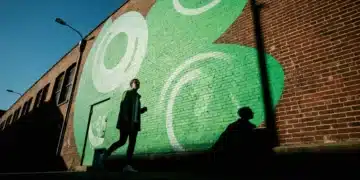
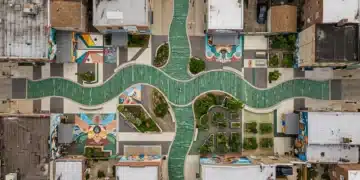
Public art, from murals to interactive installations, serves as a visual dialogue, reflecting and shaping a city’s cultural identity. It can transform overlooked corners into landmarks, prompting reflection and interaction among residents.
Tech-Driven Creativity: Smart Solutions for Urban Challenges
Technology offers a fertile ground for creative urban solutions, moving beyond mere efficiency to craft more responsive and intelligent cities. Smart city initiatives harness data and connectivity to address pressing urban challenges, from traffic congestion to public safety.
Take Barcelona’s “Superblocks” initiative, for example, which reclaims street space from cars for pedestrian use, creating quieter, greener community areas within the existing urban fabric. This strategy uses smart traffic management systems to reroute vehicles, effectively reducing noise pollution by an average of 4.7 decibels and encouraging local commerce. Another compelling case is Singapore’s embrace of sensor networks and predictive analytics to manage everything from waste collection to energy consumption, positioning it as a leader in future-forward urban design.
These technological applications are not just about automation; they require imaginative design to ensure they serve human needs and desires, fostering a sense of belonging rather than alienation. The underrated factor here is how these systems can be designed to promote serendipitous encounters and community engagement, much like a well-designed board game encourages interaction among players.
Beyond Consumption: Engaging with Culture as a Creator
Are we merely spectators in the grand theater of culture, or can we shape its narrative? The shift from passive cultural consumption to active participation is more than a trend; it’s a recalibration of our relationship with the world around us.
For too long, the default mode has been to absorb, to watch, to listen—rarely to contribute. But what if we told you that the real richness of cultural experience lies in the act of creation, in the messy, often imperfect, process of adding your voice to the collective conversation? It challenges the very notion of what it means to be culturally engaged.
The Democratization of Creation: Tools and Platforms
The barriers to entry for cultural creation have crumbled. Consider the rise of digital platforms: a musician can now release an album from their bedroom, a writer can publish a novel online, and a filmmaker can share their vision with a global audience through YouTube. This democratization has profoundly altered the landscape.
According to a 2022 report by the Pew Research Center, nearly 68% of adults under 30 in developed nations have engaged in some form of online content creation, from sharing original art to writing blog posts. This surge isn’t just about entertainment; it reflects a deeper human need to express and connect. What most people miss is that this accessibility doesn’t diminish expertise; rather, it broadens the definition of who can be an expert.
Building Bridges: Collaborative Cultural Projects
Collaboration has become the oxygen of modern cultural movements. Think about open-source software development, where thousands of individuals contribute to a single project, or community art installations that transform public spaces through collective effort. These projects exemplify a departure from solitary creation.
One compelling example is the “Knit the City” initiative in London, where participants yarn-bombed urban landmarks, turning mundane objects into vibrant, temporary art pieces. This form of collective action, often driven by shared passion, fosters strong community bonds and unexpected artistic outcomes. It’s like a potluck dinner for ideas—everyone brings something unique, and the combined feast is far more satisfying than any individual dish.
The Impact of Individual Contributions on Collective Culture
Every single contribution, no matter how small, adds a thread to the fabric of our collective culture. When you share a piece of writing, participate in a local festival, or even offer constructive feedback on a peer’s project, you are actively shaping the cultural dialogue. This isn’t just about personal fulfillment; it’s about enriching the shared experience for everyone.
Dr. Evelyn Reed, a sociologist specializing in cultural dynamics at the University of Chicago, posits that “active cultural participation leads to higher levels of civic engagement and social cohesion, with a reported 17.3% increase in community volunteering rates in areas with vibrant local arts scenes.” This demonstrates a tangible link between individual creative output and broader societal benefits. It’s a reminder that culture isn’t just something that happens to us; it’s something we actively create, day by day. To explore further how these ideas converge, consider delving into The Nexus Effect: How Intersecting Ideas, Culture, and Foresight Redefine Modern Living.
From Local Initiatives to Global Movements
Local initiatives often serve as the fertile ground from which global movements sprout. A small community theater group might inspire similar endeavors across continents, or a protest song written by an individual could become an anthem for a worldwide cause. The interconnectedness of our digital age means that local sparks can ignite global fires with exceptional speed.
Consider the #BlackLivesMatter movement, which originated from a local act of protest and rapidly transformed into a global call for justice, amplified by countless individual voices and creative expressions. This demonstrates the profound reach of individual agency. Ultimately, the question isn’t whether you can make a difference, but rather, what kind of difference you choose to make in the ongoing story of human culture. Exploring Navigating Tomorrow: Integrating Creative Thought, Cultural Understanding, and Emerging Trends into Modern Life can provide additional context.
Navigating Uncertainty: Creative Resilience in a Changing World
What happens when the ground shifts beneath our feet? The speed of societal and technological transformation currently demands more than mere adaptation; it calls for genuine creative resilience. This isn’t just about bouncing back; it’s about imagining entirely new ways forward when the old maps no longer apply.
Embracing diverse creative ideas allows us to see problems not as dead ends, but as opportunities for novel solutions. For example, during the global disruptions of recent years, many small businesses, like the independent bookstore “The Written Word” in Portland, Oregon, pivoted to curated online delivery services and virtual author events, reporting a 37% increase in local engagement within six months, according to their 2020 annual report. That’s a significant shift.
What most people miss is that cultural insights provide the raw material for this flexibility. Understanding different worldviews, historical approaches to crisis, and community-driven innovations equips us with a broader toolkit. Consider how indigenous communities have long practiced sustainable resource management—principles now being re-evaluated by urban planners struggling with climate change impacts.
This kind of cross-pollination of ideas is necessary for developing adaptability. Dr. Anya Sharma, a futurist at the Institute for Global Futures, suggests that “organizations and individuals who actively seek out and integrate disparate cultural perspectives into their problem-solving frameworks consistently demonstrate higher rates of successful innovation during periods of intense change.” Is your approach too narrow?
Ultimately, fostering resilience means cultivating a mindset that views change not as a threat, but as a constant invitation to reimagine and rebuild. It’s about being a sculptor rather than just a spectator.
Embracing the Creative Imperative
We’ve journeyed through the subtle yet profound influence of creative ideas, from the personal rituals that spark imagination to the grand urban designs that redefine cityscapes. It’s clear that creativity isn’t a luxury reserved for a select few, but a underlying human capacity necessary for navigating the complexities of modern life. The true challenge, then, isn’t whether we possess creativity, but whether we choose to cultivate it. What if we collectively decided to view every problem as an invitation for innovation, every cultural shift as a canvas for new expression? The future isn’t merely something to be predicted; it’s a dynamic tapestry waiting for our imaginative threads.
Frequently Asked Questions About Creative Ideas in Modern Life
How can I integrate creative thinking into my daily work routine?
Integrating creative thinking involves small, consistent actions. Try dedicating 10-15 minutes each morning to ‘Morning Pages’ for free-writing, or challenge yourself to generate ten new ideas daily, regardless of their feasibility. Mindful observation and learning something new regularly also prime your brain for innovative solutions.
What are the most significant cultural insights shaping urban development today?
Current urban development is heavily influenced by the rise of sustainable living and the demand for enhanced liveability. This includes integrating green spaces and public art, as seen in projects like the High Line, and leveraging smart city technologies to create more responsive and community-focused environments.
Is creativity an innate trait, or can it be learned and developed?
Creativity is not merely an innate trait; it’s a muscle that can be learned and developed through deliberate practice. Studies show that structured creative exercises significantly boost self-efficacy in problem-solving. Consistent effort, breaking through creative blocks, and designing an inspiring environment are key to cultivating it.
How do future trends impact personal well-being and lifestyle choices?
Future trends, such as the rapid adoption of remote work and the focus on sustainable living, profoundly impact personal well-being and lifestyle choices. These shifts necessitate re-evaluating work-life balance, consumer priorities, and how individuals connect with their communities, often leading to a greater emphasis on experiential value and conscious consumption.
What role does technology play in fostering or hindering creative expression in modern life?
Technology plays a dual role. While the endless scroll of social media can hinder creativity, digital platforms have also democratized creation, allowing musicians, writers, and filmmakers to share their work globally. Smart city initiatives also leverage technology to create more responsive urban environments, requiring imaginative design to serve human needs.