Unlocking Space: Top 3 Commercial Opportunities for US Businesses by 2030

The cosmos, once the exclusive domain of government agencies and scientific endeavors, is rapidly transforming into a vibrant frontier for commercial enterprise. As technology advances and the cost of accessing space decreases, a new era of commercial space opportunities is emerging, promising unprecedented economic growth and innovation. For U.S. businesses, the next decade, leading up to 2030, presents a critical window to capitalize on these burgeoning markets. This article delves into the top three commercial space opportunities for U.S. businesses, exploring their potential financial impact, the technological drivers, and the strategic considerations for engaging in this exciting new economy.
The global space economy is already a formidable force, valued at over $400 billion and projected to surpass $1 trillion by 2040. Much of this growth is fueled by the private sector, which is innovating at a pace previously unseen. From advanced satellite services to daring ventures in lunar and Martian exploration, the scope of commercial activities is expanding exponentially. For U.S. businesses, this isn’t just about launching rockets; it’s about developing new technologies, creating novel services, and establishing sustainable economic ecosystems beyond Earth. Understanding these commercial space opportunities is crucial for any enterprise looking to diversify, innovate, and secure a leading position in the 21st-century economy.
The Dawn of a New Space Economy: Why Now?
Several converging factors are driving the rapid expansion of commercial space opportunities. Firstly, significant reductions in launch costs, primarily due to reusable rocket technology pioneered by companies like SpaceX, have made space far more accessible. What once cost hundreds of millions of dollars now costs tens of millions, opening the door for smaller companies and more frequent missions. Secondly, miniaturization of satellites, coupled with advancements in artificial intelligence and data processing, has led to a proliferation of small satellites, or CubeSats, capable of performing complex tasks at a fraction of the cost of traditional satellites.
Furthermore, government agencies like NASA are increasingly partnering with private companies, shifting from a primary role as operators to facilitators and purchasers of services. This public-private partnership model stimulates innovation and allows businesses to take the lead in developing new capabilities. The geopolitical landscape also plays a role, with nations recognizing the strategic and economic importance of space dominance, fostering an environment ripe for investment and innovation in commercial space opportunities.
The financial impact of these trends is staggering. Investment in space companies has surged, with venture capital pouring billions into startups focused on everything from asteroid mining to space tourism. This influx of capital is accelerating technological development and expanding the market for space-related goods and services. U.S. businesses are particularly well-positioned to leverage these trends, given the nation’s strong foundation in technology, entrepreneurship, and a supportive regulatory environment. The next decade will see these nascent industries mature, offering substantial returns for early adopters and innovative players.
Opportunity 1: Advanced Satellite Services and Earth Observation
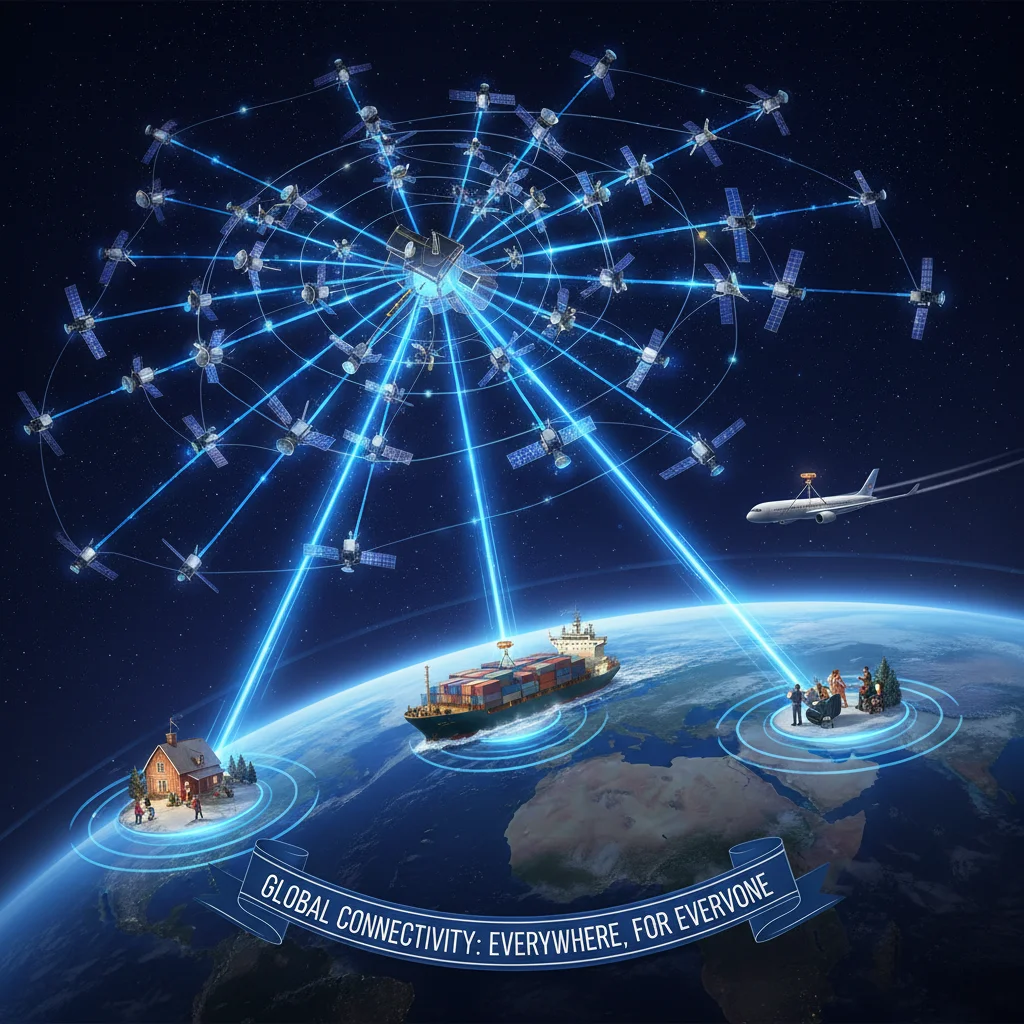
One of the most immediate and impactful commercial space opportunities lies in the realm of advanced satellite services and Earth observation. While satellite communication has been a cornerstone of the space industry for decades, the capabilities and applications are evolving dramatically. The deployment of mega-constellations, such as Starlink and OneWeb, is revolutionizing global internet connectivity, especially in underserved rural and remote areas. This isn’t just about providing basic internet; it’s about enabling high-speed, low-latency broadband critical for industries like precision agriculture, autonomous vehicles, and remote education and healthcare.
The financial potential here is enormous. The satellite broadband market alone is projected to reach tens of billions of dollars annually by 2030. U.S. businesses can participate not only as service providers but also as developers of ground infrastructure, user terminals, and specialized applications that leverage this ubiquitous connectivity. Think about the data analytics companies that can process the vast amounts of information flowing through these networks, or the cybersecurity firms needed to protect this critical infrastructure.
Beyond communication, Earth observation satellites are becoming increasingly sophisticated. High-resolution imagery, hyperspectral data, and synthetic aperture radar (SAR) are providing unprecedented insights into our planet. These data streams are invaluable for a multitude of sectors: environmental monitoring (tracking climate change, deforestation, water resources), urban planning, disaster response, defense intelligence, and even financial markets (monitoring global supply chains, agricultural yields). Companies specializing in data collection, processing, and analysis will find a boundless market. The ability to provide real-time, actionable intelligence from space is a powerful differentiator.
For U.S. businesses, this means investing in advanced sensor technology, developing sophisticated AI algorithms for data interpretation, and building platforms that make this data accessible and useful to a broad range of clients. The demand for such services is global, offering significant export potential. Furthermore, the integration of satellite data with other forms of data (e.g., IoT sensors, drone footage) creates even richer insights, fostering new business models and services. The competitive edge will go to those who can not only collect data but also transform it into valuable, decision-driving information.
Opportunity 2: In-Space Manufacturing and Resource Utilization
Perhaps one of the most futuristic yet rapidly approaching commercial space opportunities is in-space manufacturing and resource utilization (ISRU). Historically, everything launched into space had to be built on Earth, a process that is incredibly expensive and constrained by launch vehicle size and weight limitations. The ability to manufacture in space, using resources found in space, promises to revolutionize how we operate beyond Earth.
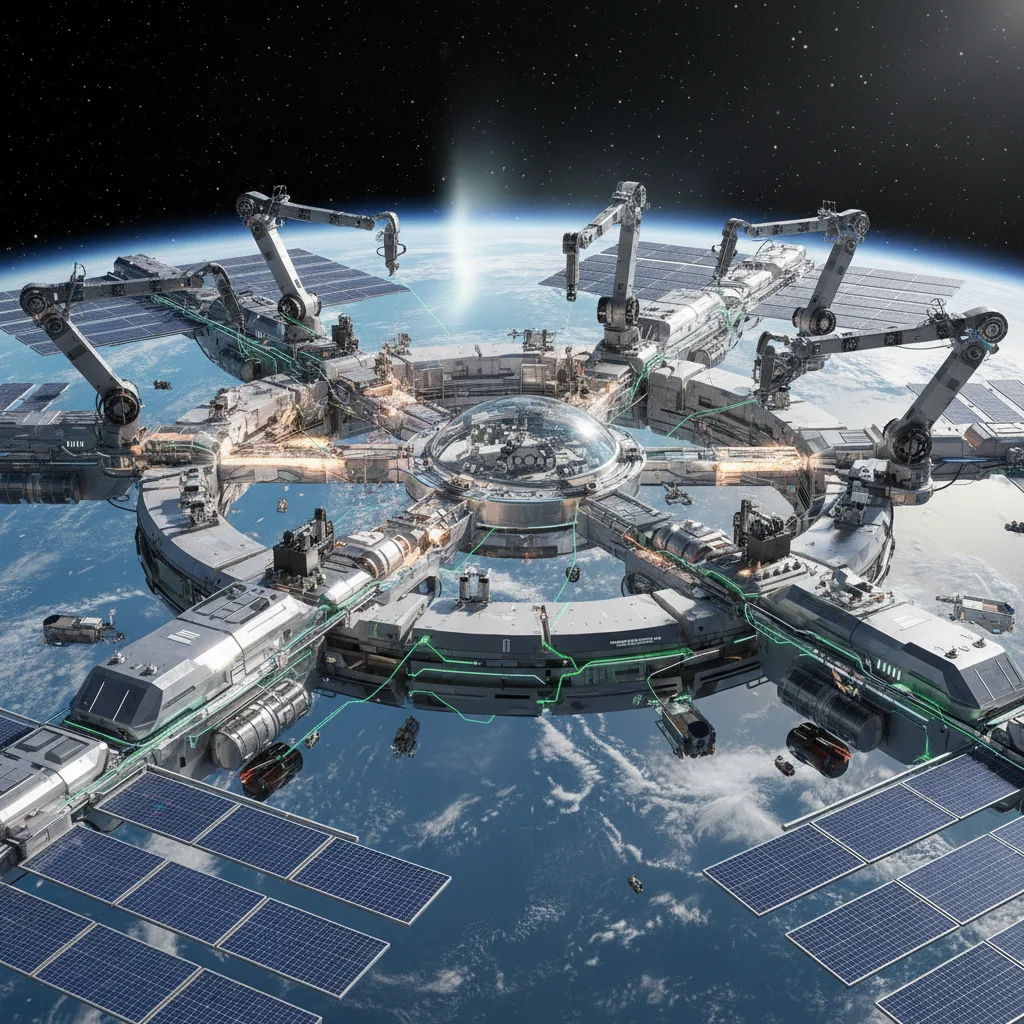
In-space manufacturing can range from 3D printing spare parts for satellites and space stations to constructing large structures, such as solar power arrays or habitats, directly in orbit. This eliminates the need to launch fully assembled components, drastically reducing costs and enabling the creation of much larger and more complex structures than currently possible. Imagine a future where components for a new satellite are printed on demand in orbit, or where entire space stations are assembled from modules fabricated in microgravity. The implications for mission flexibility, cost-effectiveness, and capability are profound.
The financial impact of in-space manufacturing is difficult to quantify precisely but is projected to be immense. It will enable entirely new industries, from orbital construction companies to firms specializing in advanced materials development for the space environment. Early movers in this sector will establish critical intellectual property and infrastructure, positioning themselves as leaders in a truly extraterrestrial industrial revolution. This opportunity extends to the development of autonomous robotics, specialized additive manufacturing techniques for zero-g, and advanced materials science.
Complementing in-space manufacturing is resource utilization. This involves extracting and processing raw materials from celestial bodies like the Moon, asteroids, or even Mars. The most immediate and often discussed resource is water ice, which can be broken down into hydrogen and oxygen to produce rocket fuel. This would enable spacecraft to refuel in orbit or at lunar depots, making deep-space missions more feasible and less dependent on Earth-launched propellant. Beyond water, asteroids contain valuable metals and minerals that could eventually be extracted and used for construction or manufacturing, both in space and potentially on Earth.
While asteroid mining might seem like science fiction, significant groundwork is being laid. Companies are developing technologies for prospecting, extraction, and processing in the harsh vacuum of space. U.S. businesses with expertise in mining, robotics, materials science, and chemical engineering are uniquely positioned to enter this market. The economic benefits would be twofold: reducing the cost of space operations by providing on-demand resources and potentially introducing new, valuable materials into the global economy.
Opportunity 3: Space Tourism and Commercial Human Spaceflight
The allure of space has captivated humanity for generations, and now, commercial space tourism and human spaceflight are transitioning from aspiration to reality. This sector represents a unique blend of high-tech engineering and luxury experiential travel, offering significant commercial space opportunities for U.S. businesses.
Companies like Virgin Galactic and Blue Origin are already offering suborbital flights, providing paying customers with a brief but unforgettable experience of microgravity and breathtaking views of Earth. Orbital tourism, while more complex and expensive, is also gaining traction, with companies like Axiom Space planning to build commercial space stations and facilitate private missions to the International Space Station (ISS) and beyond. The demand for these experiences, though currently limited to the ultra-wealthy, is projected to grow as costs decrease and accessibility increases.
The financial impact of space tourism is multifaceted. Beyond the direct revenue from ticket sales, there’s a vast ecosystem of supporting industries. This includes the development of specialized spacecraft and launch vehicles, astronaut training programs, luxury accommodations and logistics for pre- and post-flight experiences, and even space-themed entertainment and educational ventures. U.S. businesses can innovate in spacecraft design, life support systems, astronaut health monitoring, and the creation of unique consumer experiences. Furthermore, the growth of commercial human spaceflight will drive advancements in safety protocols, medical research in microgravity, and the development of new materials and technologies for human habitation in space.
As commercial space stations become a reality, new opportunities will arise for in-orbit research and development, not just for government agencies but for private companies. Pharmaceutical firms, material science laboratories, and even entertainment studios could leverage the microgravity environment for unique experiments or productions. This expands the definition of space tourism beyond just sight-seeing to include commercial activities and scientific endeavors conducted by private citizens.
For U.S. businesses, this means identifying niches within this emerging market. Is it developing advanced environmental control systems for future space hotels? Or perhaps creating bespoke training programs for private astronauts? Or even designing the interior aesthetics and amenities for commercial space habitats? The possibilities are as vast as space itself, and the competitive advantage will go to those who can offer unique, safe, and compelling experiences or essential supporting services.
Navigating the Challenges and Seizing the Future
While the commercial space opportunities are immense, U.S. businesses must also be prepared to navigate significant challenges. The space industry is inherently high-risk, characterized by complex technical hurdles, substantial capital requirements, and a demanding regulatory environment. Cybersecurity concerns are paramount, as critical space infrastructure becomes increasingly interconnected and vulnerable to attack. Furthermore, the issue of space debris, a growing problem, requires innovative solutions for tracking, mitigation, and removal.
To succeed, U.S. businesses should consider several strategic approaches. Firstly, fostering strong partnerships between government agencies, established aerospace companies, and innovative startups is crucial. Collaboration can mitigate risk, share resources, and accelerate development. Secondly, investing in robust research and development, particularly in areas like advanced propulsion, autonomous systems, and sustainable space operations, will be key to maintaining a competitive edge. Thirdly, advocating for clear and supportive regulatory frameworks that encourage innovation while ensuring safety and environmental responsibility is vital.
Education and workforce development are also critical. As the space industry expands, there will be an increasing demand for skilled engineers, scientists, technicians, and even space lawyers and economists. U.S. businesses can play a role in developing these talent pipelines through internships, educational programs, and partnerships with academic institutions.
The financial implications of these opportunities are not just about direct revenue from space activities. The innovations driven by the space industry often have significant terrestrial spin-offs. Technologies developed for space, from advanced materials to miniaturized electronics and AI algorithms, frequently find applications in other sectors, boosting economic growth across the board. Investing in space is, in many ways, investing in the future of technology and innovation on Earth.
By 2030, the landscape of the space industry will have transformed dramatically. U.S. businesses that strategically position themselves within these emerging commercial space opportunities will not only reap substantial financial rewards but also contribute to a new era of human ingenuity and exploration. The future is in space, and the time for American enterprise to lead the way is now.
Conclusion: A Trillion-Dollar Horizon Awaits
The commercial space sector is no longer a niche market; it is a burgeoning economic powerhouse, ripe with transformative commercial space opportunities for U.S. businesses. By 2030, the landscape will be defined by pervasive advanced satellite services, the beginnings of in-space manufacturing and resource utilization, and a burgeoning space tourism industry. Each of these areas represents not just a chance for financial gain but an opportunity to shape the future of humanity’s presence beyond Earth.
The convergence of reduced launch costs, technological advancements, and supportive government policies has created an unprecedented environment for private sector growth. U.S. businesses are uniquely positioned to leverage their innovative spirit and technological prowess to capture significant market share in these emerging domains. Whether it’s connecting the unconnected through satellite internet, building the infrastructure for an extraterrestrial economy, or fulfilling the age-old dream of space travel for the masses, the pathways to success are diverse and exciting.
Embracing these commercial space opportunities requires foresight, strategic investment, and a willingness to navigate complex challenges. However, the potential rewards—both economic and societal—are immense. The next decade will be pivotal in establishing the frameworks and technologies that will define the space economy for generations to come. For U.S. businesses, the message is clear: the future is in space, and the time to act is now to secure a leading role in this trillion-dollar horizon.