Augmented Reality’s Enterprise Future: 5 U.S. Use Cases Driving a Projected $10 Billion Market by 2029

The landscape of enterprise operations is undergoing a profound transformation, driven by innovative technologies that promise to enhance efficiency, safety, and productivity. Among these, Augmented Reality (AR) stands out as a particularly disruptive force, poised to reshape how businesses operate across various sectors. The U.S. enterprise AR market is not just growing; it’s exploding, with expert projections estimating a colossal market value of $10 billion by 2029. This exponential growth isn’t merely speculative; it’s underpinned by tangible, impactful use cases that are already demonstrating significant returns on investment for early adopters.
This comprehensive article will delve into the exciting future of enterprise AR, exploring the foundational elements driving its adoption and spotlighting five critical U.S. use cases that are fueling this projected $10 billion market. From manufacturing to healthcare, and from field service to retail, AR is proving to be more than just a novelty; it’s an indispensable tool for the modern enterprise. Understanding these applications is crucial for businesses looking to stay competitive, innovate, and prepare for the next generation of industrial and commercial operations.
The Rise of Enterprise AR: A Paradigm Shift
Augmented Reality, often described as the layering of digital information onto the real world, has evolved far beyond its initial consumer-facing applications like gaming and social media filters. Its true power, and indeed its most significant economic impact, is now being realized within enterprise environments. Unlike Virtual Reality (VR), which immerses users in a completely simulated world, AR keeps users grounded in their physical surroundings while enriching it with contextually relevant digital content. This distinction is vital for enterprise adoption, as it allows workers to remain aware of their physical environment, collaborate effectively, and interact with real-world objects while accessing critical digital data.
Several factors are converging to accelerate the adoption of enterprise AR. Firstly, advancements in hardware, including more comfortable and powerful AR glasses and head-mounted displays, are making the technology more practical for extended professional use. Secondly, the maturation of AR software platforms and development tools has lowered the barrier to entry for businesses, enabling them to create custom AR applications tailored to their specific needs. Thirdly, the increasing demand for remote collaboration, hands-free operation, and data visualization in complex tasks has highlighted AR’s unique capabilities. Finally, the demonstrable ROI in terms of reduced errors, improved training, faster problem resolution, and enhanced operational efficiency is convincing more enterprises to invest heavily in this technology.
The projected $10 billion market in the U.S. by 2029 signifies not just a technological trend but a fundamental shift in how businesses approach productivity, training, maintenance, and customer engagement. This growth is a testament to AR’s versatility and its ability to address a wide array of industrial and commercial challenges. Let’s explore the key use cases that are driving this enterprise AR future.
1. Enhanced Workforce Training and Onboarding
One of the most compelling and immediately impactful applications of enterprise AR is in workforce training and onboarding. Traditional training methods, often involving manuals, videos, or shadowing, can be time-consuming, expensive, and sometimes ineffective, especially for complex machinery or intricate procedures. AR offers a revolutionary alternative, providing immersive, interactive, and hands-on learning experiences that accelerate skill acquisition and improve retention.
Imagine a new technician learning to assemble a sophisticated engine. Instead of flipping through a manual, they wear AR glasses that overlay step-by-step instructions, 3D models of components, and highlighted areas directly onto the physical engine in front of them. This allows for ‘learning by doing’ in a guided, error-proof environment. The trainee can see exactly where each part goes, how it connects, and even receive real-time feedback on their progress. This reduces training time, minimizes errors during the learning phase, and significantly improves the confidence and competency of new hires.
Beyond initial onboarding, AR-powered training is invaluable for upskilling existing employees on new equipment or procedures. Companies can deploy standardized AR training modules across multiple locations, ensuring consistency and quality regardless of geographical constraints. This not only streamlines the training process but also contributes to a more skilled and adaptable workforce, a critical asset in rapidly evolving industries. The ability to simulate dangerous or complex scenarios safely in an AR environment further enhances the value proposition, allowing workers to practice critical skills without risk.
The benefits extend to cost savings as well. Reduced travel expenses for trainers, decreased material waste during practical exercises, and faster time-to-proficiency all contribute to a significant return on investment. As businesses increasingly recognize the importance of continuous learning and development, AR-driven training is becoming a cornerstone of modern talent management strategies, firmly cementing its place as a key driver of the enterprise AR future.
2. Remote Assistance and Expert Guidance
In an increasingly globalized and distributed workforce, the ability to provide expert assistance remotely is paramount. Enterprise AR is transforming remote support by allowing experts to guide on-site personnel through complex tasks, regardless of their physical location. This use case has seen a massive surge in adoption, particularly in industries like manufacturing, field service, and maintenance, where specialized knowledge is often concentrated in a few key individuals.
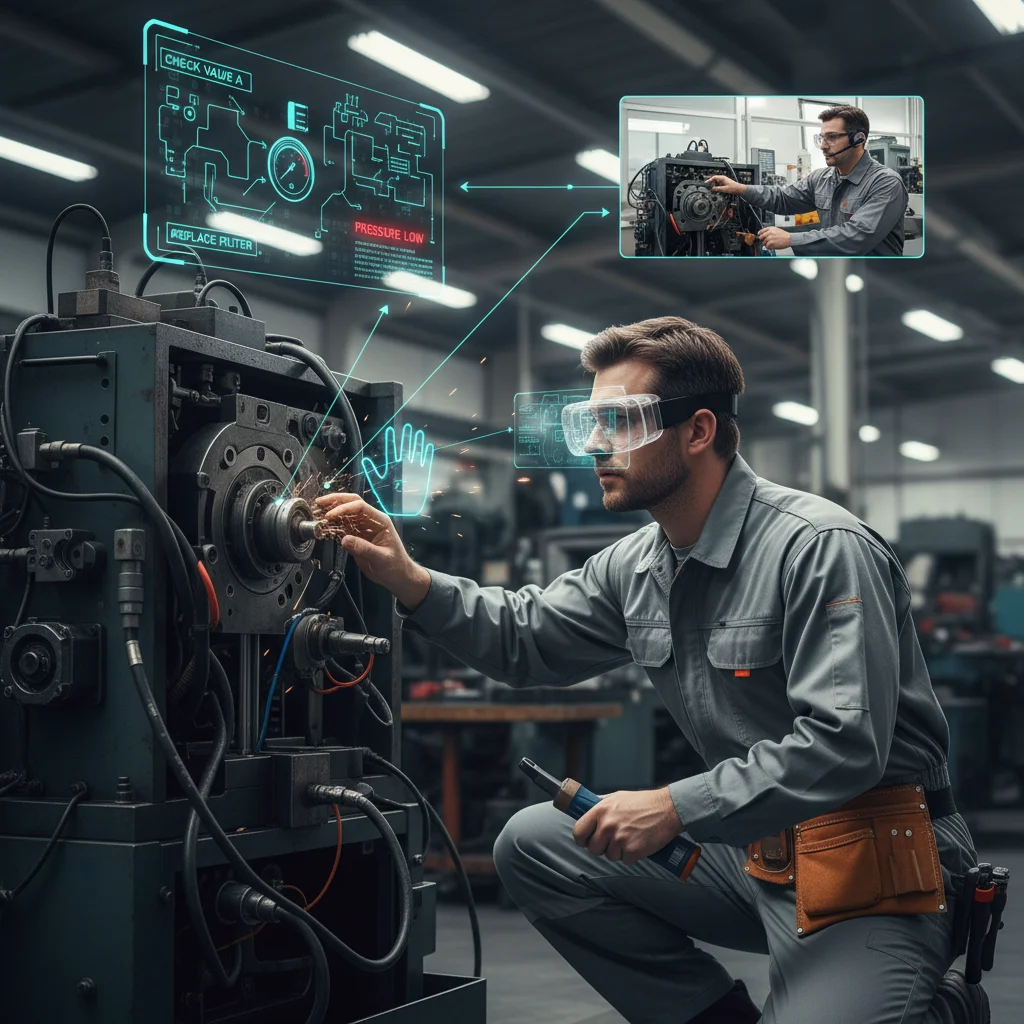
Consider a scenario where a piece of critical machinery breaks down in a remote factory. Instead of waiting for an expert to travel to the site, which can take days and incur significant costs, a local technician can wear AR glasses and connect with a remote expert. The expert can see exactly what the technician sees through the AR headset’s camera feed. They can then overlay digital annotations, arrows, 3D models, and written instructions directly onto the technician’s field of view, guiding them step-by-step through the repair process. This ‘see-what-I-see’ capability, combined with real-time digital guidance, dramatically reduces downtime, improves first-time fix rates, and minimizes the need for costly expert travel.
This application of enterprise AR is particularly powerful for complex repairs, diagnostics, and inspections. It democratizes expertise, making specialized knowledge accessible to a broader workforce. Furthermore, it fosters knowledge transfer, as on-site technicians learn from experts in a practical, real-time setting. The efficiency gains are substantial, leading to improved operational continuity and reduced operational expenditures. As companies continue to seek ways to optimize their support operations and leverage their expert talent more effectively, remote AR assistance stands out as a transformative solution, propelling the growth of the enterprise AR future.
3. Enhanced Manufacturing and Assembly
The manufacturing sector is a prime candidate for enterprise AR adoption, offering immense potential for optimizing assembly lines, improving quality control, and streamlining complex production processes. AR overlays can provide workers with real-time, context-sensitive information directly on their workpieces, significantly reducing errors and boosting productivity.
In modern manufacturing, assembly tasks can be intricate, often involving thousands of components. AR glasses can guide assembly workers through each step of the process, highlighting the correct parts, indicating their placement, and even projecting virtual models onto the physical product. This eliminates the need for paper manuals, reduces cognitive load, and ensures adherence to precise specifications. For instance, in an aerospace manufacturing plant, an AR system could guide a technician through wiring a complex electrical panel, showing exact wire routing and connection points, thereby minimizing the chance of miswiring.
Beyond assembly, AR is revolutionizing quality control and inspection. Inspectors can use AR devices to compare physical products against digital blueprints or CAD models in real-time, instantly identifying deviations or defects. This speeds up the inspection process, increases accuracy, and ensures higher product quality. Predictive maintenance is another area where AR shines. Technicians can use AR to visualize sensor data, thermal readings, or historical performance metrics overlaid onto machinery, allowing them to anticipate potential failures and perform proactive maintenance, thereby reducing unexpected downtime.
The integration of enterprise AR into manufacturing workflows leads to a more efficient, error-free, and adaptive production environment. It empowers workers with the information they need, precisely when and where they need it, driving significant improvements in throughput, quality, and safety. This direct impact on the bottom line makes manufacturing a cornerstone of the projected enterprise AR future.
4. Healthcare: Surgical Precision and Medical Training
The healthcare industry, with its critical need for precision, specialized knowledge, and effective training, is rapidly embracing enterprise AR. From enhancing surgical procedures to revolutionizing medical education, AR is proving to be a game-changer, promising to improve patient outcomes and streamline clinical workflows.
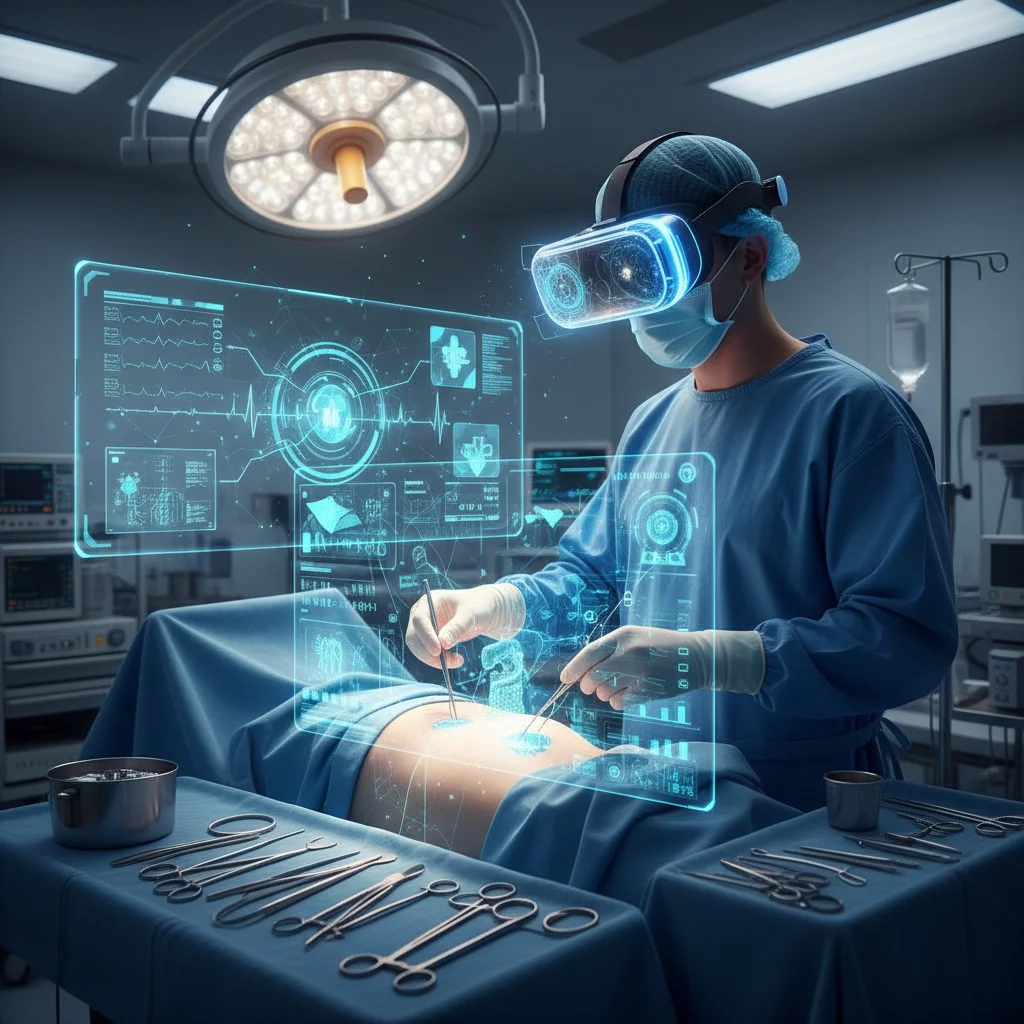
In surgical settings, AR offers surgeons a ‘superpower’ by superimposing critical patient data, 3D anatomical models, and pre-operative scans directly onto the patient’s body during an operation. This provides an augmented view that enhances spatial awareness, improves precision, and can potentially reduce incision sizes and recovery times. For example, in complex orthopedic surgeries, AR can guide surgeons with extreme accuracy for bone alignment or implant placement. In neurosurgery, it can provide a real-time ‘X-ray vision’ of underlying structures, allowing for safer and more precise interventions.
Medical training is another area where AR is making a profound impact. Instead of relying solely on cadavers or expensive physical simulators, medical students can use AR to practice complex procedures on virtual patients, seeing anatomical structures and physiological responses in a highly realistic and interactive manner. This allows for repeated practice, immediate feedback, and the ability to simulate rare or challenging clinical scenarios without risk. Furthermore, AR can be used for patient education, helping individuals visualize their conditions and treatment plans in an engaging and understandable way.
The potential for enterprise AR to enhance diagnostic capabilities, facilitate remote consultations, and even assist in pharmaceutical research is immense. As the technology matures and regulatory frameworks adapt, the integration of AR into healthcare will undoubtedly continue to accelerate, making it a vital component of the enterprise AR future and contributing significantly to the $10 billion market projection.
5. Retail and Logistics: Optimized Operations and Customer Experience
While often associated with industrial settings, enterprise AR also holds substantial promise for the retail and logistics sectors, offering avenues for optimized operations, enhanced customer experiences, and more efficient supply chain management. These applications are crucial for businesses looking to gain a competitive edge in fast-paced markets.
In retail, AR can transform both the customer journey and back-end operations. For customers, AR apps can allow them to virtually ‘try on’ clothes, visualize furniture in their homes before purchase, or receive interactive product information in-store. This creates a more engaging and personalized shopping experience, potentially boosting sales and reducing returns. For store employees, AR can streamline inventory management, helping them quickly locate products in stockrooms or identify items that need restocking by overlaying digital labels and directions onto physical shelves. This increases efficiency and improves customer service by ensuring product availability.
In logistics and warehousing, AR is proving invaluable for improving picking accuracy and speed. Warehouse workers wearing AR glasses can receive visual instructions on their field of view, guiding them directly to the correct shelf location, highlighting the specific items to pick, and even indicating the optimal packing method. This hands-free approach reduces errors, accelerates order fulfillment, and optimizes warehouse layouts. Furthermore, AR can assist in truck loading and unloading, ensuring that cargo is placed and secured correctly, thereby preventing damage and maximizing space utilization.
The ability of enterprise AR to provide real-time, context-aware information to both employees and customers makes it a powerful tool for enhancing operational efficiency and delivering superior service in retail and logistics. As these sectors continue to seek innovative ways to meet consumer demands and manage complex supply chains, AR will play an increasingly prominent role, contributing significantly to the overall enterprise AR market growth.
The Economic Impact and Future Outlook
The projected $10 billion U.S. enterprise AR market by 2029 is a testament to the technology’s profound economic impact. This growth is driven by a clear understanding of the tangible benefits AR brings: increased productivity, reduced operational costs, improved safety, enhanced training effectiveness, and superior customer experiences. Businesses that strategically invest in enterprise AR are not just adopting new technology; they are fundamentally reshaping their operations to be more agile, efficient, and resilient.
The continued advancement in AR hardware, including lighter, more powerful, and more affordable devices, will further accelerate adoption. Software platforms will become more sophisticated, offering easier integration with existing enterprise systems and more intuitive development tools. The convergence of AR with other emerging technologies, such as Artificial Intelligence (AI) and the Internet of Things (IoT), will unlock even more powerful applications. Imagine AR systems that use AI to analyze real-time sensor data from IoT devices, providing predictive maintenance alerts and guiding technicians through complex repairs with unprecedented accuracy.
However, successful enterprise AR implementation requires careful planning. Companies must identify clear business challenges that AR can solve, conduct pilot programs to demonstrate ROI, and ensure proper training and change management to foster user adoption. Data privacy and security, along with the ethical implications of AR, will also require continuous attention as the technology becomes more pervasive.
Conclusion: Embracing the Augmented Future
The trajectory of the U.S. enterprise AR market towards a $10 billion valuation by 2029 is not just a forecast; it’s a clear indicator of a technological revolution already underway. The five use cases explored – enhanced workforce training, remote assistance, advanced manufacturing, surgical precision in healthcare, and optimized retail & logistics – represent just the tip of the iceberg of AR’s potential. Each application demonstrates AR’s unique ability to bridge the gap between the physical and digital worlds, empowering workers, streamlining operations, and ultimately driving significant business value.
For enterprises across various sectors, the question is no longer if they should consider Augmented Reality, but how and when to integrate this transformative technology into their strategic roadmap. Embracing the enterprise AR future is not merely about adopting a new tool; it’s about investing in a more efficient, intelligent, and competitive operational paradigm. The businesses that lead this charge will be the ones that define the next era of industrial and commercial excellence.