Autonomous Vehicle Developments: Impacting US Infrastructure in 3 Years

The landscape of transportation is on the brink of a monumental transformation, driven by the relentless march of autonomous vehicle technology. What once seemed like science fiction is rapidly becoming an tangible reality, poised to redefine how we move, commute, and interact with our physical environment. For the United States, a nation built on the bedrock of its expansive road networks and intricate logistical systems, the implications of this shift are profound. Within the next three years, we anticipate not just incremental changes, but fundamental shifts in our infrastructure, urban planning, and regulatory frameworks as these intelligent machines begin to integrate more deeply into our daily lives. Understanding these impending developments is not merely an academic exercise; it’s a critical imperative for policymakers, urban planners, industry leaders, and indeed, every citizen who will experience the benefits and challenges of this new era of mobility. The integration of Autonomous Vehicle Infrastructure is no longer a distant dream, but a near-term reality that demands our immediate attention and proactive engagement.
The promise of autonomous vehicles (AVs) extends far beyond the convenience of hands-free driving. It encompasses a vision of safer roads, reduced traffic congestion, optimized fuel consumption, and more accessible transportation for all. However, realizing this vision requires a concerted effort to adapt our existing infrastructure and build new systems capable of supporting these advanced technologies. This article will delve into four pivotal autonomous vehicle developments that are set to impact U.S. infrastructure significantly within the next three years. We’ll explore the technological advancements driving these changes, the infrastructure adaptations they necessitate, and the broader societal implications they carry. From enhanced connectivity to dedicated lanes and advanced charging networks, the foundational elements of our transportation system are undergoing a radical overhaul, all in preparation for a future where vehicles navigate our world with unprecedented autonomy. The focus on Autonomous Vehicle Infrastructure will be central to our discussion, highlighting the critical interplay between technology and the built environment.
As we embark on this exploration, it’s crucial to acknowledge that the journey towards fully autonomous transportation is complex and multifaceted. It involves overcoming technical hurdles, addressing public perception and trust, and navigating a labyrinth of regulatory challenges. Yet, the momentum is undeniable. Major automotive manufacturers, tech giants, and innovative startups are pouring billions into research and development, accelerating the pace of innovation. Pilot programs are expanding, and early deployments are already providing invaluable insights into the practicalities of operating AVs in real-world conditions. The next three years will be a period of intense activity, marked by significant investment, technological breakthroughs, and the gradual but steady integration of autonomous capabilities into our transportation fabric. The transformation of Autonomous Vehicle Infrastructure is not just about roads; it’s about a holistic ecosystem designed for intelligent mobility.
1. The Proliferation of Vehicle-to-Everything (V2X) Communication Systems
One of the most foundational developments impacting Autonomous Vehicle Infrastructure in the coming three years is the widespread adoption and standardization of Vehicle-to-Everything (V2X) communication systems. V2X technology enables vehicles to communicate not only with each other (V2V – Vehicle-to-Vehicle) but also with roadside infrastructure (V2I – Vehicle-to-Infrastructure), pedestrians (V2P – Vehicle-to-Pedestrian), and the network (V2N – Vehicle-to-Network). This constant exchange of data is the lynchpin for truly intelligent transportation systems, allowing AVs to perceive their environment far beyond the line of sight of their onboard sensors.
Technological Advancements Driving V2X
The push for V2X is primarily driven by advancements in wireless communication technologies. Initially, Dedicated Short-Range Communications (DSRC) was the frontrunner, offering low-latency, high-reliability communication for safety-critical applications. However, the emergence of cellular V2X (C-V2X), leveraging 5G cellular networks, has gained significant traction. C-V2X offers broader coverage, higher bandwidth, and the ability to integrate seamlessly with existing cellular infrastructure, making it a more scalable and future-proof solution. Over the next three years, we will see a clearer path towards the dominant V2X standard, with strong indications pointing towards C-V2X, potentially with DSRC maintaining a niche in specific applications or as a complementary technology. The development of robust and secure communication protocols is paramount to ensure the integrity and reliability of this data exchange, which is critical for Autonomous Vehicle Infrastructure.
Infrastructure Adaptations for V2X
The widespread implementation of V2X demands significant infrastructure upgrades. Roadside Units (RSUs) will need to be deployed at intersections, along highways, and in urban centers. These RSUs act as communication hubs, relaying information from traffic lights, road sensors, construction zones, and emergency vehicles to approaching AVs. This V2I communication allows AVs to anticipate road conditions, optimize speed, and make more informed decisions, leading to smoother traffic flow and enhanced safety. Furthermore, existing traffic signals will need to be upgraded to ‘smart’ signals, capable of communicating their status and timing information to AVs. This digital transformation of our roadside assets is a massive undertaking, requiring substantial investment from federal, state, and local governments, as well as private sector involvement. The integration of V2X will fundamentally reshape how we think about and manage Autonomous Vehicle Infrastructure.
Societal and Regulatory Implications
The societal benefits of V2X are immense. It promises a drastic reduction in traffic accidents by enabling vehicles to ‘see’ around corners, detect sudden stops ahead, and warn drivers (or autonomous systems) of potential hazards. Congestion could be significantly alleviated through optimized traffic flow, leading to reduced travel times and fuel consumption. However, regulatory bodies face the challenge of standardizing V2X protocols, ensuring interoperability between different manufacturers, and addressing critical cybersecurity concerns. The privacy of data exchanged through V2X systems is also a major concern that needs robust legal and technical frameworks. The next three years will be crucial in establishing these frameworks, paving the way for a truly connected and efficient Autonomous Vehicle Infrastructure across the U.S.
2. Expansion of Dedicated and Smart Lane Infrastructures
As autonomous vehicles become more sophisticated and their numbers on the road increase, the need for specialized road infrastructure will become increasingly apparent. While initial deployments focus on mixed-traffic environments, the next three years will see a significant push towards the expansion of dedicated and ‘smart’ lane infrastructures designed specifically to optimize AV operation. This is a critical development for scaling Autonomous Vehicle Infrastructure efficiently and safely.
The Concept of Dedicated AV Lanes
Dedicated AV lanes, similar to existing HOV (High-Occupancy Vehicle) or bus lanes, would provide exclusive access for autonomous vehicles. These lanes could be designed to allow AVs to travel at higher, more consistent speeds, free from the unpredictable behavior of human-driven cars. Such lanes would leverage the precision and connectivity of AVs to create platooning opportunities, where vehicles travel in close formation, significantly increasing road capacity and reducing aerodynamic drag, thereby improving fuel efficiency. The concept is not just about physical separation but also about creating a controlled environment where AVs can operate at their peak performance. This requires careful planning and significant investment in Autonomous Vehicle Infrastructure.

Features of Smart Lane Infrastructure
Beyond simple dedicated lanes, ‘smart’ lane infrastructure integrates a dense network of sensors, cameras, lidar, and V2I communication units directly into the roadway. These embedded technologies provide real-time data on road conditions, traffic flow, potential hazards, and even vehicle health, feeding this information directly to AVs. This enhanced situational awareness allows AVs to react more quickly and intelligently to changing conditions, further improving safety and efficiency. Dynamic lane assignments, variable speed limits, and automated incident response systems could be implemented within these smart lanes, optimizing throughput and minimizing disruptions. The development and deployment of these sophisticated systems will be a hallmark of evolving Autonomous Vehicle Infrastructure.
Pilot Programs and Future Outlook
Several states and cities are already exploring or piloting dedicated AV lanes and smart infrastructure concepts. These early projects provide valuable data on design, operational protocols, and economic feasibility. Over the next three years, we can expect to see more of these pilot programs emerge, particularly in urban corridors and on major freight routes where the benefits of AV efficiency are most pronounced. The challenges include the high cost of implementation, the political will to reallocate existing road space, and the need for seamless integration with conventional traffic. However, the long-term benefits in terms of reduced congestion, improved safety, and economic productivity will likely drive continued investment in this crucial aspect of Autonomous Vehicle Infrastructure.
3. Development of Advanced Charging and Refueling Networks for Electric AVs
The future of autonomous vehicles is inextricably linked with the future of electric vehicles (EVs). As AV technology matures, the industry is largely converging on electric powertrains due to their environmental benefits, lower operating costs, and compatibility with advanced software and sensor systems. This convergence means that the development of robust and intelligent charging and refueling networks is a critical component of evolving Autonomous Vehicle Infrastructure.
The Rise of Electric Autonomous Fleets
Many of the early and most impactful deployments of autonomous vehicles are expected to be in fleet operations, such as ride-hailing services, last-mile delivery, and long-haul trucking. These fleets will predominantly be electric. For these operations to be economically viable and efficient, they require highly reliable and rapid charging solutions. Traditional charging stations, designed for human-driven EVs, may not meet the demands of a fully autonomous, high-utilization fleet. This necessitates a new approach to charging infrastructure that is optimized for autonomy.
Innovations in Autonomous Charging
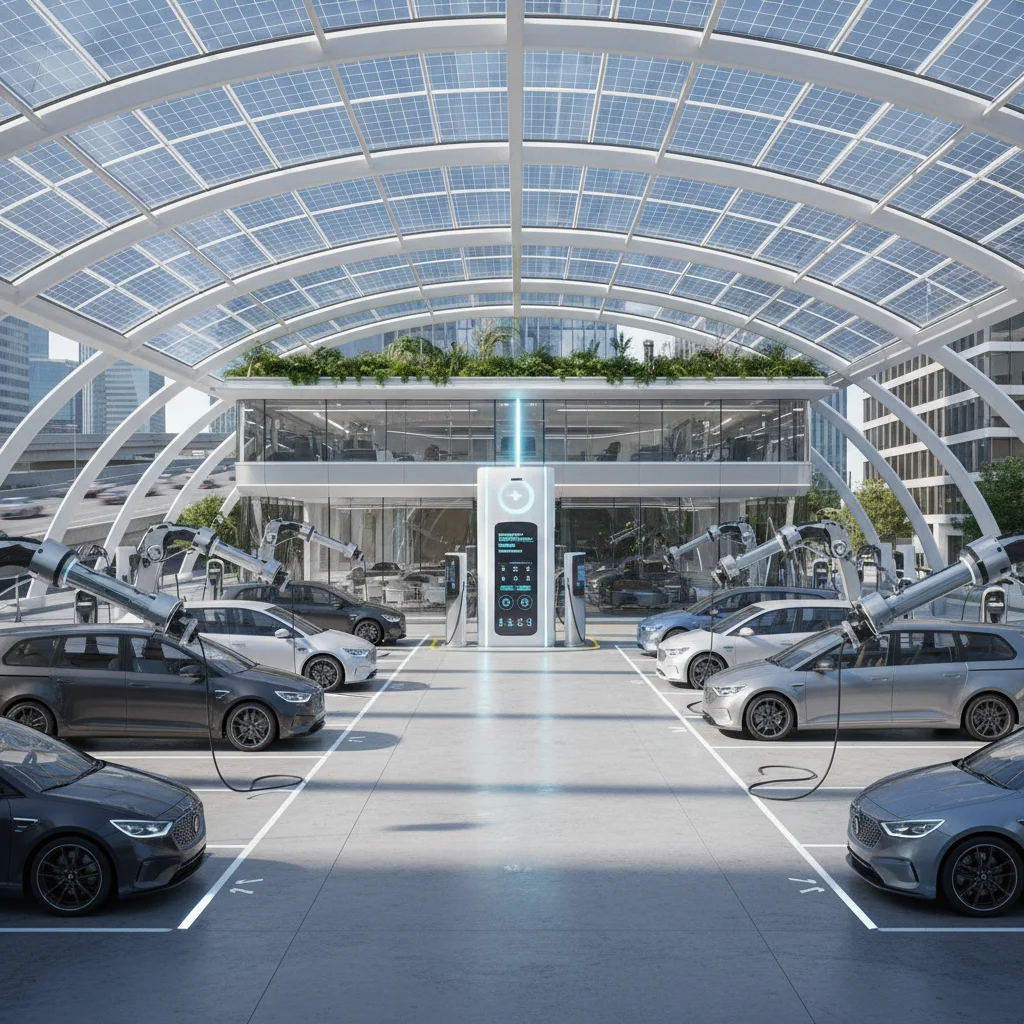
Over the next three years, we will see significant advancements in autonomous charging technologies. This includes robotic charging arms that can automatically connect to an EV without human intervention, wireless inductive charging pads embedded in parking spaces or even roadways, and battery swapping stations that can quickly exchange depleted battery packs for fully charged ones. These innovations are crucial for maximizing the uptime of autonomous fleets, allowing them to operate continuously with minimal human oversight. The development of intelligent charging management systems, which can predict charging needs, optimize power draw, and even participate in grid balancing, will also be a key area of focus for Autonomous Vehicle Infrastructure.
Infrastructure Planning and Grid Impact
The deployment of these advanced charging networks requires extensive planning and coordination. Cities and utility providers will need to identify strategic locations for charging hubs, ensure adequate grid capacity, and invest in smart grid technologies to manage the increased demand for electricity. The integration of renewable energy sources into these charging networks will also be a priority, aligning autonomous transport with sustainability goals. Furthermore, the standardization of charging interfaces and communication protocols will be essential to ensure interoperability across different vehicle manufacturers and charging providers. The expansion of this charging infrastructure is a monumental task, but one that is absolutely vital for the success of Autonomous Vehicle Infrastructure.
4. Enhanced Digital Mapping and High-Definition Localization Systems
While often invisible to the public, the backbone of any reliable autonomous vehicle system is its ability to precisely understand its location and environment. Over the next three years, we will witness a dramatic enhancement in digital mapping and high-definition localization systems, forming a critical layer of Autonomous Vehicle Infrastructure.
The Evolution of HD Maps
Traditional GPS is insufficient for autonomous driving, offering accuracy only to within a few meters. Autonomous vehicles require centimeter-level precision, which is provided by High-Definition (HD) maps. These maps are not just navigational guides; they are rich, layered datasets that include precise lane markings, road geometry, traffic signs, curb heights, speed limits, and even the reflectivity of different surfaces. They are created using lidar, radar, and camera data collected by specialized mapping vehicles. The challenge lies in keeping these maps constantly updated to reflect real-time changes in the environment, such as construction zones, temporary lane closures, or new traffic patterns. The development of dynamic HD mapping solutions, which can be updated continuously and collaboratively by fleets of AVs, is a major focus.
Real-time Localization and Sensor Fusion
Beyond static HD maps, AVs rely on real-time localization systems to determine their exact position within that map. This is achieved through sensor fusion, combining data from GPS, IMUs (Inertial Measurement Units), lidar, radar, and cameras. As AV technology advances, the precision and robustness of these localization systems will improve, making them more resilient to environmental challenges like adverse weather or GPS signal loss. Infrastructure will play a role here too, with the potential deployment of more precise ground-based beacons or enhanced cellular positioning services that can augment vehicle-based localization efforts. The synergy between onboard sensors and external infrastructure data is what makes a truly robust Autonomous Vehicle Infrastructure possible.
Implications for Urban Planning and Data Governance
The creation and maintenance of these highly detailed digital maps have significant implications for urban planning. Cities may need to standardize how their infrastructure data is collected and shared, creating digital twins of their environments that can be accessed by AV operators. This also raises critical questions about data ownership, privacy, and cybersecurity. Who owns the vast amounts of data collected by AVs and mapping vehicles? How is this data protected? The next three years will see increased collaboration between industry, government, and academic institutions to establish best practices and regulatory frameworks for managing this invaluable data, which is essential for the continuous improvement and safe operation of Autonomous Vehicle Infrastructure.
Challenges and Opportunities for U.S. Infrastructure
The journey towards a fully integrated Autonomous Vehicle Infrastructure is not without its hurdles. While the opportunities are immense, so are the challenges that must be addressed to ensure a smooth and equitable transition. Understanding these complexities is vital for effective planning and execution.
Funding and Investment
Perhaps the most significant challenge is the sheer scale of investment required. Upgrading existing roads with V2X capabilities, building smart lanes, deploying advanced charging networks, and maintaining high-definition maps will cost billions, if not trillions, of dollars. Identifying sustainable funding mechanisms, whether through public-private partnerships, dedicated infrastructure bonds, or innovative taxation models, will be crucial. The economic benefits of AVs, such as increased productivity and reduced accident costs, could eventually offset these investments, but the initial capital outlay is substantial.
Regulatory and Legal Frameworks
The current patchwork of state and federal regulations for autonomous vehicles creates uncertainty and hinders widespread deployment. Standardizing regulations for vehicle testing, operation, liability, and data privacy is paramount. Over the next three years, we expect to see more unified approaches, but achieving consensus across diverse jurisdictions will remain a complex task. Furthermore, legal frameworks around liability in the event of an AV-involved accident will need to evolve, likely shifting focus from human error to software and hardware manufacturers or fleet operators.
Cybersecurity and Data Privacy
A connected Autonomous Vehicle Infrastructure is inherently vulnerable to cyber threats. A malicious attack could disrupt traffic flow, compromise safety, or steal sensitive data. Robust cybersecurity measures must be built into every layer of the system, from vehicle hardware and software to roadside units and central data platforms. Equally important is protecting the privacy of individuals, as AVs will generate vast amounts of data about people’s movements and habits. Clear policies and strong encryption will be essential to build public trust.
Public Acceptance and Workforce Adaptation
Beyond the technological and financial aspects, public acceptance is critical. Addressing concerns about safety, job displacement (especially in the trucking and taxi industries), and the ethical implications of AI decision-making will require transparent communication and education campaigns. Simultaneously, there will be a need for workforce retraining and development to prepare for new jobs in AV maintenance, data management, and smart infrastructure operation, ensuring a just transition for affected workers.
Opportunities for Economic Growth and Efficiency
Despite these challenges, the opportunities presented by Autonomous Vehicle Infrastructure are transformative. Economically, AVs promise increased efficiency in logistics, reduced operational costs for businesses, and the creation of entirely new industries and services. Reduced traffic congestion will save countless hours and billions in lost productivity. Environmentally, the shift to electric autonomous fleets will lead to significant reductions in emissions and improved air quality in urban areas. Socially, AVs can enhance mobility for the elderly, disabled, and those without access to personal vehicles, fostering greater independence and inclusion.
Conclusion: Paving the Way for a Smarter Future
The next three years will be a pivotal period for the integration of autonomous vehicles into U.S. transportation infrastructure. The developments in V2X communication, dedicated and smart lane infrastructures, advanced charging networks for electric AVs, and enhanced digital mapping are not isolated advancements but interconnected components of a holistic transformation. Each piece of this puzzle is essential for building a robust, safe, and efficient future of mobility.
While the road ahead is complex, marked by significant technical, financial, and regulatory challenges, the momentum towards an autonomous future is undeniable. Proactive planning, collaborative efforts between government and industry, and a focus on public engagement will be crucial in navigating this transition successfully. Embracing these changes will not only modernize our transportation systems but also unlock unprecedented opportunities for economic growth, environmental sustainability, and enhanced quality of life for all Americans. The continuous evolution of Autonomous Vehicle Infrastructure is not just about adapting to new technology; it’s about proactively shaping a smarter, safer, and more connected future for our nation’s mobility.
The vision of a world where vehicles seamlessly and safely navigate our roads, reducing accidents, congestion, and pollution, is within reach. The foundational work being laid down in the next three years, particularly in building out the necessary Autonomous Vehicle Infrastructure, will determine the speed and success of this revolutionary shift. As we move forward, vigilance, innovation, and strategic investment will be key to realizing the full potential of autonomous transportation and ensuring that the U.S. remains at the forefront of this global transformation.