Navigating 2026 U.S. AI Regulations: A Compliance Guide for Tech Companies

The rapid evolution of Artificial Intelligence (AI) has brought about unprecedented innovation, transforming industries and daily life. However, this transformative power also presents significant ethical, societal, and economic challenges. In response, governments worldwide are scrambling to establish regulatory frameworks that foster innovation while mitigating risks. The United States, a global leader in AI development, is no exception. As we approach 2026, the landscape of U.S. AI Regulations is poised for significant shifts, demanding proactive attention from tech companies.
For businesses operating in the AI space, understanding and preparing for these impending changes is not merely a matter of legal compliance but a strategic imperative. Non-compliance could lead to severe penalties, reputational damage, and a loss of market trust. Conversely, companies that embrace responsible AI development and stringent compliance measures will gain a competitive edge, fostering consumer confidence and demonstrating leadership in ethical technology. This comprehensive guide will delve into the anticipated 2026 U.S. AI Regulations, outlining key areas of focus, potential impacts, and actionable strategies for tech companies to navigate this complex environment successfully.
The Evolving Landscape of U.S. AI Regulations
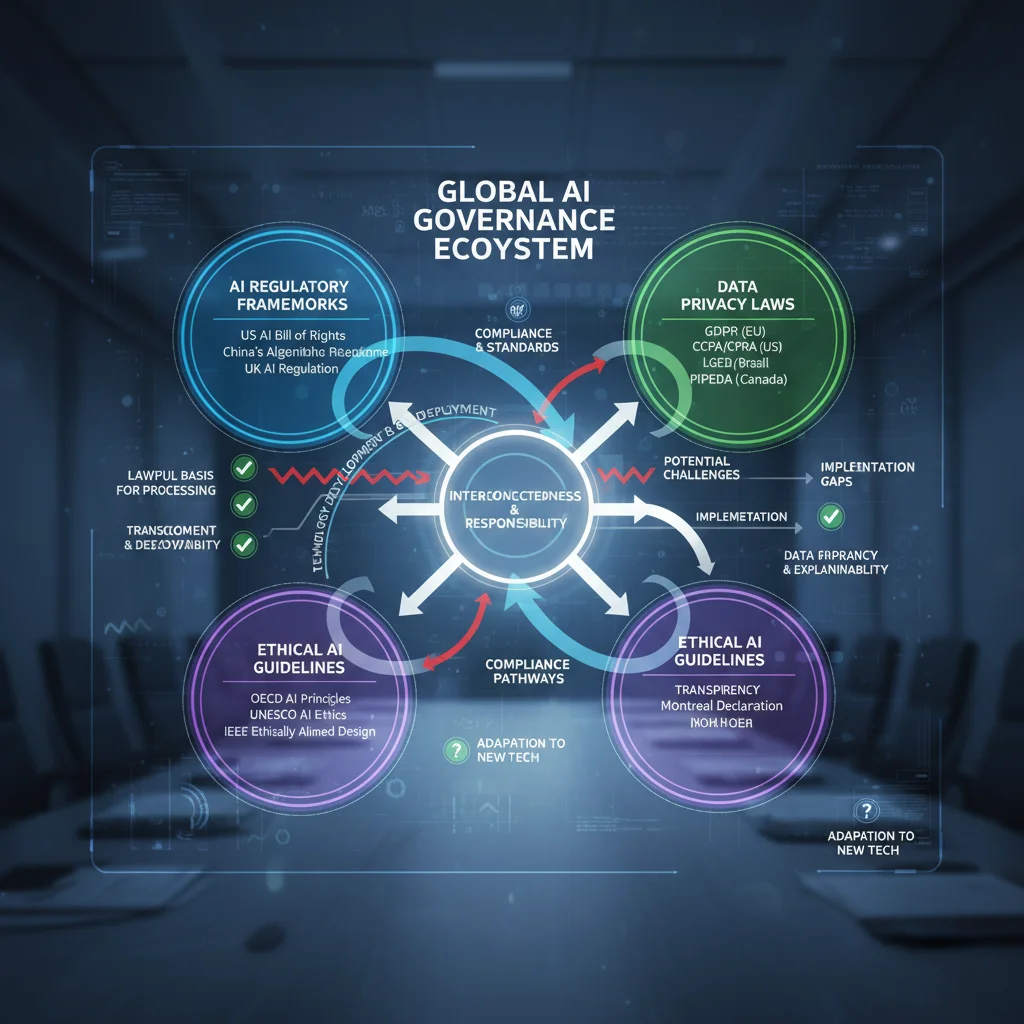
Unlike the European Union’s more centralized approach with the AI Act, the U.S. AI Regulations landscape is characterized by a fragmented, multi-agency, and often state-level effort. This decentralized approach reflects the U.S. legal system and the diverse stakeholder interests involved. However, a clear trend towards more formalized and enforceable regulations is emerging, driven by executive orders, legislative proposals, and increasing public and private sector advocacy for responsible AI.
Key Drivers Behind New U.S. AI Regulations
Several factors are accelerating the push for comprehensive U.S. AI Regulations:
- Ethical Concerns: Growing awareness of AI’s potential for bias, discrimination, privacy infringement, and job displacement.
- National Security: Concerns regarding the use of AI in critical infrastructure, defense, and surveillance.
- Economic Competitiveness: The desire to maintain U.S. leadership in AI while ensuring fair competition and market integrity.
- Public Trust: A recognition that public trust in AI is crucial for its widespread adoption and societal benefit.
- International Alignment: While distinct, U.S. efforts are also influenced by global discussions and regulatory developments, aiming for a degree of interoperability where possible.
The Biden administration has taken significant steps, most notably through Executive Order 14110 on the Safe, Secure, and Trustworthy Development and Use of Artificial Intelligence (October 2023). This executive order laid the groundwork for many of the regulatory actions we expect to see materialize by 2026, directing various federal agencies to develop standards, guidelines, and best practices across a broad spectrum of AI applications.
Anticipated Areas of Focus in 2026 U.S. AI Regulations
While specific legislative acts are still taking shape, several key themes and areas of focus are consistently emerging in discussions around future U.S. AI Regulations. Tech companies should pay close attention to these domains:
1. Data Governance and Privacy
Data is the lifeblood of AI, and its responsible collection, use, and management will be central to new regulations. Expect increased scrutiny on:
- Data Sourcing and Quality: Requirements for transparency regarding data provenance, ensuring data is ethically sourced, representative, and free from harmful biases.
- Privacy-Preserving AI: Mandates for implementing techniques like differential privacy, federated learning, and homomorphic encryption to protect sensitive information used in AI models.
- Data Minimization: Principles requiring companies to collect and retain only the data necessary for their AI systems’ intended purpose.
- Individual Rights: Enhanced rights for individuals to access, correct, and delete data used by AI systems, aligning with and potentially expanding upon existing privacy laws like CCPA.
2. Algorithmic Transparency and Explainability
The ‘black box’ nature of many advanced AI models poses significant challenges for accountability and trust. Future U.S. AI Regulations will likely push for greater transparency and explainability:
- Interpretability Requirements: For high-risk AI systems, companies may need to demonstrate how their models arrive at specific decisions or predictions. This could involve developing tools and methodologies to explain AI outputs in understandable terms.
- Disclosure of AI Usage: Requirements for informing users when they are interacting with an AI system, particularly in sensitive contexts like customer service or content generation.
- Documentation Standards: Mandates for comprehensive documentation of AI model design, training data, evaluation metrics, and deployment procedures.
3. Bias Detection and Mitigation
AI systems can perpetuate and even amplify existing societal biases if not carefully designed and monitored. Addressing algorithmic bias is a top priority for future U.S. AI Regulations:
- Bias Audits and Assessments: Requirements for regular, independent audits of AI systems to identify and mitigate biases in training data, model architecture, and outputs.
- Fairness Metrics: The development and adoption of standardized fairness metrics to evaluate AI system performance across different demographic groups.
- Remediation Strategies: Obligations for companies to implement clear strategies for correcting identified biases and preventing their recurrence.

4. AI Safety and Risk Management
Ensuring the safe and reliable operation of AI systems, especially those deployed in critical applications, will be a cornerstone of new regulations:
- Risk Assessments: Mandatory pre-deployment and ongoing risk assessments for AI systems, classifying them based on their potential impact (e.g., high-risk, limited-risk).
- Testing and Validation: Requirements for robust testing protocols, including adversarial testing, to ensure AI systems are resilient, secure, and perform as intended under various conditions.
- Human Oversight: Mandates for human oversight and intervention mechanisms, particularly for AI systems making critical decisions or operating in autonomous modes.
- Cybersecurity for AI: Specific guidelines and requirements to protect AI systems from cyber threats, data poisoning, and model manipulation.
5. Accountability and Governance
Establishing clear lines of responsibility for AI systems and their outcomes is crucial:
- Internal Governance Frameworks: Encouragement, and potentially mandates, for companies to establish internal AI governance frameworks, including roles, responsibilities, and ethical guidelines.
- Impact Assessments: Requirements for AI impact assessments (AIIAs) before deploying high-risk AI systems, similar to data protection impact assessments (DPIAs).
- Reporting and Record-Keeping: Obligations to maintain detailed records of AI system development, deployment, and performance, and to report significant incidents or failures.
Sector-Specific U.S. AI Regulations
Beyond general principles, expect to see sector-specific U.S. AI Regulations emerge or intensify, tailored to the unique risks and opportunities within particular industries. Agencies like the FDA, FTC, NIST, and others are already developing or updating guidelines:
- Healthcare: Regulations concerning AI in medical devices, diagnostics, and drug discovery, focusing on patient safety, data accuracy, and bias in clinical applications.
- Financial Services: Rules addressing AI’s use in credit scoring, loan applications, fraud detection, and algorithmic trading, emphasizing fairness, transparency, and consumer protection.
- Employment: Guidelines for AI tools used in hiring, performance management, and workforce scheduling, aiming to prevent discrimination and ensure equitable treatment.
- Law Enforcement and Justice: Strict regulations on AI in predictive policing, facial recognition, and sentencing recommendations, with a strong emphasis on civil liberties and due process.
Preparing for 2026: Actionable Strategies for Tech Companies
The time to prepare for the upcoming U.S. AI Regulations is now. Proactive measures can transform compliance from a burden into a strategic advantage. Here are key strategies for tech companies:
1. Establish an Internal AI Governance Framework
Develop a clear, comprehensive internal framework for responsible AI development and deployment. This includes:
- Cross-Functional AI Ethics Committee: Assemble a team comprising legal, technical, ethical, and business stakeholders to oversee AI strategy and compliance.
- Ethical AI Principles: Define and embed a set of core ethical AI principles that guide all stages of AI development, from conception to deployment and monitoring.
- Roles and Responsibilities: Clearly delineate who is responsible for AI governance, risk management, and compliance within the organization.
2. Conduct AI Risk Assessments and Audits
Regularly assess your AI systems for potential risks and biases. This should involve:
- Inventory Your AI Systems: Create a comprehensive inventory of all AI systems in use or under development, categorizing them by risk level (e.g., high-risk, limited-risk).
- Impact Assessments: Perform AI Impact Assessments (AIIAs) for high-risk systems, evaluating their potential societal, ethical, and legal ramifications.
- Bias Audits: Implement tools and processes for continuous monitoring and auditing of AI models for bias, particularly in sensitive applications. Consider engaging third-party auditors for independent verification.
3. Enhance Data Governance and Privacy Practices
Strengthen your data practices to align with anticipated regulatory demands:
- Data Lineage and Provenance: Implement robust systems to track the origin, transformations, and usage of all data feeding into your AI models.
- Privacy by Design: Integrate privacy considerations into the very design of your AI systems, rather than as an afterthought.
- Consent Management: Ensure transparent and granular consent mechanisms for data collection and usage, especially for personal data.
- Data Anonymization/Pseudonymization: Employ advanced techniques to protect sensitive data while enabling AI development.
4. Prioritize Transparency and Explainability
Work towards making your AI systems more understandable and accountable:
- Explainable AI (XAI) Tools: Invest in and implement XAI tools and methodologies to provide clear explanations for AI decisions, especially for high-stakes applications.
- User Notifications: Develop clear and concise ways to inform users when they are interacting with AI, outlining the AI’s capabilities and limitations.
- Comprehensive Documentation: Maintain detailed records of your AI models, including design choices, training data, validation processes, and performance metrics.
5. Invest in AI Safety and Robustness
Ensure your AI systems are secure, reliable, and resilient:
- Robust Testing: Implement rigorous testing protocols, including stress testing, adversarial testing, and real-world simulations, to identify vulnerabilities and ensure reliability.
- Security Measures: Strengthen cybersecurity measures specifically tailored to AI systems to protect against data poisoning, model theft, and other AI-specific threats.
- Human-in-the-Loop: Design systems with appropriate human oversight and intervention points, allowing for human review and override of AI decisions when necessary.
6. Stay Informed and Engage with Policymakers
The regulatory landscape is dynamic. Continuous engagement is key:
- Monitor Legislative Developments: Regularly track proposed legislation, executive orders, and agency guidelines at both federal and state levels.
- Participate in Industry Groups: Join industry associations and working groups focused on AI ethics and regulation to share best practices and influence policy discussions.
- Consult Legal Experts: Engage with legal counsel specializing in AI law and data privacy to ensure your strategies remain compliant with evolving U.S. AI Regulations.
Challenges and Opportunities
Navigating the complex world of U.S. AI Regulations presents both challenges and significant opportunities for tech companies.
Challenges:
- Regulatory Fragmentation: The patchwork of federal and state laws can create compliance complexities and inconsistencies.
- Pace of Innovation vs. Regulation: AI technology evolves at a breakneck speed, often outpacing the ability of regulators to develop and implement effective rules.
- Resource Allocation: Small and medium-sized enterprises (SMEs) may struggle with the resources required to implement comprehensive compliance programs.
- Defining ‘Harm’ and ‘High-Risk’: Establishing universally accepted definitions for AI-related harm and high-risk applications remains a challenge.
Opportunities:
- Enhanced Trust and Reputation: Companies that demonstrate strong ethical AI and compliance practices will build greater trust with customers, partners, and regulators.
- Competitive Differentiation: Proactive compliance can become a unique selling proposition, attracting clients who prioritize responsible AI.
- Innovation in Responsible AI: The need for compliance can spur innovation in areas like explainable AI, bias detection tools, and privacy-preserving AI techniques.
- Reduced Legal and Reputational Risk: Adhering to regulations minimizes the likelihood of fines, lawsuits, and public backlash.
Conclusion
The year 2026 marks a pivotal moment for U.S. AI Regulations. While the exact contours of the regulatory landscape are still forming, the direction is clear: an increasing demand for responsible, ethical, and accountable AI. For tech companies, this is not a moment to be feared but to be embraced as an opportunity to solidify their commitment to building AI that serves humanity’s best interests.
By proactively establishing robust AI governance frameworks, prioritizing data privacy, ensuring transparency and explainability, mitigating bias, and investing in AI safety, companies can not only meet compliance requirements but also foster innovation and build a future where AI is a trusted and beneficial force. Staying informed, engaging with stakeholders, and adapting swiftly will be crucial for success in this evolving regulatory environment. The future of AI in the U.S. will be defined not just by technological breakthroughs, but by how responsibly and ethically these powerful tools are developed and deployed.