Storytelling for Innovation: 5 Narrative Structures US Marketers Use for 2X Impact

Storytelling for Innovation: 5 Narrative Structures US Marketers Are Using to Present Creative Concepts with 2X Impact
In the dynamic landscape of modern business, innovation is often the key differentiator. Yet, even the most groundbreaking ideas can fall flat without effective communication. This is where storytelling for innovation becomes not just an advantage, but a necessity. US marketers, at the forefront of creative concept presentation, are increasingly leveraging the timeless power of narrative structures to not only convey their ideas but to imbue them with meaning, resonance, and ultimately, a 2X impact on their audience.
Why storytelling? Because humans are hardwired for stories. From ancient myths to modern advertisements, narratives captivate, persuade, and inspire action in ways that raw data or bullet points simply cannot. For marketers, this means transforming complex creative concepts into digestible, emotionally engaging journeys that stakeholders and consumers can connect with. This article delves into five powerful narrative structures that leading US marketers are employing to elevate their presentations, foster innovation, and achieve unparalleled success.
The Unseen Power of Narrative: Why Storytelling Fuels Innovation
Before we dive into the specific structures, it’s crucial to understand the profound link between storytelling and innovation. Innovation, by its very nature, involves introducing something new, something that challenges the status status quo. This can be met with skepticism, resistance, or simply a lack of understanding. A well-crafted story acts as a bridge, guiding the audience from their current understanding to embracing the innovative concept.
Consider the process of developing a new product or service. It’s often fraught with challenges, iterations, and moments of breakthrough. Without a narrative, these stages remain isolated facts. With storytelling, they become part of a compelling journey – a journey of problem-solving, discovery, and ultimately, value creation. This is the essence of storytelling for innovation.
Bridging the Empathy Gap with Storytelling
One of the primary reasons storytelling is so effective in presenting creative concepts is its ability to build empathy. When you present an innovation as a story, you invite your audience to step into the shoes of the protagonist – often the customer whose problem is being solved, or the team that tirelessly worked to bring the idea to life. This emotional connection makes the innovation more relatable and its benefits more tangible. US marketers understand that empathy is a powerful driver for adoption and investment.
Simplifying Complexity Through Narrative Arcs
Innovative concepts can often be complex, involving intricate technologies, novel processes, or disruptive business models. Trying to explain these complexities through technical jargon alone can overwhelm and disengage an audience. Stories, however, provide a natural framework for simplifying complexity. A narrative arc, with its beginning, middle, and end, allows marketers to introduce a problem, present the innovative solution, and demonstrate its positive outcome in a clear, sequential, and memorable way. This structured approach is fundamental to effective storytelling for innovation.
Inspiring Action and Memorability
Beyond understanding and empathy, the ultimate goal of presenting creative concepts is to inspire action – whether it’s securing funding, gaining team buy-in, or convincing consumers to purchase. Stories are inherently memorable. People remember narratives far more readily than they recall statistics or features. By embedding your innovative concept within a compelling story, US marketers ensure that their ideas not only resonate in the moment but also stick with the audience long after the presentation is over, driving desired behaviors and decisions.
The 5 Narrative Structures US Marketers Use for 2X Impact
Now, let’s explore the specific narrative structures that are proving invaluable for US marketers in their quest for impactful presentations of creative concepts and fostering storytelling for innovation.
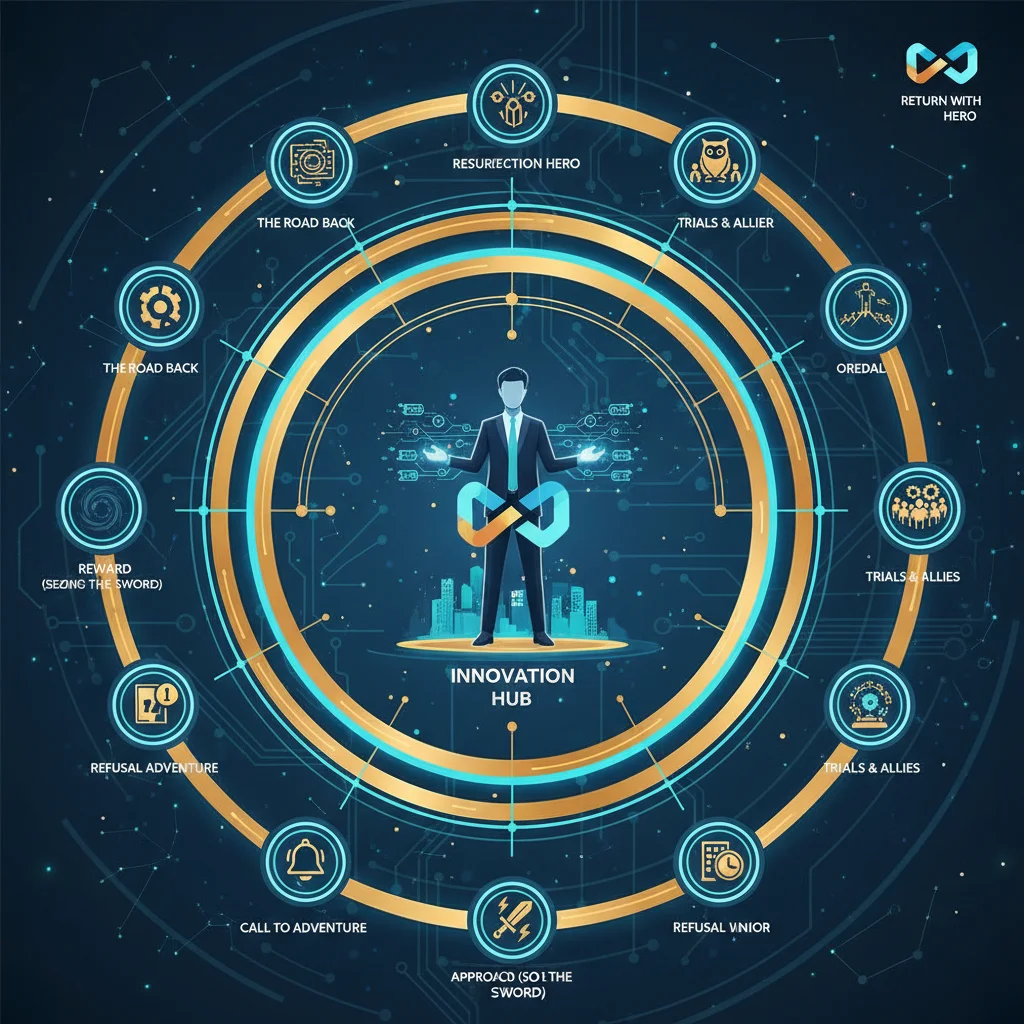
1. The Hero’s Journey (Monomyth)
Perhaps the most universally recognized narrative structure, the Hero’s Journey, popularized by Joseph Campbell, is a powerful framework for presenting an innovation as a transformative quest. It follows a protagonist (often the customer, the brand, or even the innovative concept itself) through a series of stages:
- The Ordinary World: Introduce the current state, the problem, or the unmet need that exists.
- The Call to Adventure: Highlight the emergence of a new challenge or opportunity that demands a solution.
- Refusal of the Call: Acknowledge initial hesitations or existing solutions that fall short.
- Meeting the Mentor: This is where your innovative solution or product steps in, offering guidance and a new path.
- Crossing the Threshold: The decision to embrace the innovation, moving from the old way to the new.
- Tests, Allies, and Enemies: Detail the challenges overcome, the features that help, and the competition or obstacles faced.
- Approach to the Inmost Cave: The most significant challenge or the moment of truth for the innovation.
- The Ordeal: The climactic moment where the innovation proves its worth, solving the problem decisively.
- Reward (Seizing the Sword): The benefits and successes achieved directly due to the innovation.
- The Road Back: The journey of the customer or user returning to their ‘new ordinary world’ with the benefits of the innovation.
- Resurrection: A final, even greater challenge overcome, solidifying the innovation’s impact.
- Return with the Elixir: The ultimate transformation and the lasting value delivered.
How US Marketers Use It: By positioning their product or service as the ‘mentor’ or the ‘elixir’ in the customer’s journey, marketers build a powerful, aspirational narrative. This structure is particularly effective for launching disruptive technologies, transformational services, or any innovation that promises a significant improvement in the user’s life. It creates a sense of epic scale and purpose around the innovation, making it incredibly compelling. This is a cornerstone of effective storytelling for innovation.
2. The Mountain Narrative
The Mountain, or ‘In Media Res’ (starting in the middle), is a narrative structure that grabs attention immediately. Instead of a linear progression, it begins with a peak moment – often a significant challenge or a compelling outcome – and then unpacks the story from there, typically moving back and forth in time.
- The Hook (Peak): Start with the most dramatic, intriguing, or impactful moment of your innovation’s story. This could be a surprising result, a major challenge overcome, or a revolutionary feature.
- The Ascent (Rising Action): Explain the events leading up to that peak. What were the initial problems? What were the early attempts?
- The Descent (Falling Action): Detail the solution itself – your innovative concept – and how it specifically addresses the challenges.
- The Resolution (New Peak): Conclude with the positive outcomes and the future possibilities enabled by the innovation.
How US Marketers Use It: This structure is excellent for capturing short attention spans. If you have a truly remarkable outcome or a ‘wow’ factor, starting with it immediately hooks your audience. Marketers use this to present a compelling case study by starting with the impressive results, then explaining the innovative process that led to them. It builds suspense and curiosity, making the audience eager to understand the ‘how’ and ‘why’ behind the initial impactful statement. It’s perfect for fast-paced presentations where every second counts for storytelling for innovation.
3. The Sparklines Narrative
Developed by Nancy Duarte, the Sparklines structure is about contrasting ‘what is’ with ‘what could be.’ It’s a rhythmic alternation between problem and solution, reality and ideal, creating a powerful sense of movement and progress. This structure is particularly effective for inspiring change and advocating for a new vision.
- What Is: Describe the current undesirable reality, the existing problem, or the status quo.
- What Could Be: Present your innovative solution, the ideal future, or the positive outcome your concept offers.
- Repeat and Contrast: Continuously alternate between ‘what is’ and ‘what could be,’ building the contrast and highlighting the transformative power of your innovation.
- Call to Action: End with a clear invitation to embrace the ‘what could be’ and take the next step.
How US Marketers Use It: US marketers employ Sparklines to build a compelling case for their innovative concepts by starkly illustrating the pain points of the present and the promise of the future. This structure is highly persuasive, as it taps into the audience’s desire for improvement and progress. It’s ideal for presentations aiming to secure investment, gain buy-in for a new strategic direction, or introduce a product that significantly improves upon existing solutions. It’s a dynamic approach to storytelling for innovation that keeps the audience engaged through contrast.
4. Nested Loops Narrative
The Nested Loops structure involves telling three or more stories, one inside the other. You start with an overarching story, then introduce a second, more specific story within it, and then a third even more detailed one. After telling the innermost story, you work your way back out, concluding each story as you go. This creates a rich, multi-layered narrative experience.
- Outer Loop: Begin with a broad, relatable story or an overarching theme that sets the context for your innovation.
- Middle Loop: Introduce a more specific story that illustrates a particular aspect or challenge related to the outer loop.
- Inner Loop: Present the core of your innovation – a micro-story about a specific feature, a customer success, or a moment of breakthrough.
- Unwind: Conclude the inner loop, then the middle loop, and finally the outer loop, bringing everything together to reinforce your main message.
How US Marketers Use It: This structure is masterful for building credibility and providing depth to complex innovations. For instance, an outer loop might be about the future of a particular industry, a middle loop about a company’s mission within that industry, and an inner loop about a specific product or feature that embodies that mission. By weaving these stories together, marketers create a comprehensive and convincing argument, demonstrating how their innovation fits into a larger context and delivers tangible value. It’s an advanced technique for storytelling for innovation that builds rich context.
5. The "Invention" or "Origin Story" Narrative
Every innovation has an origin story, a moment of inspiration, a problem that demanded a solution. This narrative structure focuses on the journey of creation, highlighting the ingenuity, perseverance, and vision behind the innovative concept.
- The Problem Identified: Start with the initial observation of a significant problem or an unmet need.
- The "Aha!" Moment: Describe the flash of insight, the creative spark, or the initial idea that began the innovation process.
- The Struggle and Iteration: Detail the challenges faced, the trials and errors, the setbacks, and the continuous refinement of the idea.
- The Breakthrough: Explain how the team overcame obstacles and arrived at the final innovative solution.
- The Impact: Conclude with the positive effects and the value this invention brings to the world or its target audience.
How US Marketers Use It: This structure humanizes the innovation, making it more relatable and inspiring. It’s particularly effective for startups presenting their foundational idea, or for established companies launching a truly novel product. By sharing the journey of creation, marketers build trust and demonstrate the authentic passion and expertise behind their concepts. It allows the audience to appreciate not just the "what" but the "how" and "why" of the innovation, strengthening their connection and belief in its potential. This is essential for effective storytelling for innovation, particularly when introducing truly novel ideas.

Crafting Your Innovation Story: Best Practices for US Marketers
While these narrative structures provide a robust framework, their effectiveness hinges on careful execution. Here are some best practices for US marketers to maximize the impact of their storytelling for innovation:
Know Your Audience Inside Out
The most compelling stories are those that resonate directly with the listener. Before crafting your narrative, deeply understand your audience’s pain points, aspirations, values, and existing knowledge. Is your audience investors, internal teams, or end-users? Tailor your story’s tone, complexity, and emotional appeals accordingly. A story that excites a venture capitalist might not connect with a technical development team, and vice versa. Understanding their perspective is the first step in effective storytelling for innovation.
Embrace Authenticity and Vulnerability
Great stories aren’t always polished perfection; they often include struggles and setbacks. Being authentic about the challenges faced during the innovation process can build trust and make your solution more credible. Acknowledging difficulties and showing how they were overcome adds depth and humanity to your narrative, making your innovative concept more relatable and your journey more inspiring. This vulnerability is a powerful tool in storytelling for innovation.
Use Vivid Language and Imagery
Storytelling is a sensory experience. Use descriptive language that paints a clear picture in your audience’s mind. Incorporate metaphors, analogies, and vivid imagery to make abstract concepts tangible. Don’t just tell them; show them. Visual aids, strong graphics, and even short videos can significantly enhance your narrative, bringing your innovative concept to life. Remember, the goal is to create an immersive experience through storytelling for innovation.
Focus on the "Why," Not Just the "What"
While features and functionalities are important, the true power of innovation lies in its purpose. Why does this innovation matter? How does it improve lives, solve problems, or create new opportunities? Your story should articulate the "why" – the underlying motivation and the ultimate benefit – more than just listing the "what." This emotional core is what drives engagement and buy-in for your storytelling for innovation.
Practice and Refine
A great story isn’t told; it’s performed. Practice your presentation, paying attention to pacing, tone, and emphasis. Get feedback from others and be willing to refine your narrative until it flows seamlessly and delivers maximum impact. The more you practice, the more natural and compelling your storytelling for innovation will become.
Measuring the 2X Impact: How Storytelling Translates to Results
The promise of 2X impact isn’t just hyperbole. When US marketers effectively employ storytelling for innovation, they see tangible results:
- Increased Engagement: Audiences are more attentive, ask more thoughtful questions, and retain information longer when presented with a story. This engagement is the bedrock of successful innovation adoption.
- Stronger Buy-in: Stakeholders are more likely to invest, approve, and champion innovative concepts when they understand the narrative behind them and feel an emotional connection to the potential outcomes.
- Faster Adoption: Consumers are more willing to try new products or services when they understand how these innovations fit into their own ‘story’ and solve a real-world problem.
- Enhanced Brand Loyalty: Brands that consistently tell compelling stories around their innovations build deeper relationships with their audience, fostering loyalty and advocacy.
- Improved Internal Alignment: Within organizations, storytelling for innovation helps align teams around a shared vision, fostering collaboration and driving the innovation forward with greater unity and purpose.
These measurable improvements – from increased conversion rates to higher employee morale – underscore how narrative structures are not just creative tools but strategic assets for US marketers aiming for significant returns on their innovative ventures. The impact of effective storytelling for innovation extends across the entire business ecosystem.
Conclusion: The Future is Narrated
In an increasingly crowded and competitive marketplace, simply having a great innovative concept is no longer enough. The ability to articulate that concept in a way that captivates, persuades, and inspires is paramount. US marketers who master storytelling for innovation by employing structures like the Hero’s Journey, The Mountain, Sparklines, Nested Loops, and Origin Stories are not just presenting ideas; they are crafting experiences, forging connections, and ultimately, doubling their impact.
As you embark on your next creative presentation, remember the transformative power of narrative. Step beyond the bullet points and data, and instead, invite your audience on a journey. Frame your innovation not just as a solution, but as an integral part of a compelling story waiting to unfold. By doing so, you won’t just communicate your concepts; you’ll embed them in the hearts and minds of your audience, paving the way for unprecedented success and truly impactful innovation.
Embrace these narrative structures, refine your storytelling craft, and watch as your creative concepts achieve not just acceptance, but enthusiastic adoption and a demonstrable 2X impact in the market.