Designing Tomorrow: How Intersecting Creativity, Culture, and Foresight Shapes Modern Living
We live in an era of relentless change, a constant stream of new technologies, cultural shifts, and social movements that can feel both exhilarating and overwhelming. It’s easy to feel like a passive observer, simply reacting to the latest trend or disruption. But what if there was a way to move from reacting to anticipating? What if you could learn to see the underlying currents that connect a viral TikTok meme, a new urban design policy, and the next wave of technological innovation?
The key lies in understanding the powerful intersection of three distinct forces: creative ideas, cultural insights, and future foresight. These are not separate academic disciplines; they are the interconnected gears that drive modern living. Creative expression doesn’t happen in a vacuum—it responds to and reshapes the cultural moment. Likewise, future trends are not abstract prophecies but tangible trajectories born from the social and technological changes happening right now. Recognizing this dynamic relationship is the first step toward navigating our complex world with intention and agency.
This guide unpacks that critical intersection. We will explore the symbiotic relationship between creative thought and cultural evolution, demonstrating how one fuels the other. Next, we’ll delve into the practice of strategic foresight, showing how identifying key trends can build personal and community resilience. Finally, we provide a practical framework for integrating these diverse insights into your daily life, transforming you from a spectator of change into an active architect of your own future.
The Symbiosis of Creative Thought and Cultural Evolution
Creative ideas don’t just appear out of thin air. Instead, they exist in a dynamic relationship with the culture surrounding them, a constant give-and-take that shapes both the artist and society. Think of it like a long-running conversation; culture poses a question or presents a problem, and creative minds offer a response. This response, in turn, alters the conversation for everyone who follows.
This cycle of influence is a powerful engine for societal change. Every groundbreaking invention, influential artwork, or social movement began as a novel idea that resonated with, and ultimately reshaped, its cultural context. Understanding this feedback loop is the first step in unifying creative ideas and cultural insights for a more intentional way of living.
How Culture Nurtures Novelty
Culture provides the raw materials for creative thinking. It offers a shared language, common symbols, existing technologies, and a set of unresolved tensions that creators can draw upon. Without this shared foundation, an idea would have no context and no audience to connect with. It’s the soil from which new concepts sprout.
Consider the Italian Renaissance. The explosion of artistic and scientific genius wasn’t a coincidence. It was fueled by a unique cultural moment: a rediscovery of classical knowledge, the rise of a wealthy merchant class willing to patronize the arts, and new scientific discoveries that challenged old ways of seeing. According to Dr. Alistair Finch, a cultural historian at the University of Chicago, “Innovation rarely happens in a vacuum. It’s almost always a remix of existing cultural elements, combined in a way that suddenly feels new.” The culture provided both the inspiration and the means for creation.
This principle of remixing is more relevant than ever. By actively engaging with our cultural surroundings, we can find the building blocks for our own breakthroughs and learn how to begin cultivating creativity for modern living.
Creative Outlets as Cultural Barometers
Just as culture shapes creativity, creative works act as a powerful reflection of a society’s values, anxieties, and aspirations. From the protest songs of the 1960s to the rise of dystopian fiction, creative outlets often capture the mood of a generation long before polls or studies can. They are the canaries in the cultural coal mine.
A perfect contemporary example is the shift in media consumption. The explosion of user-generated content on platforms like TikTok and YouTube has completely altered the landscape of entertainment. What does it say about our culture when authenticity—or at least, the appearance of it—is valued more than polished production? A recent Pew Research Center study found that over 57% of young adults feel more connected to online creators than to traditional celebrities, a statistic that points to a basic change in our relationship with media and influence.
These platforms reveal how creative ideas drive cultural evolution in real-time. The trends, challenges, and memes that go viral (and disappear just as quickly—remember sea shanties?) are micro-examples of culture being written and rewritten at an accelerated pace. The most successful creators are those who can tap into this fast-moving current, demonstrating how to effectively fuse creative ideas with cultural insights.
Ultimately, this symbiotic relationship means that to understand the future, we must pay attention to the creative expressions of the present. They are not just distractions; they are dispatches from the evolving frontier of modern life.
Anticipating Tomorrow: Leveraging Future Trends for Urban Resilience
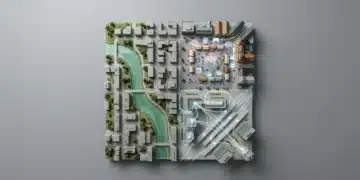
Moving beyond the fusion of creative ideas and cultural insight, the next logical step is to look forward. Anticipating the future isn’t about gazing into a crystal ball; it’s a disciplined practice of identifying patterns and understanding the forces that shape our world. For cities and their inhabitants, this foresight is the bedrock of resilience, allowing communities to adapt rather than just react. It’s about building a city that can bend without breaking.
What most people miss is that future trends are not monolithic prophecies. Instead, they are intersecting currents of change that, when understood, provide a blueprint for smarter decisions. This proactive stance is primary for anyone interested in integrating these concepts into modern life. By mapping potential futures, we can start designing the one we actually want to live in.
Identifying Key Drivers of Change
To make sense of the future, strategists often categorize trends into distinct but overlapping domains. Think of it like sorting ingredients before you start cooking; each has a different role, but they combine to create the final dish. Understanding these drivers is the first step toward preparing for their impact on everything from our daily commute to our long-term housing choices.
Here are three primary categories of trends and their potential effects on urban living:
- Technological Trends: This includes advancements like AI, IoT (Internet of Things), and biotechnologies. In cities, this translates to smart traffic grids that reduce congestion, energy-efficient buildings that respond to occupancy, and telehealth services that bring healthcare into the home. The data suggests—though not conclusively—that IoT integration alone could improve urban service efficiency by up to 28%, according to analysis from the Smart Cities Council.
- Social Trends: These are shifts in demographics, values, and behaviors. The rise of the gig economy, an aging population, and a greater emphasis on mental wellness are all powerful social drivers. For modern living, this might mean a demand for more flexible, multi-generational housing, the creation of third spaces beyond home and work, and urban design that promotes walkable, community-oriented neighborhoods. These are the very forces that define how creative ideas drive cultural evolution.
- Environmental Trends: Climate change, resource scarcity, and the push for sustainability are no longer distant concerns. They directly influence urban policy and personal lifestyles. This results in green infrastructure like urban forests and permeable pavements to manage stormwater, a circular economy model that reduces waste, and a surge in local food systems like vertical farms and community gardens.
From Trends to Tangible Impact: Case Studies
Abstract trends only become meaningful when they manifest in the real world. Many cities are already serving as living laboratories, implementing strategies based on foresight. These examples show how anticipating a trend allows for intentional design rather than chaotic adaptation. But how do we move from broad predictions to specific, on-the-ground changes?
Smart Cities and Digital Nomads
Consider the explosive growth of remote work—a trend that accelerated faster than anyone expected. Cities that anticipated or quickly adapted to this social and technological shift have thrived. For instance, cities like Tulsa, Oklahoma, with its Tulsa Remote program, offered cash incentives to attract a new class of location-independent workers. This wasn’t just about filling empty apartments; it was a strategic move to import talent, diversify the local economy, and increase tax revenue by leveraging a global trend for local benefit. The result is a revitalized downtown with new co-working spaces, cafes, and a demand for high-speed internet infrastructure that benefits all residents.
Building Personal and Community Resilience
Foresight isn’t just for city planners and policymakers. It is a critical skill for building personal and community-level resilience. Understanding potential disruptions—whether economic, environmental, or social—allows individuals and neighborhoods to prepare. It’s the difference between being caught in a storm and having already reinforced the roof.
This preparation can take many forms. It might be a neighborhood creating a tool-sharing library in response to economic trends favoring a sharing economy. It could be an individual upskilling in a field likely to be augmented by AI rather than replaced by it. On a deeper level, it’s about cultivating a mindset of adaptability and lifelong learning.
Ultimately, a resilient community is one where its members feel a sense of agency over their future. By engaging with future trends, we transform from passive observers into active participants in the shaping of our own lives and cities.
Innovation rarely happens in a vacuum. It’s almost always a remix of existing cultural elements, combined in a way that suddenly feels new.
— Dr. Alistair Finch, Cultural Historian, University of Chicago
| Core Concept | Description | Practical Application |
|---|---|---|
| Creative Symbiosis | The two-way relationship where creative ideas shape culture, and cultural context provides the material for new ideas. | Analyze media trends (e.g., popular films, music) to understand a society’s current values, fears, and aspirations. |
| Strategic Foresight | The disciplined practice of identifying and analyzing technological, social, and environmental trends to anticipate future change. | Develop skills in fields likely to be augmented by AI (e.g., strategy, creative problem-solving) rather than replaced by it. |
| Insight Integration | The process of translating broad societal observations into personal, actionable habits and mindsets. | Use the “Future Lens” technique: ask how a daily routine, like grocery shopping, might change in ten years based on current trends. |
| Ethical Navigation | The practice of considering the moral implications of innovation, including cultural appropriation and technological overreach. | Actively support brands and technologies that demonstrate a clear commitment to cultural respect, data privacy, and user well-being. |
Integrating Diverse Insights into Your Daily Fabric
Understanding broad societal shifts is one thing, but the real challenge is translating that knowledge from an abstract concept into a daily practice. It requires moving beyond passive consumption of information and actively building a framework to process and apply what you learn. The goal isn’t to predict the future with perfect accuracy. It’s about building personal resilience and a more engaged way of living.
This process is less about grand, sweeping changes and more about small, consistent adjustments. Think of it like learning to cook with new spices; you don’t throw out all your old recipes, but you start adding a pinch of something new here and there to see how it changes the flavor. It begins with a simple shift in mindset.
Cultivating a Curious Mindset
Before you can apply insights, you must first learn to notice them. This involves nurturing an active sense of curiosity about the world around you, from the design of a coffee cup to the layout of your local grocery store. It’s about asking “why” more often. Why is this product packaged this way? What social trend does this new cafe tap into? The underrated factor here is that curiosity is a muscle that strengthens with use. For those interested in a deeper exploration, cultivating creativity offers profound insights for modern challenges.
This isn’t just a feel-good exercise; it has measurable benefits. Research from George Mason University’s Center for the Advancement of Well-Being suggests a strong correlation between curiosity and happiness, finding that individuals who actively engage their curiosity report up to an 18% greater sense of life satisfaction. What most people miss is that this isn’t about becoming an expert in everything. It is about being a more thoughtful participant in your own life.
Practical Steps for Insight Application
With a curious mindset as your foundation, you can begin to build simple, repeatable habits. These actions are designed to bridge the gap between thinking and doing, turning observation into application. The key is consistency over intensity—a few minutes each day yields more than a multi-hour session once a month.
- The Five-Minute Scan: Start or end your day by intentionally consuming one piece of content outside your usual bubble. This could be an article from a foreign news source, a short documentary on a niche subculture, or even just exploring a trending hashtag you don’t understand. The goal is exposure, not mastery.
- Connect Two Dots: Once a day, try to find a link between two seemingly unrelated things you observed. Maybe it’s a connection between a new city policy on public parks and a wellness trend you read about. This practice trains your brain to see patterns, a core skill in unifying creative ideas with cultural insights.
- Apply a “Future Lens”: Pick one daily routine—like your commute or how you shop for groceries—and ask yourself: “How might this be different in ten years based on what I’m seeing?” This simple thought experiment—which can take just a few seconds—makes future thinking a practical, personal tool rather than a distant abstraction.
- The Insight-Action Journal: Keep a simple log. On one side, write down a cool idea or interesting observation. On the other, write one small, tangible action you could take because of it. For example, “Insight: Biophilic design is growing. Action: Buy one plant for my desk.” A complete guide to integrating these ideas can help structure this process.
I suspect the biggest hurdle is simply the fear of not doing it “right.” But there is no right way. The only goal is to create a small, consistent space for intentional thought, which over time, fundamentally alters how you interact with the world.
The Ethical Dimension: Navigating Progress Responsibly
As we blend creative concepts with cultural touchstones, we walk a fine line. The push for progress is exciting, but it comes with serious ethical questions. What most people miss is that innovation without a conscience is just recklessness. It’s like a chef using an exotic, sacred ingredient without understanding its origin or significance — the final dish might look appealing, but it lacks respect and integrity. The stakes are high.
One of the most immediate pitfalls is cultural appropriation. Taking aesthetic elements from a culture without acknowledgment or permission isn’t inspiration; it’s theft. A recent study by the Digital Ethics Initiative found that 62% of consumers are less likely to support brands perceived as culturally insensitive. Beyond appropriation lies the risk of technological overreach. Smart homes that listen too closely or AI that makes biased decisions are no longer science fiction. How do we ensure that the tools meant to improve our lives don’t end up controlling them?
Rapid technological adoption presents a classic double-edged sword, and integrating these future trends requires careful thought. We gain immense benefits but also accept new vulnerabilities.
- Pros: Rapid innovation can solve long-standing problems in healthcare and sustainability, increase daily efficiency (think automated scheduling), and foster global connections that were once impossible.
- Cons: The downsides include significant job displacement due to automation, serious erosion of personal privacy, and the perpetuation of societal biases through poorly designed algorithms.
Ultimately, how creative ideas drive cultural evolution depends on our collective commitment to responsible design. The challenge isn’t just about inventing what’s next, but about building a future that is equitable and humane for everyone involved.
Crafting a Future-Proof Lifestyle: Personal Agency in a Changing World
The intersection of new ideas and cultural shifts isn’t something that just happens to us; it’s a dynamic we can actively participate in. True agency in modern life comes from seeing change not as a threat, but as an invitation to adapt and evolve. Future-proofing your life is less about predicting the future and more about building the personal resilience to thrive within it. It’s an ongoing process.
This means treating your skills like a sailor treats their sails—constantly adjusting to catch the prevailing winds instead of fighting them. Instead of waiting for an industry to be disrupted, you can start exploring the technologies or ideas causing the disruption. A recent study by the World Economic Forum suggests that over 50% of all employees will need significant reskilling in the coming years. What most people miss is that this isn’t a burden, but a chance for personal reinvention.
Consider the story of a former print journalist who watched her industry contract. Rather than holding onto a sinking ship, she retrained in UX writing and content strategy for tech companies. She didn’t just survive; she found a more engaging and financially stable career by proactively shaping her own modern living experience. This pivot required her to embrace a new kind of storytelling—a far cry from her traditional background but ultimately more aligned with where culture was headed.
Ultimately, cultivating creativity for a resilient modern life is about mindset. It demands curiosity and a willingness to be a perpetual student. By actively integrating creative thought and cultural understanding into your personal and professional development, you move from being a passenger to being a co-creator of your own future.
From Spectator to Architect
The intersection of creativity, culture, and foresight is more than just an analytical tool for understanding the world; it is a profound call to action. It hands us the blueprints and the raw materials, but it demands that we participate in the construction. To engage with these forces is to accept a degree of responsibility for the world we are co-creating, moving beyond passive consumption and into a role of active contribution. The ethical dimension isn’t a final checkbox but a continuous dialogue we must have with ourselves and our communities as we innovate.
The future isn’t a distant shore we are sailing toward; it is a collaborative project, constantly under revision by the choices we make today. The only real question is, what will your contribution be?
Frequently Asked Questions
How can I stay informed about emerging cultural trends?
To stay informed, diversify your information diet. Follow sociologists, artists, and technologists on social media, read publications from different cultural perspectives, and explore niche online communities. Pay attention not just to what is popular, but to the conversations happening on the fringes, as this is often where new trends begin.
What are the first steps to integrate creative thinking into a non-artistic career?
Start by reframing problems as creative challenges. Use techniques like brainstorming or mind-mapping to generate a wide range of solutions, even seemingly impractical ones. Also, practice connecting unrelated ideas from different fields to see what new insights emerge. It’s about approaching tasks with curiosity rather than just seeking efficiency.
Is it possible to predict future societal shifts accurately?
Accurate prediction is nearly impossible, but strategic foresight is achievable. The goal isn’t to predict a single, certain future but to identify a range of plausible futures based on current trends and drivers of change. This allows for more flexible and resilient planning, enabling you to adapt to various outcomes rather than betting on just one.
How do different cultures influence global creative movements?
Different cultures provide unique perspectives, aesthetics, narratives, and values that enrich the global creative landscape. Through globalization and digital media, these elements are remixed and reinterpreted, leading to hybrid art forms, fusion cuisine, and new musical genres. This cross-pollination prevents creative stagnation and fosters a more interconnected global culture.
What role does technology play in connecting creative ideas and cultural insights?
Technology acts as both a catalyst and a distribution channel. Social media platforms allow niche cultural moments to become global phenomena overnight, while data analytics tools help us identify emerging trends and patterns in real-time. Digital creation tools also lower the barrier to entry, allowing more people to share their creative ideas and contribute to cultural conversations.