Predictive Analytics 2026: Boosting Efficiency in Healthcare & Logistics
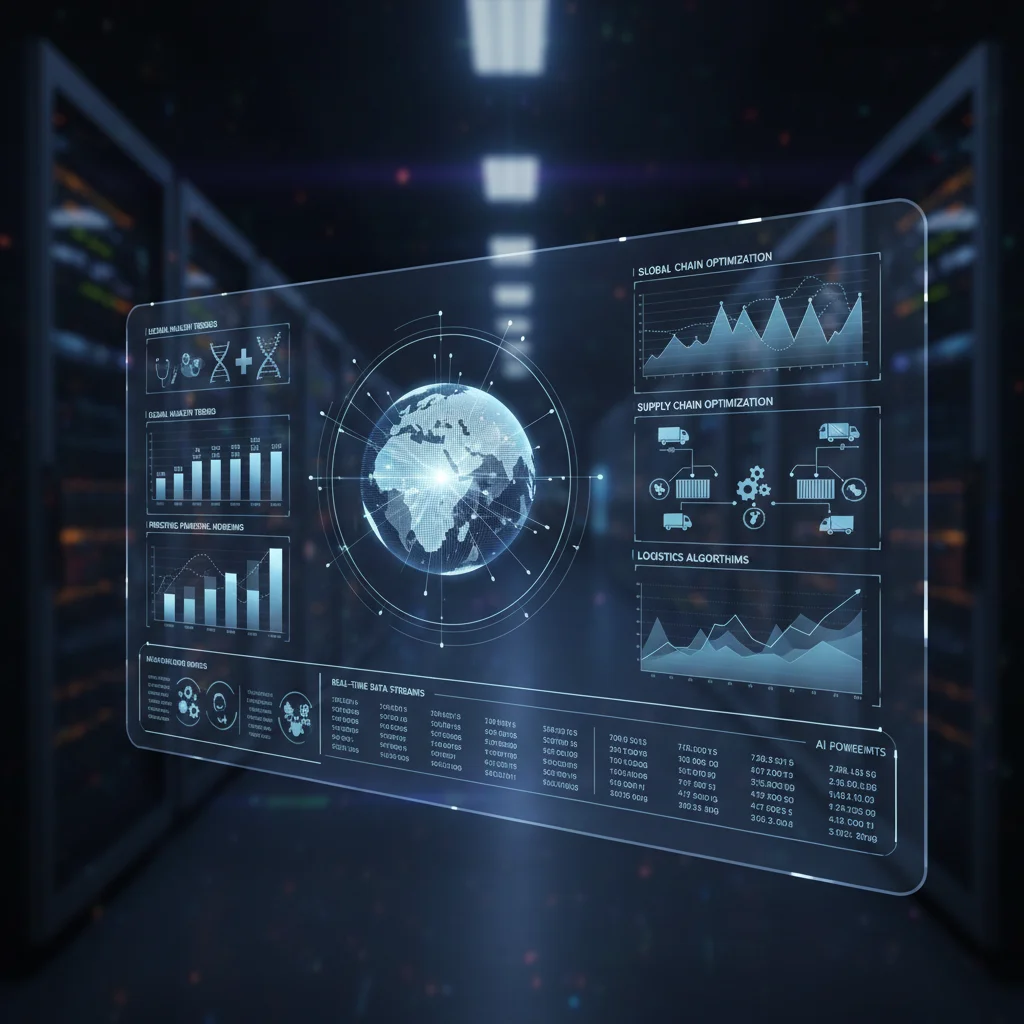
In an increasingly data-driven world, the ability to anticipate future events is no longer a luxury but a critical competitive advantage. By 2026, predictive analytics is poised to transform two crucial U.S. industries – healthcare and logistics – driving an astounding 25% boost in efficiency. This isn’t just about making better predictions; it’s about fundamentally reshaping operations, optimizing resource allocation, and delivering superior outcomes. As we delve into the intricate world of predictive analytics efficiency, we’ll explore the methodologies, real-world applications, challenges, and the profound impact this technology is having.
The concept of predictive analytics, while not entirely new, has matured significantly. Fueled by advancements in machine learning, artificial intelligence, and big data processing, it has moved beyond simple trend analysis to sophisticated forecasting models that can identify patterns, assess probabilities, and recommend actionable insights. For industries grappling with complex variables, tight margins, and high stakes, this capability is nothing short of revolutionary.
The Power of Predictive Analytics: A Foundational Understanding
At its core, predictive analytics uses historical data, statistical algorithms, and machine learning techniques to identify the likelihood of future outcomes based on past events. Unlike descriptive analytics (what happened) or diagnostic analytics (why it happened), predictive analytics focuses on “what will happen.” This forward-looking perspective empowers organizations to move from reactive strategies to proactive interventions.
The process typically involves several key steps:
- Data Collection: Gathering vast amounts of relevant historical data from various sources.
- Data Cleaning and Transformation: Preparing the data by handling missing values, outliers, and inconsistencies to ensure accuracy.
- Model Development: Selecting and training appropriate statistical or machine learning models (e.g., regression, classification, time series analysis) to identify patterns and relationships.
- Model Validation: Testing the model’s accuracy and reliability using unseen data.
- Deployment and Monitoring: Integrating the model into operational systems and continuously monitoring its performance, retraining as necessary.
The objective is clear: to enhance decision-making by providing a data-driven glimpse into the future. This capability is particularly impactful in industries where operational inefficiencies can lead to significant financial losses, compromised quality of service, or even endanger lives.
Healthcare in 2026: A Paradigm Shift Driven by Predictive Analytics
The U.S. healthcare system faces immense pressure: rising costs, an aging population, staff shortages, and the need for improved patient outcomes. Predictive analytics offers a powerful antidote, promising to enhance predictive analytics efficiency across the entire spectrum of care, from preventative measures to operational management.
Optimizing Patient Care and Outcomes
By 2026, predictive analytics will be deeply embedded in clinical decision-making. Imagine a system that can:
- Predict Disease Outbreaks: Analyzing public health data, social media trends, and environmental factors to anticipate flu seasons or outbreaks of infectious diseases, allowing for proactive resource allocation and vaccination campaigns.
- Personalize Treatment Plans: Leveraging a patient’s genetic profile, medical history, lifestyle data, and responses to previous treatments to predict which therapies will be most effective, minimizing trial-and-error and improving recovery rates.
- Identify High-Risk Patients: Algorithms can flag patients at higher risk of readmission, developing chronic conditions, or experiencing adverse drug reactions, enabling timely interventions and preventative care. This significantly reduces hospital stays and improves long-term health.
- Early Detection of Sepsis: Real-time monitoring of vital signs and lab results can predict the onset of sepsis hours before clinical symptoms appear, allowing for immediate treatment and drastically improving survival rates.
Streamlining Hospital Operations
Beyond direct patient care, predictive analytics is revolutionizing the administrative and logistical aspects of healthcare:
- Resource Allocation: Predicting patient admissions, discharges, and emergency room visits allows hospitals to optimize staffing levels, allocate beds more efficiently, and manage medical equipment inventory, reducing wait times and improving patient flow.
- Supply Chain Management: Forecasting demand for medications, medical supplies, and even blood products ensures that critical items are always in stock, minimizing waste and preventing shortages.
- Fraud Detection: Analyzing claims data to identify patterns indicative of fraudulent activities, saving healthcare providers and insurers billions of dollars annually.
- Workforce Management: Predicting staff absenteeism and turnover helps healthcare facilities proactively manage their workforce, ensuring adequate coverage and reducing burnout.
The target of a 25% efficiency boost in healthcare by 2026 is ambitious but achievable. It translates to fewer medical errors, shorter hospital stays, better preventative care, and a more financially sustainable system. The focus on predictive analytics efficiency is not just about cost-cutting; it’s about elevating the standard of care.

Logistics and Supply Chain in 2026: Navigating Complexity with Precision
The logistics industry is the backbone of the global economy, responsible for the timely and cost-effective movement of goods. However, it’s also an industry fraught with unpredictability: fluctuating fuel prices, weather disruptions, labor shortages, and unexpected demand shifts. Predictive analytics is emerging as the essential tool to bring order to this inherent chaos, promising a similar 25% leap in predictive analytics efficiency by 2026.
Optimizing Routes and Deliveries
One of the most immediate impacts of predictive analytics in logistics is in route optimization and delivery management:
- Dynamic Route Planning: Predicting traffic congestion, weather patterns, and road closures allows logistics companies to dynamically adjust routes in real-time, minimizing transit times, fuel consumption, and delivery delays.
- Last-Mile Delivery Optimization: Forecasting delivery windows and customer availability ensures higher first-attempt delivery rates, reducing failed deliveries and associated costs.
- Fleet Maintenance: Analyzing sensor data from vehicles to predict potential equipment failures before they occur. This enables proactive maintenance, reducing costly breakdowns, unscheduled downtime, and improving fleet longevity.
Enhancing Inventory and Warehouse Management
Efficient inventory and warehouse operations are critical for profitability. Predictive analytics provides the foresight to manage these aspects with unparalleled precision:
- Demand Forecasting: Accurately predicting future demand for products, taking into account seasonality, promotional activities, economic indicators, and even social media trends. This minimizes both overstocking (reducing carrying costs) and understocking (preventing lost sales).
- Warehouse Optimization: Predicting optimal placement of inventory within a warehouse based on demand patterns, improving picking efficiency and reducing labor costs.
- Staffing Needs: Forecasting peak periods and labor requirements allows warehouse managers to optimize staffing levels, avoiding overtime costs during slow periods and ensuring adequate support during busy times.
Supply Chain Resilience and Risk Management
The COVID-19 pandemic highlighted the fragility of global supply chains. Predictive analytics is now being used to build more resilient systems:
- Risk Prediction: Identifying potential disruptions such as geopolitical events, natural disasters, supplier failures, or port delays, allowing companies to develop contingency plans and diversify their supply sources.
- Supplier Performance: Predicting supplier reliability and quality issues, enabling proactive engagement and mitigation strategies.
- Pricing Optimization: Analyzing market trends, competitor pricing, and demand elasticity to predict optimal pricing strategies that maximize revenue and profitability.
The 25% efficiency gain targeted for logistics by 2026 means faster deliveries, lower operational costs, reduced environmental impact, and a more reliable supply chain. The focus on predictive analytics efficiency is transforming logistics from a reactive function into a strategic differentiator.
Challenges and Considerations for Widespread Adoption
While the benefits of predictive analytics are clear, achieving a 25% efficiency boost across these complex industries is not without its hurdles. Several key challenges need to be addressed:
- Data Quality and Availability: Predictive models are only as good as the data they are fed. In both healthcare and logistics, data can be siloed, inconsistent, or incomplete. Ensuring high-quality, standardized data is paramount.
- Integration with Existing Systems: Implementing predictive analytics often requires integrating new platforms with legacy systems, which can be technologically challenging and costly.
- Talent Gap: There’s a significant shortage of skilled data scientists, machine learning engineers, and analysts who can develop, deploy, and maintain these sophisticated models.
- Ethical and Privacy Concerns: Especially in healthcare, using sensitive patient data raises significant ethical and privacy concerns. Robust data governance, anonymization techniques, and compliance with regulations like HIPAA are critical.
- Change Management: Adopting predictive analytics requires a cultural shift within organizations. Employees need to trust the insights provided by algorithms and adapt their workflows accordingly.
- Model Explainability: “Black box” models, where the decision-making process is opaque, can be a barrier to adoption, particularly in high-stakes environments like healthcare. The push for explainable AI (XAI) is vital.
Overcoming these challenges requires a multi-faceted approach involving technological investment, talent development, robust data governance frameworks, and strong leadership committed to digital transformation. The pursuit of predictive analytics efficiency demands a holistic strategy.

The Future Landscape: Beyond 2026
The 25% efficiency gain by 2026 is just the beginning. The evolution of predictive analytics will continue at a rapid pace, driven by several emerging trends:
- Edge AI: Performing predictive analytics closer to the data source (e.g., on medical devices, delivery trucks) will enable real-time decision-making, reducing latency and improving responsiveness.
- Prescriptive Analytics: Moving beyond predicting what will happen to recommending the best course of action. This will automate more decision-making processes and further enhance predictive analytics efficiency.
- Reinforcement Learning: Algorithms that learn through trial and error, optimizing complex processes over time without explicit programming, will find increasing application in dynamic environments like logistics.
- Digital Twins: Creating virtual replicas of physical assets, processes, or even human bodies, which can be used to simulate scenarios and predict outcomes with high accuracy. This has immense potential in both healthcare (e.g., predicting how a patient will respond to a new drug) and logistics (e.g., optimizing a new warehouse layout).
- Interoperability and Data Sharing: Greater collaboration and secure data sharing between different organizations (e.g., hospitals sharing de-identified patient data, logistics companies sharing traffic data) will create richer datasets for more accurate predictions.
The synergy between these advanced analytical techniques and increasing data availability will unlock unprecedented levels of efficiency, innovation, and value creation. The journey towards maximizing predictive analytics efficiency is an ongoing one, punctuated by continuous learning and technological evolution.
Real-World Examples and Success Stories (Hypothetical for 2026)
To truly grasp the impact, let’s envision some hypothetical scenarios by 2026:
Healthcare: “Medi-Predict” Integrated Care System
Imagine a nationwide healthcare network, “Medi-Predict,” that has achieved a 27% efficiency boost. Through a comprehensive predictive analytics platform, they:
- Reduced Hospital Readmissions by 18%: By identifying high-risk patients upon discharge and automatically enrolling them in personalized remote monitoring programs and follow-up schedules.
- Optimized Surgical Schedules by 22%: Predicting surgical duration, recovery times, and operating room availability, leading to fewer cancellations and better utilization of costly resources.
- Trimmed Drug Supply Waste by 15%: Precisely forecasting demand for thousands of medications, minimizing expired drugs and ensuring necessary stock levels.
Patients experience shorter wait times, more personalized care, and better health outcomes, while the system operates with greater financial stability. This is a direct result of prioritizing predictive analytics efficiency.
Logistics: “GlobalFlow” Autonomous Supply Chain
Consider “GlobalFlow,” a leading logistics provider that has achieved a 26% increase in operational efficiency. Their success stems from:
- Cut Fuel Costs by 10% Annually: Through predictive weather routing and real-time traffic analysis, optimizing delivery paths for their vast fleet.
- Improved On-Time Delivery Rates to 98.5%: By anticipating potential delays across thousands of shipping lanes and proactively rerouting or adjusting schedules.
- Reduced Warehouse Labor Costs by 12%: Using AI to predict inventory movement and optimize picking routes for autonomous robots and human workers alike.
- Minimized Supply Chain Disruptions by 20%: Employing predictive models to identify and mitigate risks from geopolitical tensions to natural disasters, rerouting shipments before problems escalate.
For GlobalFlow, predictive analytics efficiency means not just cost savings, but also enhanced customer satisfaction and a significant competitive edge in a demanding market.
Conclusion: The Inevitable Rise of Predictive Analytics
The journey to 2026 marks a pivotal moment for predictive analytics. The projected 25% efficiency boost in U.S. healthcare and logistics isn’t a mere aspiration; it’s a testament to the transformative power of data-driven foresight. From revolutionizing patient care and optimizing hospital operations to streamlining global supply chains and enhancing logistical resilience, predictive analytics is proving to be an indispensable tool for navigating complexity and uncertainty.
While challenges remain, the relentless pace of technological innovation, coupled with the increasing recognition of data’s strategic value, ensures that predictive analytics will continue to evolve and permeate every facet of these industries. Organizations that embrace this technology will not only achieve significant efficiency gains but also foster innovation, improve service quality, and secure a sustainable future. The era of proactive, data-informed decision-making is here, and its impact on predictive analytics efficiency is just beginning to unfold.
For businesses and professionals in healthcare and logistics, understanding and implementing predictive analytics is no longer optional. It is the key to unlocking unprecedented levels of performance and staying ahead in a rapidly changing world. The future is predictable, and those who harness this power will lead the way.