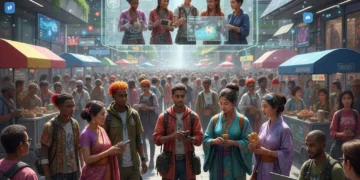
Metaverse Economy: U.S. Consumer Trends 2024-2025

Decoding the Metaverse Economy: 3 Critical U.S. Consumer Behavior Trends to Watch in the Next 12 Months
The metaverse, once a concept confined to science fiction, is rapidly transitioning into a tangible economic frontier. As technology advances and adoption grows, understanding the evolving landscape of metaverse consumer trends in the U.S. becomes paramount for businesses, innovators, and marketers alike. The next 12 months are poised to be a pivotal period, solidifying certain behaviors and opening new avenues for interaction, commerce, and identity. This article will deep-dive into three critical trends shaping the U.S. metaverse economy, offering insights into what to expect and how to prepare.
The metaverse represents a persistent, interconnected set of virtual spaces where users can interact with each other, digital objects, and AI-driven entities in real-time. It’s not a single destination but rather an ecosystem of experiences, platforms, and technologies, including virtual reality (VR), augmented reality (AR), blockchain, and artificial intelligence (AI). For U.S. consumers, this digital realm is becoming an increasingly significant part of their daily lives, influencing everything from how they socialize and play to how they shop and work. The sheer scale of potential economic activity within this nascent space is staggering, with projections placing its market value in the trillions over the coming decade.
However, the metaverse is not a monolithic entity, and consumer engagement varies significantly. Understanding the nuances of U.S. consumer behavior within this space is crucial. Are consumers primarily seeking entertainment, social connection, or utility? How willing are they to invest real-world currency into virtual assets? What are their expectations regarding privacy, security, and digital ownership? These are the questions that define the current landscape of metaverse consumer trends. By examining these trends, we can better predict the trajectory of the metaverse economy and identify the opportunities that lie ahead.
The acceleration of digital transformation, fueled by the pandemic and advancements in immersive technologies, has laid a fertile ground for the metaverse’s growth. Consumers are already comfortable with digital transactions, online communities, and virtual entertainment. The metaverse takes these existing behaviors to the next level, offering a more immersive, persistent, and interconnected digital experience. As we look towards the next year, three major themes are emerging that will dictate how U.S. consumers interact with and contribute to the metaverse economy.
Trend 1: The Ascendance of Digital Identity and Self-Expression
One of the most profound shifts in metaverse consumer trends is the increasing importance of digital identity and self-expression. In the physical world, our identity is often shaped by our appearance, possessions, and social interactions. In the metaverse, these elements are amplified and given new dimensions. Avatars are more than just digital representations; they are extensions of our real-world selves, allowing for unprecedented levels of customization and creative expression.
U.S. consumers, particularly younger demographics, are investing significant time and resources into crafting their digital personas. This goes beyond choosing a username and profile picture; it involves selecting unique clothing (often referred to as ‘digital fashion’), accessories, hairstyles, and even virtual homes or spaces. Brands that understand this fundamental need for self-expression are finding immense success by offering digital collectibles, exclusive avatar skins, and customizable virtual environments. The demand for unique, scarce, and desirable digital assets is skyrocketing, creating a vibrant market for digital creators and luxury brands alike.
The Role of Digital Fashion and Collectibles
Digital fashion, in particular, is a booming segment of the metaverse economy. Consumers are willing to pay real money for virtual outfits that allow them to stand out in digital spaces or express their affiliation with certain communities or brands. This trend is driven by several factors: the desire for novelty, the ability to experiment with styles that might be too bold for the physical world, and the social status associated with owning exclusive digital items. Major fashion houses are already establishing a presence in the metaverse, launching virtual collections, hosting digital fashion shows, and collaborating with metaverse platforms to offer unique brand experiences.
Beyond fashion, digital collectibles (often in the form of Non-Fungible Tokens, or NFTs) are becoming key components of digital identity. Owning a rare NFT can signal status, taste, and membership in exclusive online communities. These digital assets are not just static images; they can be integrated into metaverse experiences, used as profile pictures, or even provide utility within specific virtual worlds. The psychological drivers behind collecting in the physical world – scarcity, ownership, and social signaling – are translating seamlessly into the digital realm, albeit with new technological underpinnings.
Personalization and Customization at Scale
The metaverse also allows for an unprecedented degree of personalization. Users can not only customize their avatars but also their virtual spaces, creating digital homes, offices, or social hubs that reflect their individual tastes and preferences. This extends to personalizing their experiences, choosing which virtual worlds to inhabit, which communities to join, and which activities to participate in. For businesses, this means moving beyond one-size-fits-all marketing strategies and towards highly personalized, interactive experiences that resonate with individual consumer identities.
The implications for brands are significant. Companies that can empower users to express themselves authentically within the metaverse – whether through customizable products, interactive experiences, or co-creation opportunities – will likely gain a competitive edge. This trend highlights a fundamental shift from passive consumption to active participation in shaping one’s digital presence and environment.

Trend 2: The Expansion of Virtual Commerce and Digital Ownership
The second critical area in metaverse consumer trends is the rapid expansion of virtual commerce and the growing emphasis on digital ownership. While online shopping has been a norm for decades, the metaverse introduces a new dimension: immersive, interactive purchasing experiences and verifiable ownership of digital goods. U.S. consumers are becoming increasingly comfortable with the idea of spending real money on virtual items, and this trend is only set to accelerate.
Virtual commerce in the metaverse goes beyond simply buying digital versions of physical goods. It encompasses the purchase of virtual land, unique digital art, exclusive access passes to virtual events, and even services performed by other avatars. The underlying blockchain technology often provides a secure and transparent way to establish ownership of these digital assets, giving them real economic value and enabling secondary markets.
Seamless Integration of Shopping and Experience
Unlike traditional e-commerce, virtual commerce in the metaverse is often integrated directly into immersive experiences. Imagine attending a virtual concert where you can purchase exclusive digital merchandise worn by your favorite artist’s avatar, or browsing a virtual showroom where you can ‘try on’ digital clothing with your avatar before buying its physical counterpart. This blend of entertainment, social interaction, and shopping creates a more engaging and memorable purchasing journey.
For U.S. retailers, the metaverse offers an opportunity to create entirely new retail experiences that are not bound by the limitations of physical space. Brands can build elaborate virtual stores, host interactive product launches, and offer personalized shopping assistants powered by AI. The key is to leverage the unique capabilities of the metaverse to provide value that cannot be replicated in traditional online or offline channels. This means focusing on experiential commerce rather than just transactional exchanges.
The Rise of Digital Property and Monetization
Digital ownership, often facilitated by NFTs, is a cornerstone of the metaverse economy. Consumers are not just buying digital items; they are acquiring verifiable ownership of unique digital assets. This has given rise to new forms of digital property, such as virtual land, which can be bought, sold, and developed, much like real estate in the physical world. Early adopters have seen significant returns on their investments in virtual land, attracting both individual consumers and large corporations.
Moreover, the metaverse is enabling new monetization opportunities for consumers themselves. Users can create and sell their own digital content, design virtual experiences, or even offer services within the metaverse. This ‘creator economy’ within the metaverse empowers individuals to become active participants in the economy, rather than just passive consumers. This shift towards user-generated content and decentralized economic models is a powerful driver of engagement and innovation among U.S. consumers.
The challenge for businesses will be to navigate the complexities of digital rights, intellectual property, and secure payment systems within the metaverse. Ensuring trust and transparency in virtual transactions will be critical for widespread consumer adoption and sustained economic growth.
Trend 3: The Demand for Immersive, Personalized, and Social Experiences
The third major trend in metaverse consumer trends is the overwhelming demand for immersive, personalized, and deeply social experiences. The metaverse isn’t just about viewing content; it’s about being present within it, interacting with others, and shaping the experience itself. U.S. consumers are increasingly seeking digital environments that offer a richer, more engaging, and more meaningful form of interaction than traditional social media or gaming platforms.
This trend is driven by a desire for deeper connection, escapism, and novel forms of entertainment. Consumers want to attend virtual concerts that feel as electrifying as live events, explore virtual worlds with friends, and participate in interactive narratives that adapt to their choices. The more immersive and personalized an experience is, the more likely consumers are to spend time and money within that particular metaverse environment.
Beyond Gaming: Entertainment and Education
While gaming has been a primary entry point for many into virtual worlds, the demand for immersive experiences is rapidly expanding into other sectors. Virtual concerts, art exhibitions, and movie screenings are becoming increasingly sophisticated, offering unique interactive elements that go beyond traditional streaming. Educational platforms are also leveraging the metaverse to create engaging learning environments, allowing students to explore historical sites, conduct virtual science experiments, or interact with complex concepts in 3D.
The appeal lies in the enhanced sense of presence and agency. Consumers are no longer passive spectators but active participants, able to influence the unfolding events and interact with the environment in real-time. This level of immersion fosters a stronger emotional connection and a greater sense of belonging within the digital space.

The Power of Social Connection and Community Building
At its core, the metaverse is a social space. U.S. consumers are drawn to virtual worlds where they can connect with like-minded individuals, form communities, and engage in shared activities. This social dimension is a powerful driver of engagement and retention. Platforms that facilitate meaningful social interactions, enable collaborative experiences, and empower users to build their own communities are seeing significant traction.
Brands can tap into this by creating branded social spaces, hosting virtual events that encourage interaction, and fostering communities around their products or values. The metaverse offers an unprecedented opportunity to build direct, authentic relationships with consumers in a way that feels less transactional and more communal. The success of a metaverse experience often hinges on its ability to foster a sense of belonging and shared purpose among its users.
Hyper-Personalization Through AI and Data
The demand for personalization is intertwined with the quest for immersive experiences. Advanced AI and robust data analytics will play a crucial role in delivering hyper-personalized metaverse experiences. Imagine virtual environments that dynamically adapt to your preferences, AI-powered guides that anticipate your needs, or content recommendations that are perfectly tailored to your digital identity and past interactions. This level of personalization will make metaverse experiences feel more relevant, engaging, and ultimately, more valuable to the individual consumer.
However, this also raises important questions about data privacy and ethical AI usage. Consumers will expect transparency about how their data is used to personalize experiences and will demand control over their digital footprint within the metaverse. Companies that prioritize privacy-by-design and build trust with their users will be best positioned to capitalize on the demand for personalized immersive experiences.
Navigating the Future: Implications for Businesses
Understanding these metaverse consumer trends is not merely an academic exercise; it has direct and significant implications for businesses operating across various sectors. The next 12 months will be a period of rapid evolution, and companies that fail to adapt risk being left behind.
Strategic Investment in Digital Assets and Experiences
Businesses need to strategically invest in digital assets and experiences that resonate with the evolving consumer landscape. This means exploring opportunities in digital fashion, NFTs, virtual real estate, and immersive brand activations. It’s not enough to simply have a presence; the presence must be meaningful, interactive, and aligned with consumer expectations for self-expression and ownership.
Building Authentic Communities
The metaverse thrives on community. Brands should focus on building authentic communities around their products or services within virtual worlds. This involves fostering interaction, encouraging user-generated content, and providing platforms for consumers to connect with each other and with the brand in new ways. Community engagement will be a key metric of success in the metaverse economy.
Prioritizing User-Centric Design and Privacy
As immersion and personalization become paramount, user-centric design will be critical. Experiences must be intuitive, engaging, and provide genuine value. Furthermore, with the increasing collection of personal data in the metaverse, prioritizing user privacy and data security will not just be a regulatory requirement but a fundamental aspect of building consumer trust. Transparency in data handling and giving users control over their digital identities will be non-negotiable.
Embracing Interoperability and Open Standards
While proprietary platforms will continue to exist, the long-term vision of the metaverse involves interoperability – the ability for digital assets, identities, and experiences to seamlessly transfer between different virtual worlds. Businesses that embrace open standards and support interoperable solutions will contribute to a more expansive and user-friendly metaverse, which will ultimately benefit consumers and foster greater adoption.
Continuous Learning and Experimentation
The metaverse is still in its early stages, and the technology, consumer behaviors, and business models are constantly evolving. Companies must adopt a mindset of continuous learning and experimentation. This means being willing to pilot new initiatives, gather feedback, iterate quickly, and adapt strategies based on real-world data and emerging metaverse consumer trends. The landscape will be dynamic, and agility will be a significant competitive advantage.
Conclusion
The metaverse economy is no longer a distant future but a present reality, with U.S. consumer behavior acting as a primary catalyst for its growth and evolution. The next 12 months will be defined by the ascendance of digital identity and self-expression, the expansion of virtual commerce and digital ownership, and an insatiable demand for immersive, personalized, and social experiences. For businesses, these trends represent not just challenges but unprecedented opportunities to connect with consumers in novel and profound ways.
By understanding these critical metaverse consumer trends, brands can strategically position themselves to thrive in this new digital frontier. The key lies in embracing innovation, prioritizing user experience, fostering community, and building trust in a world where the lines between the physical and digital are increasingly blurred. The metaverse is here, and the consumers are leading the way – are you ready to follow?