2026 Creative Landscape: Top 4 Emerging Trends US Innovators Must Embrace Now
Navigating the 2026 Creative Landscape: 4 Emerging Trends US Innovators Must Embrace Now
The year 2026 is rapidly approaching, bringing with it a whirlwind of technological advancements, shifting consumer behaviors, and evolving societal values. For US innovators, understanding and embracing the emerging trends in the creative landscape is not merely an advantage; it’s a necessity for survival and growth. The pace of change is accelerating, and those who fail to adapt will inevitably be left behind. This comprehensive guide will delve into four pivotal trends that are poised to redefine creativity, innovation, and engagement across various industries. From the pervasive influence of artificial intelligence to the growing demand for authentic, sustainable practices, and the allure of hyper-personalized and immersive experiences, the future of creativity is dynamic and multifaceted.
The creative landscape has always been a mirror reflecting our collective aspirations, fears, and technological capabilities. As we stand on the precipice of 2026, the reflections are becoming clearer, revealing a world where innovation is no longer a luxury but a fundamental requirement. Businesses, artists, designers, marketers, and technologists alike must critically assess their current strategies and begin integrating these forward-thinking approaches. The goal is not just to keep up, but to lead, to inspire, and to create solutions that resonate deeply with an increasingly discerning global audience.
This article aims to provide a robust framework for understanding these trends, offering insights into their implications and practical strategies for implementation. By proactively engaging with these transformative forces, US innovators can not only secure their position in the market but also unlock unprecedented opportunities for groundbreaking creative work. Let’s embark on this journey to explore the future of the creative landscape in 2026.
Trend 1: The Ubiquitous Integration of AI in Creative Processes
Artificial Intelligence (AI) is no longer a futuristic concept confined to science fiction; it is an undeniable force reshaping nearly every industry, and the creative sector is no exception. By 2026, AI will be ubiquitously integrated into creative processes, moving beyond mere automation to become a collaborative partner for innovators. This trend signifies a profound shift in how creative work is conceived, developed, and executed. US innovators must recognize that AI is not here to replace human creativity, but to augment it, providing tools that enhance efficiency, unlock new possibilities, and facilitate deeper insights.
Generative AI: A New Frontier for Idea Generation
One of the most exciting aspects of AI in creativity is the rise of generative AI. Tools capable of creating text, images, music, and even video based on prompts are becoming increasingly sophisticated. For innovators, this means an unprecedented ability to rapidly prototype ideas, explore diverse aesthetics, and overcome creative blocks. Imagine a graphic designer using AI to generate hundreds of logo variations in minutes, or a content creator leveraging AI to draft compelling narratives for different audience segments. The sheer speed and scale at which ideas can be generated will allow human creatives to focus on refinement, strategic direction, and injecting the unique emotional and cultural nuances that only humans can provide.
AI-Powered Personalization and Adaptation
Beyond generation, AI will also play a crucial role in personalizing creative outputs at scale. Algorithms can analyze vast amounts of data to understand individual preferences, cultural contexts, and historical engagement patterns. This enables innovators to tailor content, designs, and experiences to specific users or micro-segments, leading to far more impactful and resonant creative work. Think of an advertising campaign that dynamically adjusts its visuals and messaging based on the viewer’s real-time mood or location, or an e-commerce platform that curates product displays with AI-generated visual stories unique to each shopper. This level of personalized engagement will become a standard expectation in the 2026 creative landscape.
Streamlining Workflows and Enhancing Efficiency
From project management to repetitive tasks, AI will streamline creative workflows, freeing up valuable human capital for higher-order thinking. AI can handle mundane tasks like image tagging, video transcription, data analysis for market research, and even initial content moderation. This efficiency gain is not just about saving time; it’s about enabling creative teams to focus on the strategic, conceptual, and emotionally intelligent aspects of their work, where human input remains irreplaceable. The integration of AI tools will necessitate new skill sets, including prompt engineering, ethical AI deployment, and understanding how to effectively collaborate with intelligent systems.
Ethical Considerations and Responsible AI Development
As AI becomes more integral, ethical considerations will move to the forefront. Innovators must grapple with issues of bias in AI-generated content, intellectual property rights for AI-assisted creations, and the potential impact on employment. Developing responsible AI guidelines and fostering transparency in AI usage will be paramount. US innovators have an opportunity to lead in establishing ethical frameworks that ensure AI serves humanity’s best interests while fostering a vibrant and fair creative ecosystem. The discussion around copyright and attribution for AI-generated works will intensify, requiring new legal and industry standards.
Trend 2: Hyper-Personalization and the Experience Economy
In an increasingly saturated market, generic content and one-size-fits-all approaches are losing their effectiveness. The second major trend defining the 2026 creative landscape is the evolution towards hyper-personalization, driven by sophisticated data analytics and AI. Consumers are no longer passive recipients; they expect experiences tailored specifically to their tastes, needs, and behaviors. This trend is deeply intertwined with the experience economy, where the value lies not just in the product or service itself, but in the memorable and meaningful interactions it facilitates.
Beyond Basic Customization: Individualized Journeys
Hyper-personalization goes far beyond simply addressing a customer by their first name. It involves creating entirely individualized journeys, from initial discovery to post-purchase engagement. This means understanding not just demographic data, but psychographic profiles, behavioral patterns, emotional states, and even real-time contextual information. Creative innovators will leverage this data to craft bespoke narratives, design unique interfaces, and offer highly relevant product or service recommendations. Imagine a digital art gallery that curates exhibits based on your past viewing habits and even your current mood, or an educational platform that adapts its teaching style and content based on your learning pace and preferred interaction methods.
Data-Driven Creativity and Empathy
The foundation of hyper-personalization is robust data analytics. Innovators will need to become adept at collecting, interpreting, and applying data in a way that fuels creative insights. This isn’t about being intrusive, but about using data empathetically to anticipate needs and deliver genuine value. The challenge lies in balancing data-driven precision with maintaining a human touch and avoiding a sense of algorithmic coldness. Creative teams will include data scientists and behavioral psychologists, fostering a multidisciplinary approach to understanding and engaging audiences on a deeper level.
Interactive and Adaptive Content Formats
To deliver hyper-personalized experiences, creative content itself must become more interactive and adaptive. Static content will give way to dynamic formats that respond to user input, preferences, and context. This could include choose-your-own-adventure narratives, adaptive web designs that reorganize based on user intent, or marketing campaigns that evolve in real-time based on engagement metrics. The goal is to make the user feel seen, understood, and actively involved in the creative experience, rather than just being a passive observer.

Building Loyalty Through Unique Experiences
In a world where products are increasingly commoditized, unique and personalized experiences become the key differentiator. Brands that excel at hyper-personalization will foster stronger customer loyalty and advocacy. When a consumer feels that a brand truly understands and caters to their individual preferences, a deeper connection is formed. This extends to customer service, product development, and community building, where personalized interactions create a sense of belonging and value. US innovators must invest in the infrastructure and talent required to deliver these sophisticated, individualized experiences consistently.
Trend 3: Sustainable and Ethical Design Principles
As global awareness of environmental and social issues continues to grow, consumers are increasingly demanding that brands and creators adopt sustainable and ethical practices. By 2026, sustainable and ethical design principles will transition from being a niche concern to a fundamental expectation across the creative landscape. Innovators who integrate these principles into every stage of their work will not only meet consumer demands but also contribute positively to global well-being and build stronger, more resilient brands.
Circular Economy and Cradle-to-Cradle Design
The linear model of ‘take-make-dispose’ is becoming obsolete. Creative innovators will embrace circular economy principles, designing products, services, and experiences with their entire lifecycle in mind. This means prioritizing materials that can be recycled, reused, or composted, minimizing waste, and designing for longevity and repairability. Cradle-to-cradle design, where every component is considered a nutrient for another system, will become a guiding philosophy. For instance, packaging designers will innovate with biodegradable materials and modular components, while fashion designers will focus on upcycling, zero-waste patterns, and responsible sourcing.
Transparency and Authenticity in Messaging
Consumers are wary of ‘greenwashing.’ By 2026, authenticity and transparency in sustainable practices will be paramount. Innovators must clearly communicate their ethical sourcing, manufacturing processes, and environmental impact. This requires honest storytelling, verifiable certifications, and a genuine commitment to social responsibility. Creative campaigns will not just sell products but also educate consumers about sustainable choices and the positive impact of ethical consumption. Brands that can genuinely demonstrate their commitment to sustainability will build trust and resonate with a values-driven audience.
Inclusive and Accessible Design
Ethical design extends beyond environmental concerns to encompass social responsibility, particularly in fostering inclusivity and accessibility. Innovators will prioritize designing for diverse user groups, including those with disabilities, varying cultural backgrounds, and different socio-economic statuses. This means creating digital interfaces that are easy to navigate for everyone, physical products that accommodate different body types, and content that is culturally sensitive and representative. Universal design principles will become standard, ensuring that creative outputs are usable and enjoyable by the widest possible audience, reflecting a more equitable society.
Local Sourcing and Community Impact
The trend towards sustainability also encourages a focus on local sourcing and supporting local communities. Innovators will explore opportunities to collaborate with local artisans, use regionally available materials, and contribute to local economies. This reduces carbon footprints associated with long-distance transportation and fosters a sense of community pride and ownership. Creative projects will increasingly integrate social impact goals, aiming to solve local problems or empower marginalized groups through design and innovation.
Trend 4: Immersive Experiences and the Blurring of Realities
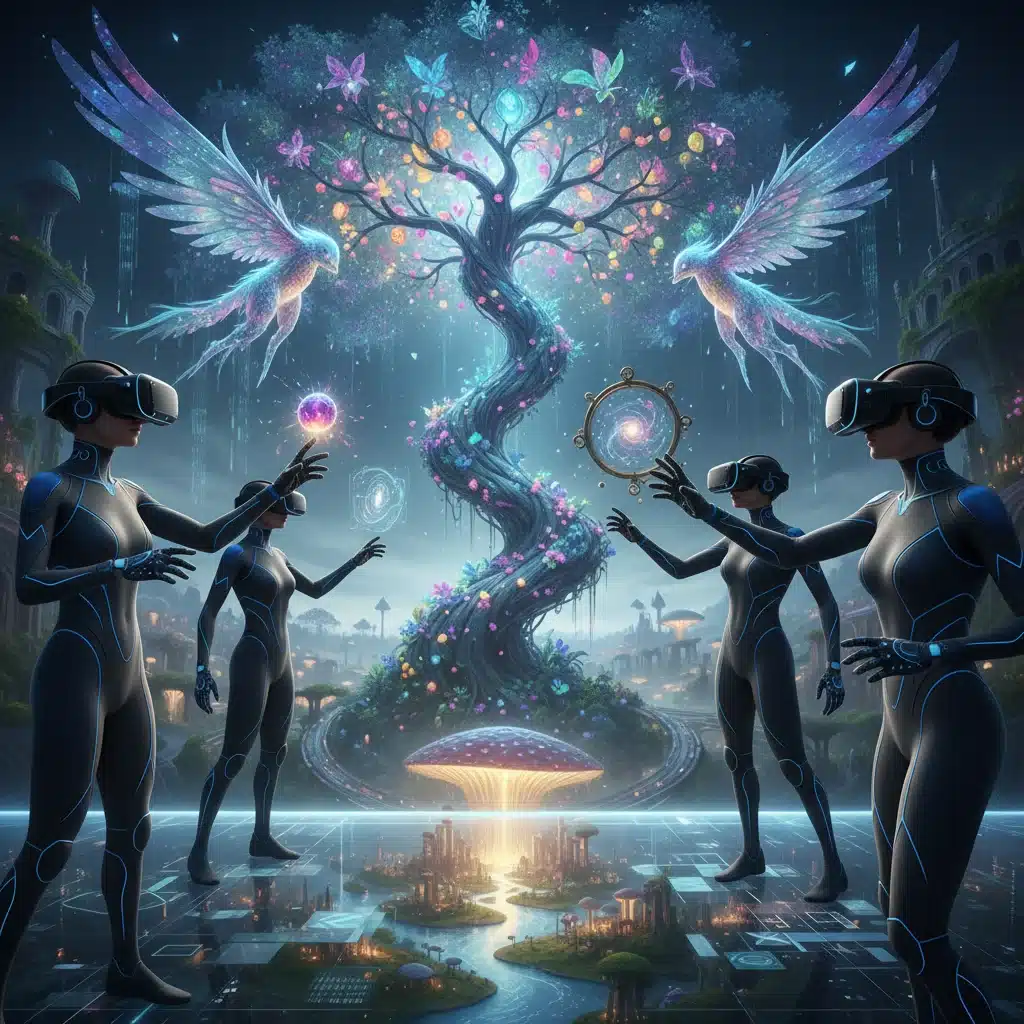
The fourth transformative trend shaping the 2026 creative landscape is the rapid advancement and widespread adoption of immersive technologies. Augmented Reality (AR), Virtual Reality (VR), and Mixed Reality (MR) are evolving from niche applications to powerful platforms for storytelling, entertainment, education, and commerce. US innovators must explore how these technologies can create deeply engaging, interactive, and memorable experiences that blur the lines between the physical and digital worlds.
Beyond Screens: Spatial Computing and Digital Overlays
The future of interaction is moving beyond flat screens. Spatial computing, which allows digital content to interact with the real world in 3D space, will become increasingly prevalent. AR, in particular, will see widespread adoption through improved mobile capabilities and dedicated AR glasses. Innovators will create digital overlays that enhance our physical environments, providing contextual information, interactive entertainment, and personalized guidance. Imagine walking through a city and seeing historical facts pop up over landmarks, or trying on clothes virtually in your own home with perfect accuracy. This merging of physical and digital realities offers a vast canvas for creative expression.
The Metaverse and Persistent Virtual Worlds
While the concept of the metaverse is still evolving, by 2026, persistent virtual worlds will offer rich opportunities for creative exploration and community building. Innovators will design virtual spaces for social interaction, gaming, commerce, and artistic performance. These metaverses will require new forms of content creation, from 3D assets and avatars to interactive narratives and virtual architecture. The challenge lies in creating compelling, interoperable, and accessible virtual environments that truly resonate with users and offer meaningful experiences beyond novelty. Brands will establish virtual presences, artists will create digital installations, and educators will build immersive learning environments.
Haptic Feedback and Multi-Sensory Engagement
To make immersive experiences truly convincing, innovators will increasingly incorporate haptic feedback and other multi-sensory elements. Beyond just sight and sound, the ability to feel textures, temperatures, and even subtle vibrations will significantly enhance immersion. Imagine a VR game where you can feel the impact of a blow or the texture of a virtual object, or an AR shopping experience where you can ‘feel’ the fabric of a garment. This multi-sensory approach will deepen emotional engagement and create more memorable interactions, pushing the boundaries of what’s possible in the creative landscape.
Interactive Storytelling and Co-Creation
Immersive technologies are ideal for interactive storytelling, where users are not just spectators but active participants in the narrative. Innovators will craft experiences where choices made by the user directly influence the plot, characters, and outcome. Furthermore, these platforms will facilitate co-creation, allowing users to contribute to and shape the virtual worlds they inhabit. This shift from passive consumption to active participation and creation will foster deeper engagement and a sense of ownership, making every experience unique and personal. Educational content will become more experiential, allowing learners to virtually explore historical events or scientific phenomena.
Strategies for US Innovators to Embrace the Creative Landscape of 2026
Understanding these trends is the first step; the next is to strategically integrate them into your innovation roadmap. For US innovators, proactive engagement is crucial to maintaining a competitive edge and fostering groundbreaking work in the evolving creative landscape.
Invest in AI Literacy and Talent Development
To harness the power of AI, organizations must invest in AI literacy across their teams. This means not just hiring AI specialists but also upskilling existing creative professionals in prompt engineering, ethical AI use, and understanding AI’s capabilities and limitations. Foster a culture of experimentation with AI tools and encourage interdisciplinary collaboration between creative and technical teams. Establishing internal AI guidelines and best practices will also be critical for responsible adoption.
Prioritize Data-Driven Empathy and User Research
To excel in hyper-personalization, innovators must deepen their understanding of their target audiences. This requires robust user research methodologies, advanced data analytics capabilities, and a commitment to using insights to drive empathetic design. Move beyond demographics to psychographics and behavioral data. Implement feedback loops and A/B testing to continuously refine personalized experiences. Ethical data collection and privacy considerations must be at the forefront of all strategies.
Integrate Sustainability from Concept to Execution
Sustainable and ethical design should not be an afterthought but an integral part of the creative process from conception. Develop clear sustainability goals, conduct lifecycle assessments for products and services, and actively seek out eco-friendly materials and processes. Transparency in communication about sustainable efforts is key to building trust. Partner with suppliers and manufacturers who share similar ethical commitments. Consider the social impact of your creations, ensuring they are inclusive and contribute positively to society.
Experiment with Immersive Technologies
Start small but think big when it comes to immersive experiences. Experiment with AR filters for social media, develop simple VR prototypes, or explore spatial computing applications relevant to your industry. Invest in hardware and software that support these technologies, and encourage creative teams to explore their potential for storytelling, interaction, and brand engagement. Collaborate with specialized immersive technology studios if internal expertise is lacking. The learning curve is steep, but the potential for differentiation is immense.
Foster a Culture of Continuous Learning and Adaptability
The creative landscape of 2026 will be characterized by rapid evolution. Innovators must cultivate a culture of continuous learning, curiosity, and adaptability. Encourage experimentation, embrace failure as a learning opportunity, and stay informed about emerging technologies and societal shifts. Cross-functional collaboration will be vital, breaking down silos between departments to foster holistic innovation. Attending industry conferences, participating in workshops, and engaging with thought leaders will help teams stay ahead of the curve.
Conclusion: Shaping the Future of Creativity
The 2026 creative landscape presents both formidable challenges and unparalleled opportunities for US innovators. By embracing the ubiquitous integration of AI, mastering hyper-personalization, embedding sustainable and ethical design principles, and pioneering immersive experiences, innovators can not only navigate this complex terrain but also actively shape its future. The key lies in a proactive, adaptable, and human-centered approach to technology and creativity.
The future of creativity is not just about what we can build, but why we build it, and for whom. It’s about leveraging powerful tools like AI to amplify human ingenuity, using data to create deeply resonant experiences, designing with a profound respect for our planet and its people, and crafting immersive worlds that inspire wonder and connection. US innovators have a unique opportunity to lead this charge, setting new standards for creativity, responsibility, and impact on a global scale. The time to act is now, to innovate with purpose, and to craft a creative future that is both brilliant and sustainable.