Crafting Tomorrow: How Diverse Perspectives Reshape Modern Living
We often treat the future as a distant destination we’re hurtling towards, a place that will simply happen to us. This passive stance leaves us feeling overwhelmed by the relentless pace of change, reacting to cultural shifts and technological disruptions rather than anticipating them. But what if the future isn’t a destination at all? What if it’s a structure we are building, moment by moment, with the creative ideas we choose to engage with and the cultural currents we decide to navigate?
The forces shaping modern living are not isolated phenomena. The spark of a new creative idea in one field, the subtle evolution of a cultural norm in another, and a nascent technological trend are all deeply interconnected. Technology acts as a powerful accelerator, collapsing the distance between cultures and ideas, forcing them to collide and merge in unpredictable ways. This convergence creates both immense opportunity and significant confusion, making it more critical than ever to understand the underlying patterns driving this constant state of flux.
This article serves as a blueprint for moving from a reactive to a proactive mindset. We will first deconstruct the myth of creativity, revealing it as a practical skill of connection that anyone can cultivate. Next, we will explore the powerful cultural dynamics that influence our daily choices, from local traditions to global digital fusions. Finally, we will provide a framework for decoding future trends, not as a form of fortune-telling, but as a strategic tool for building a more intentional and enriched modern life.
The Nexus of Imagination: Where Creative Ideas Begin
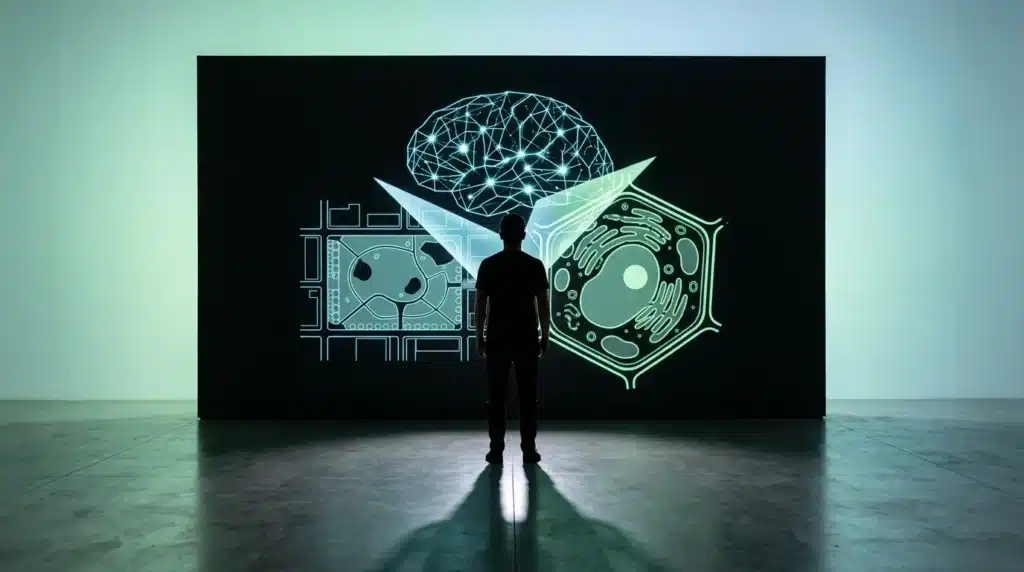
The myth of the lone genius striking gold in a moment of isolated brilliance is a seductive lie. We cling to this romantic image, but the truth is far more chaotic and collaborative. Most creative ideas are not born; they are assembled from the spare parts of other concepts, often from wildly unrelated fields. It is a process of collision, not immaculate conception.
This isn’t just a theory. Research from Stanford’s d.school suggests that teams with members from at least three different disciplines outperform homogenous groups by over 40% in generating unique solutions. The friction between a sociologist’s understanding of human behavior and an engineer’s grasp of systems can spark genuine cultural evolution. This process is about embracing cognitive diversity. It’s messy.
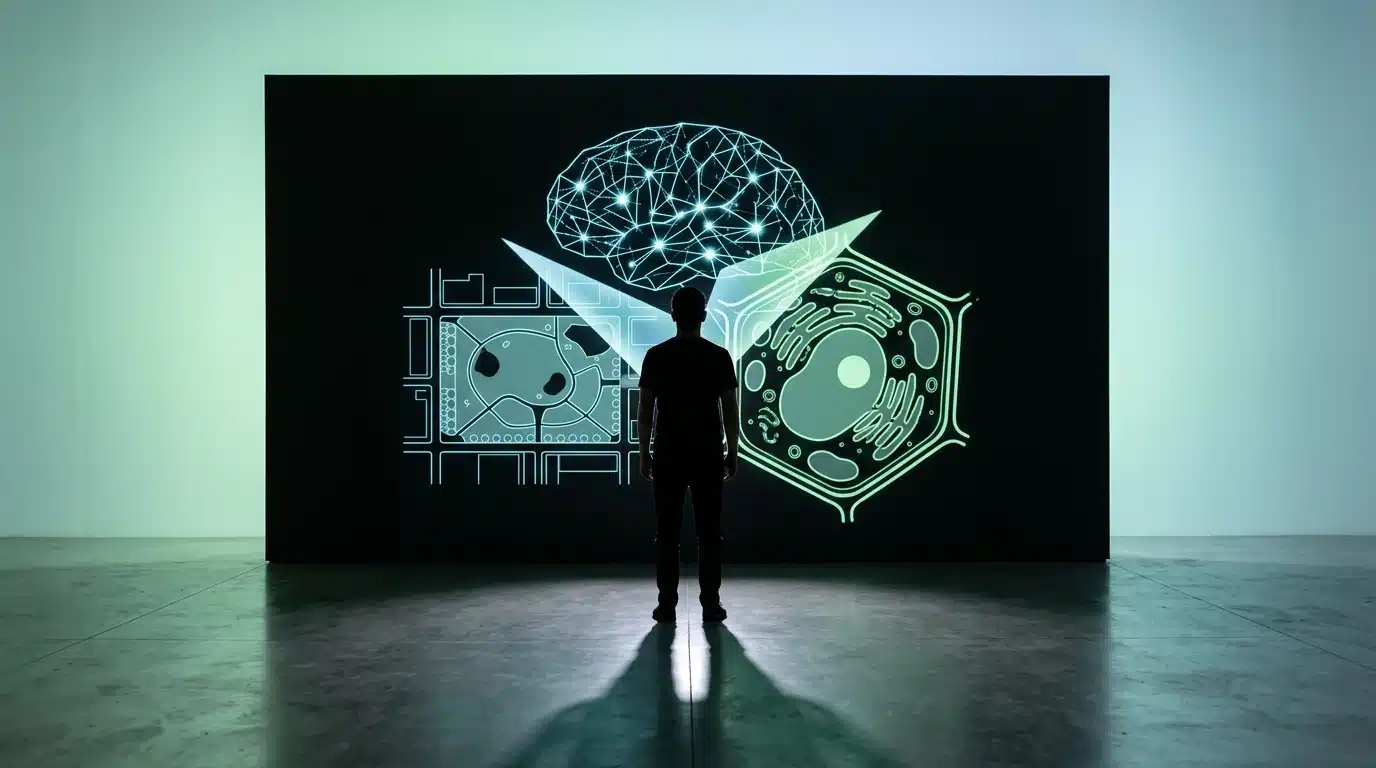
Think of it less like a divine spark and more like a chef combining unexpected ingredients. The core idea is the main dish, but the flavor that makes it memorable comes from adding a dash of something foreign—a principle from biology applied to urban planning, for instance. A famous example is the Japanese bullet train, whose front-end design was inspired by the aerodynamic beak of the kingfisher to solve the problem of sonic booms when exiting tunnels. This unifying of creative and cultural insights is the engine of progress.
What most people miss is that this requires a certain comfort with ambiguity and even a bit of intellectual conflict. So why do we so often retreat to the safety of our own expertise? The real work of idea generation happens at the uncomfortable edges where different worlds meet.
These intersections are not just theoretical playgrounds; they are the blueprints for how we experience modern life.
Cultural Currents: Unpacking Their Influence on Modern Lifestyles
We pretend that culture is a static artifact, something to be preserved under glass in a museum. This is a comforting lie. The reality is that our daily lives are a chaotic, often contradictory, blend of competing cultural signals that dictate everything from our breakfast choices to our political beliefs. We are not curators of a single culture; we are active participants in a global collision of ideas that is constantly reshaping what it means to live a modern life. Understanding these forces is not an academic exercise, it is a survival skill for navigating a complex world.
From Local Traditions to Global Fusions
A powerful tension defines our consumption habits: the pull of local identity versus the allure of the global marketplace. While we might order a specific single-origin coffee sourced from thousands of miles away, a Pew Research Center study found that a staggering 72% of people believe it’s important to buy products made in their own country. This isn’t hypocrisy. It’s the central conflict of modern consumerism.
This dynamic creates fascinating hybrids. The process is less a hostile takeover and more like adding a new, potent spice to a cherished family recipe; the original dish is still recognizable, but it’s forever changed. Consider the global proliferation of food trucks selling Korean tacos or Japanese-inspired Italian pasta. These are not bastardizations of culture. They represent the delicious and sometimes messy reality of the cultural evolution happening in our cities, where authenticity is constantly being redefined on the streets.
The shift in underlying values is stark when viewed side-by-side.
| Traditional Value Framework | Emerging Value Framework |
|---|---|
| Community & Hierarchy: Emphasis on collective well-being and established social structures. | Networked Individualism: Focus on personal fulfillment through curated digital and physical networks. |
| Fixed Identity: Identity is often inherited through family, location, and tradition. | Fluid Identity: Identity is a project, constructed and reconstructed from diverse cultural inputs. |
| Long-Term Stability: Prioritizing consistency, tradition, and predictable life paths. | Adaptability & Change: Valuing flexibility, embracing disruption, and pursuing multiple career paths. |
| Local Production & Consumption: Goods and ideas are primarily sourced from the immediate community. | Globalized Consumption: Access to and desire for products, media, and ideas from around the world. |
The Digital Age’s Cultural Accelerators
Digital platforms have become the primary engine for this cultural exchange, for better and for worse. A regional dance style that once took a decade to cross borders can now achieve global recognition in 48 hours via a viral TikTok challenge. This exceptional speed collapses context and removes the friction of distance. But what happens to the meaning of a cultural practice when it’s stripped of its origin story and turned into a fleeting trend?
I suspect the underrated factor here is the subtle danger of algorithmic culture. Dr. Kenji Tanaka, a media theorist at Keio University, suggests that these platforms act as “cultural flatteners,” reducing deep traditions into easily digestible—and highly marketable—aesthetics. A sacred textile pattern becomes a fast-fashion print, and a communal celebration becomes an Instagram backdrop. We are trading depth for reach, and it’s a terrible bargain.
This digital acceleration demands a new level of awareness from us. It’s one thing to appreciate another culture; it’s another entirely to participate in its commercialized, decontextualized performance—and let’s be honest, we’ve all been tempted by it. Actively unifying these disparate cultural threads requires conscious effort, not just passive consumption.
The question is no longer if cultures will blend, but how we manage the velocity of that blend without losing ourselves in the algorithm’s echo.
The city of tomorrow must function like a closed-loop ecosystem, not a linear resource drain.
— Dr. Anya Sharma, Urban Ecologist at MIT
| Core Concept | Key Insight | Practical Application |
|---|---|---|
| Creative Synthesis | Innovation arises from connecting disparate ideas, not from isolated genius. Cognitive diversity is a key driver. | Actively seek out information and perspectives from fields completely unrelated to your own to spark novel solutions. |
| Cultural Dynamics | Modern identity is a fluid blend of local traditions and globalized digital influences, often creating tension and new hybrid forms. | Consciously analyze your own consumption habits to see how global trends and local values interact in your daily life. |
| Future Foresight | Anticipating the future is about recognizing ‘weak signals’ and patterns in the present, not making predictions. | Practice environmental scanning by following niche forums, academic papers, or patent filings to spot emerging anomalies. |
| Personal Adaptation | Thriving in a fast-changing world requires continuous learning and, more importantly, the ability to unlearn outdated beliefs. | Identify one long-held assumption about your career or lifestyle and actively seek out evidence that contradicts it. |
Anticipating Tomorrow: Decoding Future Trends for Today
Forget the tired notion of predicting the future with crystal balls and slick infographics. The act of forecasting is not passive observation; it is an aggressive decoding of the present. It involves sifting through immense noise to find the quiet signals of what is to come, understanding that the most profound changes often begin as whispers on the periphery. Most people are waiting for an announcement. You should be listening for the echo.
The core skill isn’t clairvoyance, but pattern recognition. It’s about connecting seemingly disparate dots—a new social media behavior in Seoul, a materials science breakthrough at a university lab, a subtle shift in consumer debt figures—to sketch a plausible trajectory. This requires a mindset that is both analytical and deeply imaginative, constantly asking “what if?” and “what then?”
Signals of Change: How to Spot What’s Next
Identifying a genuine trend before it crests into the mainstream is like spotting a single, unfamiliar weed in a vast lawn; ignore it, and you may soon find your entire landscape transformed. Futurologists call these early indicators weak signals. These are fragmented, often contradictory clues that hint at a future disruption. According to researchers at the Institute for the Future (IFTF), a staggering 89% of these initial signals fade into obscurity, making their early identification a high-stakes endeavor.
So, how do you separate a genuine signal from fleeting digital noise? The process involves a rigorous form of environmental scanning, looking at everything from patent filings and academic papers to niche online forums and protest movements. It’s about looking for the anomalies—the ideas that seem strange or even ridiculous today. These are often the seeds of tomorrow’s norms. This is where unifying creative ideas and cultural insights becomes a practical tool for foresight, not just an abstract concept.
Technological Disruptions on the Horizon
When we talk about technology, the conversation often gets stuck on the latest gadget. That is a mistake. The true disruption lies not in the device but in the behavioral shifts it forces. Artificial intelligence, for example, is far more than a productivity tool; it is a catalyst for redefining creativity, originality, and even the value of human expertise. As AI generates art, music, and text, it forces us to confront what it means to create.
Simultaneously, advances in biotechnology and gene-editing, such as CRISPR, are moving from the theoretical to the practical. A recent analysis by Ark Invest suggests the market for genetic therapies could swell to over $1 trillion in the coming decade. This isn’t just about curing diseases; it’s about a future where we can fundamentally rewrite our biological code—a reality with ethical implications we have barely begun to untangle.
Societal Reimagining: New Norms and Values
Technology is a powerful agent of change, but it operates on a landscape of human values that are themselves in flux. The old binary of individualism versus collectivism is collapsing into a new state of being: networked individualism. We are simultaneously more connected and, paradoxically, more isolated than ever, curating our communities online while physical third spaces disappear. This shift directly impacts everything from urban design to mental health services.
This reimagining is profoundly affecting our relationship with work. The 9-to-5 workday, a relic of the industrial age, is giving way to portfolio careers, gig work, and a demand for radical flexibility. What most people miss is that this isn’t merely a desire for convenience. It’s a deep-seated demand for autonomy and purpose in our professional lives, reflecting a broader cultural evolution where personal values are no longer left at the office door.
Environmental Imperatives Shaping Our Future
The climate crisis is no longer a future trend; it is the dominant condition of our present. This reality acts as a non-negotiable design constraint for everything that comes next. The concept of a circular economy—where waste is designed out and resources are endlessly reused—is shifting from an idealistic fringe idea to a baseline economic necessity. Companies that fail to adapt will simply become obsolete.
This imperative will reshape our cities. Dr. Anya Sharma, an urban ecologist at MIT, argues that “the city of tomorrow must function like a closed-loop ecosystem, not a linear resource drain.” This means localized food production, decentralized power grids, and buildings that generate more energy than they consume. Our living spaces will be forced to become active participants in ecological renewal.
Personal Adaptation: Thriving in a Changing World
Facing this onslaught of change can feel overwhelming, but agency is not lost. The future is not something that happens to us; it is something we build through our daily choices. Thriving in this environment demands a new kind of literacy—one based on adaptability, critical thinking, and, most importantly, the ability to unlearn outdated models of the world. The half-life of a professional skill is now estimated to be less than five years, making continuous learning the only viable career strategy.
To navigate what’s next, keep a close watch on these intersecting developments:
- Hyper-Personalization: Expect everything from your news feed and entertainment to your healthcare and nutrition to be tailored to you on a granular level, driven by AI and personal data.
- Decentralization: Power is diffusing away from centralized institutions. This is visible in the rise of cryptocurrencies, the shift to remote work, and the growth of local, on-demand manufacturing that challenges global supply chains.
- The Experience Economy: As material abundance grows for some, value is shifting from owning things to acquiring experiences and memories. This has massive implications for retail, travel, and entertainment.
- Radical Transparency: A digitally connected populace is demanding extraordinary accountability from corporations and public figures—a trend that makes secrets almost impossible to keep.
The real challenge is not just to adapt to an incoming future. The challenge is to actively choose which of these potential futures we want to inhabit and build. Your personal choices are part of a larger guide for integrating these creative and cultural trends into a deliberate modern life, shaping the world one decision at a time.
Integrating the Elements: A Blueprint for Enriched Living
Understanding future trends and cultural shifts is intellectually satisfying, but it’s ultimately a passive exercise without application. The real challenge isn’t knowing; it’s doing. Integrating these vast concepts into the texture of daily life requires a deliberate, almost rebellious, commitment to changing how you think, act, and perceive the world around you. It’s about moving from observer to participant.
This isn’t a gentle self-help platitude. This is a demanding process of rewiring your own defaults.
Cultivating a Creative Mindset Daily
Most people mistake creativity for artistic talent. That’s a convenient excuse to avoid the hard work of innovative thinking. True creativity is simply the practice of connecting disparate ideas. To do this daily, you must feed your mind unconventional fuel—not just the same industry news and social media feeds that trap you in an echo chamber. Try picking a random object and spending five minutes deconstructing its design purpose, manufacturing process, and cultural meaning. Why is a fork shaped that way and not another?
Adopting a future-forward mindset means seeing the world not just for what it is, but for what it could be. But this perspective comes with its own set of trade-offs.
- Pro: Enhanced Adaptability. You become less reactive to change and more capable of anticipating shifts, making you more resilient in your career and personal life. A report from the Institute for the Future suggests individuals who regularly engage in foresight exercises are 33% faster at adapting to unexpected workplace changes.
- Con: The Burden of Awareness. Seeing potential problems on the horizon—from climate instability to job automation—can create a persistent, low-grade anxiety that others blissfully ignore.
- Pro: Deeper Problem-Solving. By drawing from a wider pool of cultural and creative inputs, you develop more nuanced and effective solutions. You start unifying creative ideas and cultural insights into your thinking process.
- Con: Analysis Paralysis. With an infinite number of future possibilities to consider, making a simple decision can become a complex ordeal, bogged down by what-ifs and potential outcomes.
Engaging with Diverse Cultural Narratives
Consuming culture isn’t the same as engaging with it. Passively watching a foreign film is one thing; actively seeking out narratives that fundamentally challenge your worldview is another entirely. This means reading translated literature from authors whose life experiences are alien to your own, listening to music with unfamiliar structures, and following journalists from different geopolitical spheres. The goal is to create cognitive dissonance—that mental friction is where growth happens.
The underrated factor here is the humility it requires. It’s an admission that your perspective is inherently incomplete. This active engagement is a core part of the guide to integrating creative ideas into a meaningful life. It’s not about collecting cultural trivia; it’s about systematically dismantling your own biases. This process of cultivating creativity for a resilient modern life is built on a foundation of broad and sometimes uncomfortable cultural exposure.
The discomfort you feel when your core beliefs are questioned isn’t a sign to retreat. It’s the only reliable signal that you are actually beginning to see the world differently.
The Evolving Urban Landscape: Modern Living Redefined
Forget the notion of the city as a finished masterpiece. Today’s most compelling metropolitan areas are operating as living laboratories, constantly prototyping new ways for diverse populations to coexist and thrive. The old model of rigid zoning and top-down planning is being dismantled in favor of a more adaptable approach, one where public spaces are co-authored by the people who use them. This is not about building more; it’s about building smarter and, more importantly, with more soul.
Take the Superkilen park in Copenhagen as a prime example. Instead of imposing a single Danish aesthetic, designers collaborated with local residents to import cultural artifacts from over 60 different nationalities—from a Moroccan fountain to an Armenian picnic table. This project directly reflects the urban pulse of cultural evolution, creating a space that celebrates diversity rather than smoothing it over into a bland, uniform experience. It’s a built environment that tells a global story on a local street corner.
This approach isn’t just about aesthetics; it carries tangible benefits. A recent study from the European Centre for Urban Affairs found that citizen-led placemaking initiatives can increase local property values by up to 11.4% and reduce petty crime by nearly 20%. The underrated factor here is that when residents have a stake in their environment, they treat it like an extension of their home, not just a pathway to commute through. It’s the difference between a meticulously planned dinner party and a chaotic, wonderful potluck—one is controlled, but the other has life.
The challenge, I suspect, is reconciling this bottom-up creativity with the push for hyper-efficient “smart cities.” Are we optimizing for human connection or for data collection? These two goals are not always aligned. True intersections of creativity and foresight must prioritize community resilience over mere technological convenience, ensuring that the future city serves its citizens, not just its operating systems.
Beyond Prediction: The Mandate to Unlearn
Ultimately, the ability to map trends and dissect cultural shifts is secondary to a far more notable skill: the willingness to unlearn. The assumptions that serve you today are the anchors that will hold you back tomorrow. The most resilient individuals and organizations won’t be the ones who correctly predict the next big thing, but those who can gracefully and rapidly discard their own outdated models of the world. The future doesn’t reward foresight as much as it rewards adaptability.
The real challenge, then, isn’t to accumulate more knowledge about what’s coming, but to build the mental flexibility to thrive when what comes is nothing like you expected. This moves beyond intellectual exercise and becomes a daily practice of questioning your own defaults. So, what is one core belief about your work, your community, or yourself that you are willing to challenge today?
Frequently Asked Questions
How can I foster creativity in my daily routine?
You can foster daily creativity by intentionally exposing yourself to new and unrelated concepts. Instead of sticking to your niche, read a book or watch a documentary on a random topic like mycology or architecture. This practice of cross-pollination provides fresh mental raw material to connect in novel ways, which is the true essence of a creative act.
What are the biggest cultural shifts impacting young generations today?
Two of the most significant shifts are the moves towards ‘fluid identity’ and ‘networked individualism.’ Unlike previous generations with more fixed identities, younger people often construct and reconstruct their sense of self from diverse global inputs. They build community through curated digital and physical networks rather than relying solely on traditional, localized structures.
Is it possible to predict future trends accurately, and how?
Accurate prediction is a myth; strategic foresight is the reality. It’s not about being clairvoyant but about systematically identifying ‘weak signals’—small, nascent changes on the periphery of society. By connecting these seemingly disparate signals from technology, culture, and economics, you can map plausible future trajectories and prepare accordingly.
How do creative ideas from one culture influence another?
Cultural influence is rarely a simple copy-and-paste process; it’s a dynamic fusion. When a creative idea—be it in food, music, or fashion—crosses into a new culture, it is reinterpreted and blended with local traditions. This creates a hybrid that is something entirely new, representing a constant evolution and redefinition of authenticity itself.
What role does technology play in shaping our modern living experience?
Technology’s primary role is that of a catalyst and an accelerator. It’s not just about the tools themselves, but how they fundamentally alter human behavior and interaction. Digital platforms accelerate the speed of cultural exchange, collapse geographical distance, and force us to confront new questions about identity, community, and creativity.