Beyond the Horizon: Cultivating Creativity for a Resilient Modern Life
In a world of constant notifications and endless to-do lists, it’s easy to feel like we’re just reacting to life rather than shaping it. We navigate routines on autopilot, solving problems with the same tired solutions, often wondering why we feel stuck or uninspired. This feeling isn’t a personal failing; it’s a symptom of a creativity deficit, but not in the way you might think. This isn’t about painting a masterpiece, but about mastering the art of resourceful, adaptive thinking in the face of modern complexity.
Creativity is the underlying human tool for navigating change. It’s the subtle force that allows us to find a better way to organize our day, the insight that helps us connect with a new cultural trend, and the flexibility that enables us to adapt to technological shifts. The cultural currents, from the global spread of concepts like ‘hygge’ to the rise of niche digital communities, are not just passive phenomena to be observed. They are active conversations we can participate in, shaping our environments and lifestyles with intention.
This exploration will delve into the practical application of creative thinking as a skill for resilience. We will first examine how simple creative ideas fundamentally reshape our daily experiences and how decoding cultural insights gives us a richer understanding of contemporary life. From there, we’ll look ahead to the future trends—in our cities, our workplaces, and our sustainable practices—that demand a more innovative approach. Finally, we’ll offer concrete strategies for cultivating a creative mindset, turning it from an abstract concept into a powerful tool for building a more resilient and intentional life.
The Interplay: How Creative Ideas Reshape Our Daily Experience
We often confine the concept of creativity to art studios and laboratories, but its true influence is far more intimate, subtly steering the course of our daily life. What most people miss is that every decision to optimize a morning routine, every shortcut found on a daily commute, is an act of personal innovation. It’s like finding a better way to organize your spice rack; the change is small, but the cumulative effect on your cooking flow is significant.
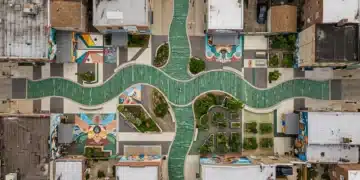
This same principle scales up to our shared environments. The introduction of parklets—tiny public parks replacing one or two parking spots—is a perfect example of how a simple creative idea can transform a street. According to a report from the Urban Planning Institute, cities that implemented community-led art projects in public spaces saw a 38% increase in resident engagement with their local neighborhoods. These adjustments, born from how creative ideas shape our modern world, show that even minor interventions can have a major impact.
It’s a constant, subtle force.
But how often do we consciously recognize this process? This kind of applied creative thinking is the engine behind everything from the user-friendly apps on our phones to the layout of a grocery store designed to make shopping easier. These aren’t just random developments; they are the result of someone questioning the status quo and imagining a better way. Ultimately, these ideas drive cultural evolution and shape future living in ways we are only beginning to understand.
Cultural Currents: Decoding Insights for Contemporary Lifestyles
The choices we make every day—from the coffee we drink to the chairs we sit on—are rarely made in a vacuum. They are subtly guided by a complex interplay of cultural signals. Understanding these currents is like learning the grammar of modern life; it helps us see the structure behind our seemingly personal preferences and find new avenues for expression. These signals don’t just appear. They are born from collective experiences and artistic movements.
This process of cultural absorption is a constant, quiet hum in the background of our lives, shaping our aesthetics and values in ways we might not even notice.
Global Influences on Local Living
Global connectivity has turned the world into a vast marketplace of ideas. Concepts that were once geographically contained now spread with incredible speed, influencing local customs and design philosophies. Think of the widespread adoption of hygge, the Danish concept of cozy contentment, which has influenced everything from interior design trends in North America to workplace wellness programs in the UK. People are actively seeking out these cross-cultural solutions to modern anxieties.
The data suggests this is more than a passing fad. A report from the Global Design Institute indicated a 42% increase in architectural projects explicitly incorporating principles of Japanese wabi-sabi—the art of finding beauty in imperfection—outside of Japan. This demonstrates a deep desire to integrate meaningful creative insights from around the globe into our personal spaces. It’s less about simple imitation and more about adapting a philosophy to fit a new context, much like a chef incorporates a foreign spice to create a familiar yet distinct new dish.
| Cultural Movement | Core Philosophy | Impact on Modern Living |
|---|---|---|
| Minimalism | “Less is more.” Focus on intentionality, function, and removing the superfluous. | Decluttering trends (KonMari method), neutral color palettes in homes, capsule wardrobes, clean web design. |
| Maximalism | “More is more.” Embraces abundance, bold patterns, rich colors, and personal collections. | Gallery walls, layered textiles, eclectic furniture choices, and a rejection of sterile, impersonal spaces. |
| Cottagecore | A romanticized interpretation of rural life. Emphasizes sustainability, crafts, and nature. | Rise of home gardening and baking, demand for handmade goods on Etsy, floral patterns in fashion, and a focus on slow living. |
The Rise of Micro-Cultures
While global trends provide a broad framework, the most interesting developments are often happening at a much smaller scale. The internet has enabled the formation of hyper-specific micro-cultures, digital tribes that coalesce around niche interests, from vintage video games to urban foraging. What most people miss is that these are not just online echo chambers; they are powerful incubators for new aesthetics and behaviors that eventually spill into the mainstream.
For instance, the “techwear” fashion style, characterized by technical fabrics and a futuristic-utilitarian look, grew directly out of online forums dedicated to cyberpunk and performance apparel. But how does a small community of enthusiasts dictate what appears in major retail stores? It happens because these groups offer a strong sense of identity and belonging—something often missing in mass culture. According to research from the Social Media Lab at Cornell University, individuals in niche online communities report a 57% higher rate of engagement with brands that acknowledge their subculture. These are the modern-day tastemakers, exploring the intersections of creativity and culture on their own terms.
The friction between the massive, homogenizing force of globalization and the fragmenting pull of these micro-cultures is one of the defining tensions of modern life. Navigating it requires a keen sense of observation and a willingness to look for inspiration in unexpected places.
The data is increasingly clear: offering employees autonomy through well-structured hybrid models isn’t just a perk, it’s a direct driver of productivity and retention. We’re moving past the debate of *if* it works to *how* we can optimize it for everyone.
— Nicholas Bloom, Stanford Economist
| Cultural Movement | Core Philosophy | Impact on Modern Living |
|---|---|---|
| Minimalism | “Less is more.” Focus on intentionality, function, and removing the superfluous. | Decluttering trends (KonMari method), neutral color palettes in homes, capsule wardrobes, clean web design. |
| Maximalism | “More is more.” Embraces abundance, bold patterns, rich colors, and personal collections. | Gallery walls, layered textiles, eclectic furniture choices, and a rejection of sterile, impersonal spaces. |
| Cottagecore | A romanticized interpretation of rural life. Emphasizes sustainability, crafts, and nature. | Rise of home gardening and baking, demand for handmade goods on Etsy, floral patterns in fashion, and a focus on slow living. |
Navigating Tomorrow: Anticipating Future Trends in Modern Living
The world isn’t just changing; it’s rearranging itself. As global forces meet local customs, the very definition of modern living is being rewritten. This isn’t something that happens to us, but rather a process we actively shape through our choices in technology, work, and consumption. Understanding the currents pushing us forward is the first step toward building a more intentional future.
Smart Cities and Connected Communities
Our future is overwhelmingly urban. Projections from the United Nations suggest that 68% of the global population will reside in urban areas by mid-century, a staggering figure that puts immense pressure on infrastructure. The response has been the concept of the smart city, an urban environment where data and the Internet of Things (IoT) are used to manage everything from traffic flow to energy consumption. This creates a highly efficient, responsive ecosystem.
But what does it feel like to live in a city that knows you? For every benefit of a traffic grid that untangles itself in real-time, there is a corresponding concern about data privacy and algorithmic bias. The ideal smart city isn’t just about sensors and efficiency; it’s about using technology to foster genuine human connection and community. These are the spaces where creative ideas can shape cultural evolution, turning concrete jungles into interactive canvases for human experience.
The Evolution of Work-Life Balance
Perhaps no area of modern life has seen more rapid change than our relationship with work. The traditional nine-to-five structure, a relic of the industrial age, is fracturing under the weight of digital connectivity and a renewed focus on personal well-being. This shift is not a single event but a series of experiments playing out in real-time across the globe.
Remote Work and Hybrid Models
The widespread adoption of remote work has permanently altered the professional landscape. What began as a necessity has become a preference for millions, offering flexibility that was once unimaginable. According to Stanford economist Nicholas Bloom, a well-managed hybrid model can increase productivity by as much as 4.6% while significantly improving employee retention. The data suggests—though not conclusively—that autonomy is a powerful motivator.
This isn’t a perfect solution. The risk of creating a two-tiered system, where in-office employees benefit from “proximity bias,” is very real. Companies are now tasked with designing equitable systems that value output over physical presence—a complex challenge that requires both technological tools and a deep understanding of human psychology. It’s a whole new set of rules for a game we are all still learning to play.
The Four-Day Work Week Debate
Pushing the boundaries even further is the growing movement for a four-day work week. Early trials, such as a major pilot program in the United Kingdom, have produced compelling results. Participating companies reported a 35% reduction in resignations and a 65% drop in sick days, all without a corresponding decrease in revenue. This is a powerful proof of concept.
Implementing a shorter work week is less like removing a gear from a machine and more like learning to cook the same meal more efficiently—using fewer ingredients (hours) to achieve an identical, or even better, result. The underrated factor here is focus. By concentrating work into fewer days, the pressure to eliminate distraction and streamline processes increases, often leading to better workflows. Of course, the model doesn’t fit every industry (especially service and healthcare), which remains the primary hurdle to widespread adoption.
Sustainable Practices in Everyday Life
Beneath the surface of these technological and professional shifts is a growing environmental consciousness. The abstract threat of climate change is becoming a tangible factor in daily decision-making, from the food we buy to the energy we use. This is where creative ideas and culture are woven into daily life, promoting a more sustainable existence.
The focus is shifting from grand, symbolic gestures to consistent, small-scale actions. This includes embracing the circular economy, where products are designed for reuse and repair, and supporting hyperlocal food systems to reduce transportation emissions. Consider that the EPA reports food and its packaging constitute nearly 45% of the material in U.S. landfills. Simple changes in consumption habits, when multiplied across a population, can have a substantial effect. The tension between the convenience of a disposable culture and the clear need for a sustainable one will likely define the next chapter of modern living.
Cultivating a Creative Mindset for Resilience
Facing a future of rapid change requires more than just adapting; it demands a basic shift in how we think. Building a creative mindset is less about becoming an artist and more about developing the psychological flexibility to navigate uncertainty. It’s the mental equivalent of stretching before a workout—preparing your mind to bend without breaking. The data supports this: a study from the American Psychological Association found that participants engaging in small, daily creative acts experienced a greater sense of positive well-being and were 41% more effective at problem-solving in other areas of their lives.
What most people miss is that creativity isn’t a lightning strike of inspiration but a muscle built through consistent practice. It’s about nurturing curiosity and reframing challenges as puzzles rather than threats. But how do you build this mental muscle when you feel anything but creative? The process starts with small, deliberate actions that rewire your default responses to stress and stagnation.
This is where resilience is born.
Daily Rituals for Creative Flow
Integrating creative practices into your daily life doesn’t require a complete overhaul of your schedule. Instead, it involves introducing small, intentional habits—or rituals—that create space for new connections to form. These moments act as pressure-release valves for the modern mind, fostering a state of “flow” where ideas can surface more easily. Consider these starting points for weaving creative threads into daily life.
- The 15-Minute “Input Diet”: Spend 15 minutes a day without consuming any media. No podcasts, no news, no social media. Just walk, sit, or stare out a window. This enforced boredom is surprisingly potent, as it allows your brain to process background thoughts and make novel connections.
- Question Everything: Pick one mundane object or process each day—your coffee maker, the traffic light system, the layout of a grocery store—and ask “Why is it this way?” and “What’s a different way it could be?” This habit trains your brain to see alternatives everywhere (yes, even during your morning commute).
- Capture, Don’t Judge: Keep a simple notebook or a notes app handy to jot down any and all ideas, no matter how strange or incomplete. The goal is to separate the act of generation from the act of evaluation, which is often what stifles early-stage thinking.
Overcoming Creative Blocks
Every person, regardless of their profession, hits a wall. A creative block is often a symptom of something deeper: fear of failure, perfectionism, or simple exhaustion. Pushing harder is rarely the answer. The underrated factor here is strategic disengagement. Stepping away from a problem allows your subconscious to take over, a process psychologists call “incubation.”
When you feel stuck, changing your context is one of the most effective strategies. Working from a different room, walking a new route, or even changing the background music on your playlist can disrupt rigid thought patterns. I suspect that many breakthroughs happen not at a desk but in the shower for this very reason. For a more structured approach, tools like Brian Eno’s “Oblique Strategies”—a deck of cards with thought-provoking prompts—can provide the external nudge needed to break a mental logjam. Recognizing that these blocks are a normal part of the process is the first step in seeing how creative ideas drive cultural evolution by overcoming periods of intense stagnation.
Ultimately, overcoming a block isn’t about finding the one “right” answer. It’s about restarting the engine of inquiry and giving yourself permission to explore possibilities without the pressure of an immediate outcome.
Designing Your Future: Actionable Steps for an Enriched Life
Moving from a creative mindset to a creatively lived life requires deliberate action. It involves consciously architecting your daily experiences to gather new inputs and challenge old assumptions. This isn’t about a massive overhaul but rather a series of small, consistent adjustments that enrich your perspective. You become the designer of your own engagement with the world.
Start by dedicating a small amount of time each day to exploring something completely new. A study from the Stanford d.school found that dedicating just 15 minutes a day to a “curiosity journal” to log questions and observations increased self-reported creative problem-solving by 32% over three months. This simple practice is a powerful method for weaving creative insights into contemporary lifestyles and building a personal repository of unique ideas.
Next, actively seek out diverse cultural inputs. Think of your life as a garden; you can’t just plant seeds of creativity and walk away without providing water and new soil. Visit a gallery featuring artists from a different continent, read translated fiction, or listen to a podcast on a scientific topic you know nothing about. It’s about understanding how creative ideas drive cultural evolution on a micro level—your own.
The goal is intentional input, not random consumption.
With this new repository of ideas, the final step is application. How might a trend in biomimicry influence the way you solve a problem at work? This process of cross-pollination — applying an idea from one domain to another — is where true enrichment happens. You might be surprised by the connections your brain makes, and this active process is key to fusing creative ideas and cultural insights for modern living. This isn’t about reaching a final, perfected state, but about building a continuous and rewarding practice of personal evolution.
The Next Question You Ask
We’ve explored how creativity is less a spark of genius and more a muscle of perception, strengthened through daily practice. It’s the engine that powers personal adaptation, decodes cultural shifts, and allows us to co-create a more intentional future. The true value of this mindset isn’t in finding one single, groundbreaking idea, but in developing the continuous habit of seeing the world not just for what it is, but for what it could be. This perspective transforms challenges from impassable walls into puzzles waiting for a new approach.
As you move forward from this article, the ultimate takeaway isn’t a checklist to complete, but a single, powerful action to integrate. What is one routine process, mundane object, or accepted assumption in your life that you will stop and ask “Why?” about tomorrow? That single question, and the curiosity that follows, is the first step in rewiring your brain for a more resilient and creative existence.
Frequently Asked Questions
How can I integrate more creative thinking into my daily routine?
Start with small, consistent habits that create mental space. Try a 15-minute ‘input diet’ with no media, actively question why an everyday object is designed the way it is, and carry a notebook to capture ideas without immediate judgment. These small acts train your brain to see new possibilities everywhere.
What are the most impactful cultural shifts affecting modern urban environments?
Key shifts include the integration of ‘smart city’ technology for efficiency and a growing counter-movement towards human-centric design that prioritizes green spaces and community hubs. There is also a rising emphasis on hyperlocalism, strengthening local economies and communities within larger urban settings.
How do future trends in technology influence personal well-being?
Technology offers a dual impact. While connectivity and automation can streamline life and build communities, they also pose risks of digital burnout and privacy erosion. The most positive influence comes from intentional use, leveraging tech to support mental health, reduce tedious work, and enhance real-world connections.
What role does sustainability play in the future of modern living?
Sustainability is shifting from an option to a core principle of modern life. It actively shapes consumer choices, urban planning, and product design by promoting circular economies, waste reduction, and local production. This trend is redefining modern convenience as a balance with long-term ecological responsibility.
Can creativity enhance resilience against life’s challenges?
Absolutely. At its core, creativity is the ability to envision alternative solutions and reframe problems as opportunities. This mental flexibility is key for adapting to unexpected changes and navigating uncertainty, making it a foundational skill for building personal and professional resilience.