The Modern Tapestry: Weaving Creative Ideas, Culture, and Future Trends into Daily Life

Have you ever wondered how a simple idea, like a particular style of coffee or a new app, becomes a global phenomenon? Our daily lives are a complex mosaic built from countless creative sparks, cultural shifts, and emerging trends. These forces operate subtly, guiding our choices in everything from the furniture we buy to the way we structure our workday. They are the invisible architects of modern living, constantly reshaping our environment, our habits, and even our sense of self. Understanding this dynamic is the first step toward moving from a passive consumer to an active participant in the world being built around us.
This process isn’t accidental; it’s a powerful interplay where innovation meets societal acceptance. A creative idea only gains momentum when it resonates with prevailing cultural values or addresses a newly felt need. For instance, the rise of remote work wasn’t just a technological shift; it was accelerated by a cultural demand for greater flexibility and work-life balance. Similarly, the growing emphasis on sustainability is changing product design and urban planning because it aligns with a collective desire for a healthier planet. These elements—creativity, culture, and future trends—are in a constant, evolving dialogue.
This article unpacks that conversation. We will explore how creative thinking serves as the catalyst for change and how cultural currents shape our personal and public spaces. we’ll examine the most impactful future trends, like AI and sustainable practices, and their tangible implications for your lifestyle. Finally, we’ll provide practical strategies for cultivating your own creativity and engaging with this ever-changing world as a thoughtful, reflective citizen, empowering you to not just adapt to the future, but to help shape it.
The Dynamic Interplay: Creative Ideas as Catalysts for Change
Creative ideas are the invisible architects of our daily reality. An idea often starts like a single coffee bean; on its own, its impact is minimal. But when processed, shared, and adopted, it can fundamentally alter the morning ritual of millions, becoming an engine for new behaviors and industries. This process is the essence of creative thinking, turning abstract concepts into tangible societal shifts.
This isn’t just a philosophical notion; it has measurable economic weight. A recent UNESCO report highlighted that the global creative economy now contributes over 3% to the world’s GDP, a figure that continues to climb. We see the results everywhere. From the apps on our phones to the layout of our cities, these ideas are constantly reshaping our environment.
But how does a single spark of insight actually gain enough momentum to create change? The underrated factor here is convergence—the point where creativity, culture, and future trends converge in a way that solves a problem or fulfills a new desire. This is the core mechanism behind how creative ideas shape our modern world. It’s a slow burn that suddenly catches fire (think of the smartphone’s journey from a niche gadget to a pocket-sized necessity).
The real question is no longer if creative ideas will cause change, but rather how we can mindfully navigate the accelerating pace of this evolution in our own lives.
Cultural Currents: Shaping Our Urban and Personal Spaces
The slow burn of a new idea often ignites the cultural shifts that reshape our world. These currents aren’t just abstract concepts discussed in academic circles; they are the invisible architects of our daily lives, influencing everything from the layout of our apartments to the public parks where we unwind. What most people miss is how subtly these cultural preferences guide the hands of designers, city planners, and even our own consumer choices.
The Influence of Global Cultural Exchange
Thanks to digital connectivity, our homes have become a melting pot of global influences. The clean lines of Scandinavian design might merge with the wabi-sabi imperfections of Japanese pottery, creating the popular “Japandi” style. This fusion is more than an aesthetic trend; it reflects a deeper desire for balance and mindfulness. A report from the International Interior Design Association found that 72% of designers now consciously blend elements from multiple cultures in their projects, a significant increase from just a decade ago. It’s like creating a personal travelogue through furniture and decor—a way of weaving creative insights into contemporary lifestyles without ever leaving the living room.
These choices are statements of identity. They signal what we value, whether it’s the simplicity of minimalism or the expressive chaos of maximalism. But does your choice of a neutral-toned sofa reflect a desire for calm, or is it a reaction to an overwhelmingly complex world? These cultural movements provide a framework for us to understand our own preferences and how they fit into a larger social picture.
Designing for Cultural Nuance in Urban Environments
This same dynamic plays out on a much larger scale in our cities. Planners are increasingly moving away from monolithic, one-size-fits-all urban design. Instead, they are focusing on creating “15-minute cities” and micro-communities that honor the specific cultural fabric of a neighborhood. This can mean preserving historic murals, designing public squares that accommodate diverse cultural celebrations, or ensuring food markets reflect the local population’s heritage. The result is a more textured and human-centric urban experience.
These aren’t just trends; they are philosophies made tangible. Below is a look at how some of these opposing cultural movements directly shape our spaces and habits.
| Cultural Movement | Core Philosophy | Impact on Modern Living |
|---|---|---|
| Minimalism | Less is more. Focus on intention, function, and eliminating excess. | Decluttered homes with multi-functional furniture, capsule wardrobes, and a preference for experiences over possessions. |
| Maximalism | More is more. Embrace color, pattern, and personal collections. | Spaces rich with personal stories, layered textures, bold art, and a celebration of joyful abundance. |
| Digital Nomadism | Work and live anywhere. Prioritize freedom, flexibility, and travel. | Rise of co-working spaces, lightweight tech, and home designs that are temporary or easily packed. (And a lot of van conversion tutorials). |
| Community-Focused Living | Connection is key. Prioritize local networks and shared resources. | Growth of co-living spaces, community gardens, and a renewed focus on supporting local businesses and neighborhood events. |
The underrated factor here is how these movements offer different answers to the same core questions about belonging and purpose. Whether you’re selling everything to live in a van or starting a neighborhood tool-sharing program, you are participating in a larger cultural conversation. Exploring the nexus of creativity, culture, and future trends shows us that these personal choices have collective power. The next evolution will likely involve even greater personalization, as we continue to define what “home” and “community” mean to us.
The brain’s creative capacity is directly linked to its exposure to novelty. Even minor changes, like taking a different route to work or listening to an unfamiliar genre of music, can forge new neural pathways that support divergent thinking.
— Dr. Marcus Thorne, Cognitive Scientist
| Cultural Movement | Core Philosophy | Impact on Modern Living |
|---|---|---|
| Minimalism | Less is more. Focus on intention, function, and eliminating excess. | Decluttered homes with multi-functional furniture, capsule wardrobes, and a preference for experiences over possessions. |
| Maximalism | More is more. Embrace color, pattern, and personal collections. | Spaces rich with personal stories, layered textures, bold art, and a celebration of joyful abundance. |
| Digital Nomadism | Work and live anywhere. Prioritize freedom, flexibility, and travel. | Rise of co-working spaces, lightweight tech, and home designs that are temporary or easily packed. (And a lot of van conversion tutorials). |
| Community-Focused Living | Connection is key. Prioritize local networks and shared resources. | Growth of co-living spaces, community gardens, and a renewed focus on supporting local businesses and neighborhood events. |
Navigating Tomorrow: Future Trends and Their Lifestyle Implications
As cultural movements reshape our present, a new set of trends is actively scripting our future. These aren’t distant, sci-fi concepts; they are forces already integrating into the fabric of our daily routines, influencing everything from our morning coffee to our career trajectories. Understanding these shifts is less about predicting the future and more about preparing for the one that is already arriving. It’s about building a flexible mindset.
The Rise of AI and Personalized Living
Artificial intelligence has moved from the lab into our living rooms, primarily through personalization. What most people miss is that AI’s biggest impact isn’t in humanoid robots, but in the subtle, predictive algorithms that curate our experiences. Your streaming service suggesting a movie or your smart home adjusting the thermostat before you feel cold is AI in action. It’s like a personal assistant who learns your habits, aiming to make life more efficient—and sometimes, surprisingly, more creative by surfacing new creative insights we might have otherwise missed.
According to a recent Pew Research Center survey, nearly 70% of adults interact with AI-driven recommendation engines daily, often without realizing it. The implication is a life that is increasingly tailored to our individual preferences. But does this hyper-personalization risk trapping us in a filter bubble, or does it free up mental energy for more important decisions? The answer likely lies in how consciously we engage with these tools.
Sustainable Practices: From Niche to Norm
Sustainability is undergoing a quiet but significant transformation from a niche interest to a baseline expectation. Consumers are increasingly voting with their wallets for ethical and eco-friendly products. A study from the Consumer Goods Forum highlighted that products with transparent sustainability markers experienced a sales growth nearly six times higher than their conventional counterparts. This isn’t just about reusable shopping bags anymore.
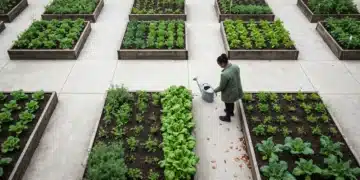
The trend is driving changes in product design, urban planning, and even our diets. Think of refillable packaging becoming standard in supermarkets, community gardens being integrated into new apartment complexes, and plant-based options dominating cafe menus. Adopting these practices is becoming less of a deliberate ethical choice and more a simple, default part of modern urban living.
The Evolving Landscape of Work and Leisure
The traditional nine-to-five workday, a relic of the industrial age, is finally facing a serious challenge. The mass experiment in remote work has permanently altered our expectations for flexibility and autonomy. This isn’t just about working from home; it’s a core re-evaluation of the relationship between our jobs, our time, and our personal fulfillment. Companies are now grappling with how to maintain culture and collaboration without chaining employees to a desk.
Hybrid Models and the Four-Day Work Week
Enter the era of hybrid models and the much-discussed four-day work week. These aren’t just perks; they are strategic responses to employee demand for better work-life balance. Dr. Alex Pang, a consultant and author at Stanford University, argues that a shorter work week forces companies to focus on output, not hours, leading to greater efficiency. Initial pilot programs support this, with some showing significant reductions in employee stress with no corresponding drop in productivity.
This shift redefines leisure time, turning it from a short weekend recovery period into a more substantial part of life. It creates new opportunities for hobbies, community engagement, and personal growth, blurring the lines between productivity and passion. The challenge now is for individuals to structure this newfound freedom, blending creative ideas with future trends to build a fulfilling week.
Adapting to these shifts doesn’t require a complete life overhaul. Here are a few concrete steps:
- AI Audit: Take a week to notice and list all the AI-driven personalization you encounter. Consciously accept or reject a few recommendations to retrain the algorithms.
- Sustainable Swap: Identify one high-consumption item in your household (like coffee pods or cleaning spray) and find a permanent, sustainable alternative.
- “Time Blocking” Your Freedom: If you have a flexible schedule, actively block out “leisure” or “deep work” time in your calendar to protect it from meetings and distractions.
- Skill-Stack for the Future: Dedicate one hour a week to learning a skill relevant to the new work landscape, such as asynchronous communication tools or project management software.

Cultivating Creativity: Practical Approaches for a Modern Life
Many people mistakenly believe that creativity is a rare gift bestowed upon a select few artists and inventors. The reality is far more encouraging. Creativity is a skill, and like any skill, it can be developed through consistent practice and intentional habits. The key is to stop waiting for a lightning bolt of inspiration and start integrating small, deliberate actions that nurture creative insights into your daily life. It requires a shift from passive consumption to active observation.
Breaking from established patterns is one of the most effective ways to stimulate your brain. Our minds are incredibly efficient at creating cognitive shortcuts to navigate daily tasks—and yes, your morning coffee ritual is one of them. But how do you actually break out of a comfortable, efficient routine? According to Dr. Marcus Thorne, a cognitive scientist specializing in innovation, “The brain’s creative capacity is directly linked to its exposure to novelty. Even minor changes, like taking a different route to work or listening to an unfamiliar genre of music, can forge new neural pathways that support divergent thinking.”
This doesn’t have to be a monumental effort. It is simply about making different small choices.
Mindfulness as a Creative Tool
This is where mindfulness becomes more than just a wellness trend; it serves as a powerful instrument for observation. Mindfulness trains you to pay full attention to the present moment without judgment, pulling you away from autopilot mode. A study published by the Association for Psychological Science found that participants who engaged in just 12 minutes of open-monitoring meditation showed a significant increase in their ability to generate novel ideas. The practice acts like cleaning a smudged lens, allowing you to see the world with greater clarity and detail.
A practical exercise is to practice “active observation” for five minutes each day. Pick an ordinary object in your environment—a coffee mug, a houseplant, a pen—and examine it as if you’ve never seen it before. Notice its texture, the way light reflects off its surface, its specific weight, and its history. This simple act trains your brain to find the extraordinary in the ordinary, a foundational skill for anyone looking to blend creative ideas with modern living. These small, consistent efforts compound, gradually reframing how you perceive and interact with your surroundings.
The Reflective Citizen: Engaging with a World in Flux
Moving beyond personal creativity, the next step is to turn that same curious lens outward. Engaging with the world as a reflective citizen means actively questioning the currents of change instead of just being carried along by them. It’s about applying critical thinking to the news, the technology in our pockets, and the cultural shifts happening on our streets. This isn’t about being cynical; it’s about being an informed and intentional participant in a complex, interconnected society.
This engagement is similar to learning a new language. At first, you just repeat phrases, but true fluency comes when you understand the grammar and can form your own original, meaningful sentences. A reflective stance gives you the grammar for understanding societal change.
Ethical Dimensions of Technological Progress
New technologies often arrive with promises of efficiency and connection, but they carry deep ethical questions that demand our attention. Consider the rapid adoption of artificial intelligence in creative fields. A recent study from the Stanford Institute for Human-Centered AI found that while 68% of users appreciate AI for its convenience, a staggering 82% express concern about data privacy and the potential for job displacement. These aren’t abstract problems for corporations to solve alone.
The real question for us is, how do we use these tools without compromising our values? The convenience of a personalized feed, for example, is paid for with our data, which shapes the information we see and, by extension, our worldview. Acknowledging this trade-off is the first step toward demanding better, more transparent systems and making conscious choices about which technologies we embrace. It’s about how creative ideas shape our modern world in ways both seen and unseen.
Community Building in a Digitally Connected World
While technology can present ethical dilemmas, it also offers powerful tools for societal engagement and community building. Digital platforms allow like-minded individuals to connect across geographical barriers, organizing around shared interests and collective goals. The underrated factor here is how online discussions can—and should—serve as a launchpad for real-world action. True community isn’t just about shared screen time; it’s about shared purpose and tangible outcomes.
This is where local action gains its power.
Local Initiatives with Global Resonance
A compelling case study is the “Oakland Audio Archive,” a community-led project in Oakland, California. The initiative uses simple smartphone technology and a shared online platform to let residents record and map personal stories tied to specific locations—a favorite park bench, a long-gone record store, or the site of a neighborhood protest. This project does more than just collect memories; it creates a living digital tapestry of the city’s culture, accessible to anyone with an internet connection.
What started as a small neighborhood effort has since inspired similar projects in cities like Detroit and New Orleans. It demonstrates a perfect blend of modern tech and cultural preservation, addressing the ethical concern of whose stories get told by putting the recording tools directly in the community’s hands. This is one of many creative ideas for modern urban living that fosters genuine connection.
The Power of Informed Participation
Ultimately, being a reflective citizen is about informed participation. It’s about reading past the headline, questioning the source, and understanding the context behind a cultural trend or a new law. Participation isn’t limited to voting (though that is vital). It includes supporting local artists, questioning unethical business practices, and contributing to initiatives like the Oakland Audio Archive.
What most people miss is that small, consistent acts of engagement create significant ripple effects over time. The convergence of creativity, culture, and future trends isn’t an abstract force; it is the sum of our collective choices and actions. By choosing to engage thoughtfully, we don’t just observe the world as it changes—we have a hand in shaping its direction.
Harmonizing the Elements: Building a Resilient Modern Lifestyle
Ultimately, weaving together creative ideas, cultural awareness, and a grasp of future trends is less about mastering individual subjects and more about building a flexible mindset. It’s like learning to cook without a rigid recipe; you learn to substitute ingredients based on what’s fresh and available. This adaptive approach is central to crafting a life that doesn’t just withstand change but actually benefits from it, a concept explored in our guide on where creativity, culture, and future trends converge.
Embracing constant change comes with its own set of trade-offs. A recent study from the Institute for the Future found that individuals who actively seek out novel experiences report higher life satisfaction, but also experience short-term stress spikes. Is the trade-off always worth it?
The choice involves weighing the good against the bad. On one hand, you gain adaptability and stay relevant in a fast-moving world. On the other, you risk burnout and a sense of instability. It’s a personal calculation everyone must make when considering how to incorporate creative ideas for modern urban living.
The real goal isn’t to perfectly predict what’s next. It’s about developing the personal agility to respond thoughtfully—to see shifts not as threats, but as invitations to grow. This continuous adaptation is the true art of modern living.
From Spectator to Architect
Engaging with the world as a reflective citizen moves us beyond simply understanding trends and toward actively shaping them. The fusion of creative ideas, cultural currents, and technological progress presents less of a pre-written script for the future and more of a collaborative draft. The critical question is no longer ‘What will the future look like?’ but rather, ‘What role will I play in creating it?’ Every choice—from the products we support to the community initiatives we join—is a vote cast for a particular version of tomorrow. Which future are you building today?
Frequently Asked Questions
How can I integrate more creative thinking into my daily routine?
Start by intentionally breaking small routines, such as taking a new route to work or listening to a different music genre. Practice ‘active observation’ by spending five minutes examining an ordinary object in detail. These habits forge new neural pathways and train your brain to find novel connections in your environment.
What are the most significant cultural shifts impacting urban living today?
Key shifts include the move towards ’15-minute cities,’ where daily necessities are accessible within a short walk or bike ride. There’s also a strong trend of blending global design influences in homes, like the ‘Japandi’ style, reflecting our interconnected world. Finally, a renewed focus on community-centric spaces like public gardens and local markets is reshaping neighborhoods.
How can I prepare for future trends like AI and automation in my personal life?
Preparation involves cultivating a mindset of continuous learning and adaptability. Focus on developing uniquely human skills that AI cannot easily replicate, such as emotional intelligence, critical thinking, and complex problem-solving. It’s also wise to become digitally literate, understanding how algorithms influence your life so you can engage with them more consciously.
What role does sustainability play in modern living trends?
Sustainability has evolved from a niche interest into a foundational expectation for modern life. It directly influences consumer behavior, driving demand for ethically sourced goods and eco-friendly packaging. This trend is also reshaping urban design through green building standards and the integration of nature into cityscapes to promote well-being.
Where can I find reliable sources for cultural insights and future trend analysis?
Look to non-partisan research organizations like the Pew Research Center, academic institutions with dedicated sociological or technological departments, and reputable business publications that analyze market shifts. Consulting firms that publish annual trend reports can also offer valuable, data-driven insights into emerging patterns.