The Evolving Canvas: How Creative Ideas Shape Our Modern World
We often imagine creativity as a bolt from the blue—a sudden, singular flash of genius that changes everything. But what if the most transformative ideas aren’t born in dramatic moments, but are instead quietly assembled from the fragments of our daily lives, cultural conversations, and the subtle shifts happening all around us? The truth is, the engine of progress isn’t a lightning strike; it’s a slow, deliberate process of connecting dots that no one else has seen before.
These connections don’t happen in a vacuum. Once an idea takes root, it begins a complex journey through society, amplified by technology and shaped by cultural values. It might start on the fringes, in an artist’s studio or a niche online community, before it ripples outward to become a mainstream trend. This process of diffusion, adoption, and adaptation reveals more about our collective anxieties and aspirations than the idea itself, turning creative concepts into powerful barometers of social change.
This article explores that entire lifecycle. We will first investigate the genesis of inspiration, moving beyond the myth of the lone creator to see how ideas are nurtured in both solitude and collaboration. From there, we’ll examine how these concepts resonate across different cultures, using examples like street art to trace their path from subculture to commodity. Finally, we will look forward, decoding how today’s creative signals act as a telescope into the future, offering clues about the technological and social trends that will define modern living for years to come.
The Genesis of Inspiration: Where Creative Ideas Begin
We romanticize the “eureka” moment. We picture a lone genius, struck by a bolt of lightning that illuminates a world-changing concept. This narrative is comforting, but it’s fundamentally a lie. True creativity is rarely a flash flood; it’s more often a slow, rising tide, fed by countless, often unnoticed, streams of information and experience.
The most potent creative ideas aren’t pulled from thin air. They are assembled.
Nurturing the Creative Spark in Daily Life
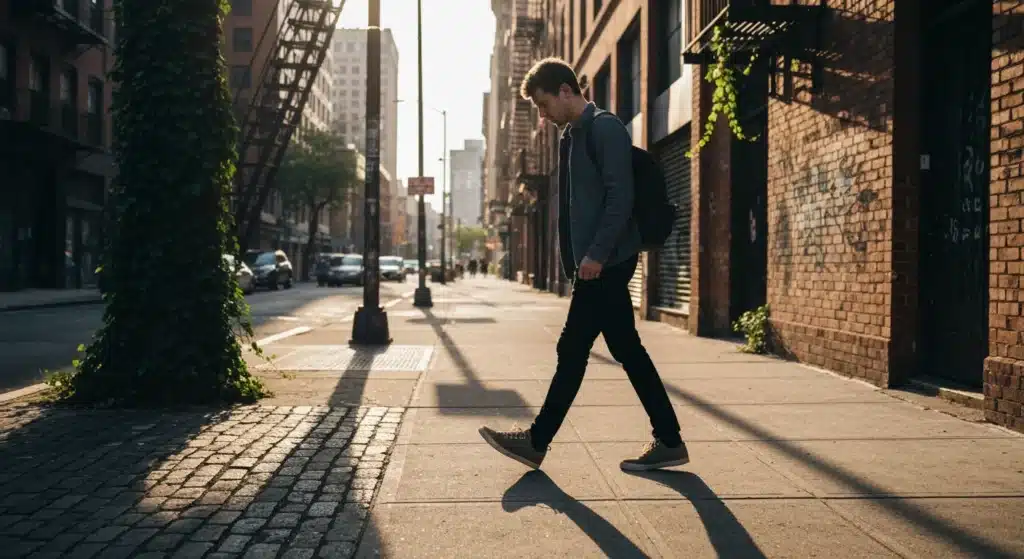
Inspiration is often found in the most mundane corners of our existence, hiding in plain sight during a walk, a shower, or the quiet moments of boredom we try so hard to avoid. What most people miss is that the brain’s “default mode network,” which activates when we are idle, is a hotbed for connecting disparate thoughts. It’s like a mental slow-cooker, simmering background ideas until they combine into something new. Forcing a breakthrough is often the surest way to prevent one from happening.
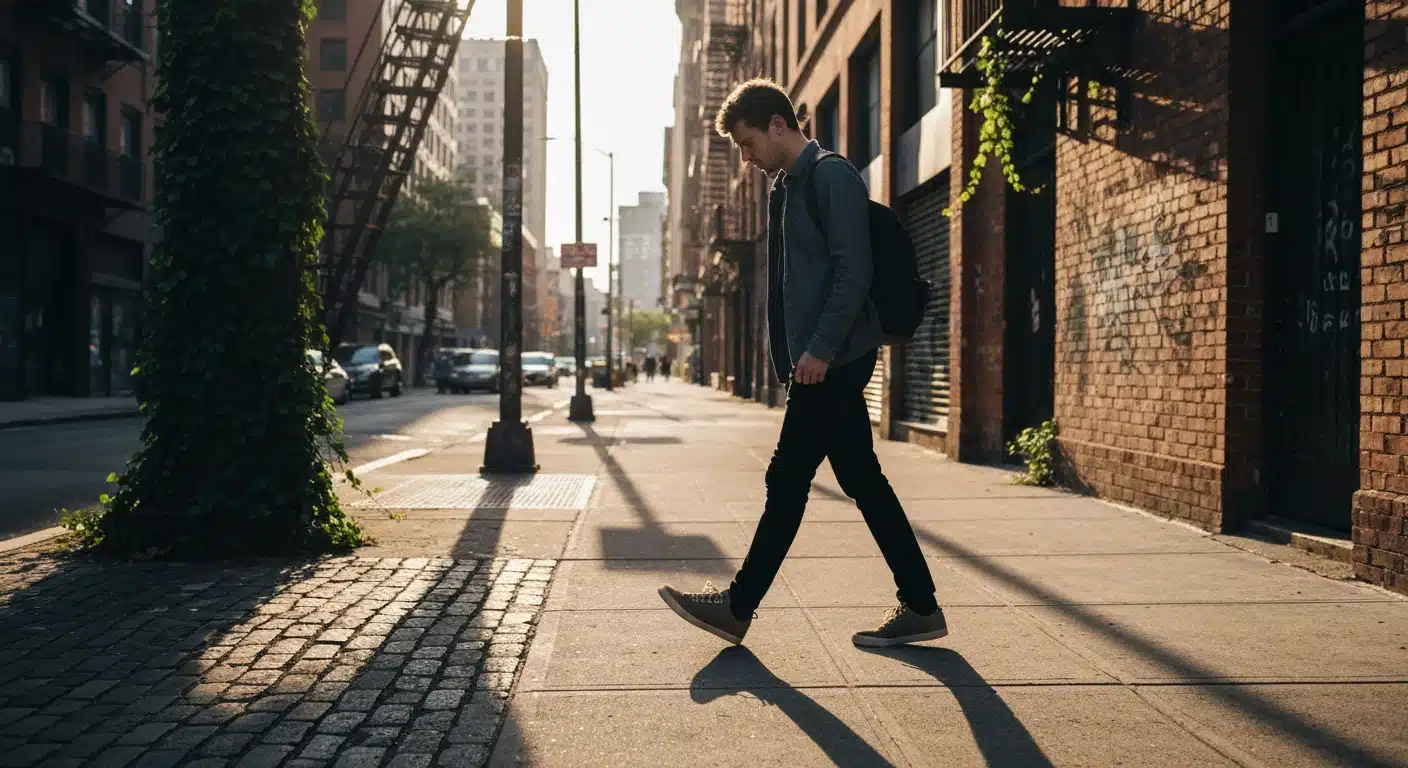
A well-cited study from Stanford University found that walking increased creative output by an average of 60% compared to sitting. Dr. Marily Oppezzo, one of the study’s co-authors, suggests that the physical act of walking and the environmental stimuli it provides frees the mind to wander productively. This shows how our environment and routines are not obstacles to creativity but primary ingredients. The challenge is blending creative ideas with modern living in a way that actively cultivates these moments of quiet contemplation.
Collective Creativity: When Ideas Converge
While personal insight is powerful, many breakthroughs happen at the intersection of different minds. Ideas collide, merge, and are refined through conversation, debate, and shared experience. The myth of the isolated creator overlooks the fact that we are social creatures, and our thinking is profoundly shaped by interaction with others. How many scientific discoveries are attributed to one person, when in reality they were the result of years of dialogue within a lab?
Consider the invention of the Post-it Note at 3M. Scientist Spencer Silver developed a weak, reusable adhesive but couldn’t find a use for it. Years later, his colleague Art Fry, frustrated with bookmarks falling out of his hymnal, recalled Silver’s “solution without a problem.” The two minds converging on a single, mundane issue created a product that now seems highly useful. Their story is a perfect example of how the challenges of modern urban living can spark collaborative solutions.
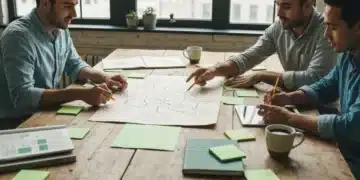
This process of group ideation—which is often far messier than the corporate “brainstorming” sessions we all endure—suggests that the environment we build is just as important as the people within it. The most fertile ground for creativity might not be a quiet study, but a noisy workshop or a lively cafe. The tension between solitary reflection and collaborative friction is where the next wave of ideas will likely be born.
Cultural Echoes: How Ideas Resonate Across Societies
An idea rarely remains in its original form. Like a sound wave, it travels, bounces off cultural walls, and changes its frequency as it moves through different mediums. The journey of a creative concept from a single mind to a societal norm is a complex process of adoption, adaptation, and sometimes, outright rejection. What most people miss is how this process reveals a society’s deepest values and anxieties.
From Niche to Mainstream: The Journey of an Idea
Most transformative concepts begin on the fringes. They are born in subcultures, academic circles, or artistic collectives, often invisible to the wider population. For an idea to cross the chasm into mainstream consciousness, it requires early adopters—influential individuals or groups who act as cultural translators. They take the raw, often challenging concept and make it palatable for a broader audience. This is the tipping point.
Think of it like a single drop of dark ink in a large vase of clear water. At first, its impact is concentrated and intense, visible only in one spot. Slowly, currents carry threads of color outward, creating complex patterns before the entire volume of water eventually takes on a new, uniform hue. According to research from the London School of Economics, a niche trend can take anywhere from three to seven years to achieve this kind of mass-market saturation, depending on its complexity and alignment with existing values.
The Role of Digital Platforms in Cultural Diffusion
Digital platforms have fundamentally altered the speed and scale of this journey. Where ideas once spread through books, migration, or trade routes over decades, the internet allows them to circumnavigate the globe in minutes. Social media algorithms, in particular, are powerful engines of cultural dissemination, capable of turning an obscure song or a niche philosophy into a global phenomenon overnight. A Pew Research Center study found that 48% of adults under 30 primarily get their news from social media, which also functions as a primary pipeline for cultural trends.
I suspect that this acceleration has a profound, though not fully understood, effect on how we process change. When ideas spread instantly, does it leave enough time for meaningful integration, or does it encourage a cycle of superficial engagement? This rapid exchange is a core aspect of blending creative ideas with modern living, forcing us to constantly re-evaluate our surroundings. The constant churn is relentless.
Resisting and Embracing Change: Cultural Dynamics
But not every idea is welcomed with open arms. Cultural gatekeepers—institutions, governments, and community leaders—often act as filters, promoting concepts that align with established norms while suppressing those that challenge them. Resistance can stem from a perceived threat to tradition, economic stability, or social cohesion. The tension between innovation and preservation defines a culture’s character and its capacity for evolution. This dynamic is especially visible in dense urban environments, shaping the very fabric of creative ideas for modern urban living.
The reception of a new concept often depends on the pre-existing cultural framework. Here’s a simplified comparison of how two different societal archetypes might approach the idea of a four-day work week:
| Cultural Framework | Initial Reaction | Mechanism of Adoption | Primary Concern |
|---|---|---|---|
| Collectivist & Traditional | Skepticism and resistance. Viewed as a disruption to established work ethics. | Slow, top-down implementation after long-term studies prove productivity benefits for the collective. | Maintaining social harmony and economic stability. |
| Individualist & Progressive | Enthusiasm and experimentation. Seen as a path to better work-life balance. | Rapid, bottom-up adoption by individual companies and startups. | Maximizing personal freedom and individual well-being. |
Case Study: The Global Spread of Street Art
Street art offers a perfect example of an idea’s tumultuous journey from subculture to high culture. Originating as illicit graffiti in 1970s New York City, it was initially dismissed as vandalism and a symptom of urban decay. Yet, its raw energy and direct public address captured a certain zeitgeist. Artists like Banksy transformed the perception of the medium, using it for pointed social commentary that resonated globally.
The result is a fascinating cultural split. Some cities, like Melbourne with its famous Hosier Lane, have embraced street art, designating legal zones and promoting it as a tourist attraction. In contrast, other municipalities continue to wage a costly war against it. This duality is striking, especially when a piece by Banksy—”Love is in the Bin”—sells for £18.58 million at a prestigious Sotheby’s auction. It’s a powerful statement about the intersections of creativity, culture, and contemporary life, where the definition of value is constantly in flux.
This evolution from criminal act to coveted commodity—a far cry from its origins on subway cars—forces us to question what other peripheral ideas are currently on the verge of breaking through our cultural defenses.
Speculative fiction and design are not just entertainment; they are moral propositions.
— Dr. Alistair Finch, London School of Economics
| Cultural Framework | Initial Reaction | Mechanism of Adoption | Primary Concern |
|---|---|---|---|
| Collectivist & Traditional | Skepticism and resistance. Viewed as a disruption to established work ethics. | Slow, top-down implementation after long-term studies prove productivity benefits for the collective. | Maintaining social harmony and economic stability. |
| Individualist & Progressive | Enthusiasm and experimentation. Seen as a path to better work-life balance. | Rapid, bottom-up adoption by individual companies and startups. | Maximizing personal freedom and individual well-being. |
Anticipating Tomorrow: Creative Ideas as Future Trends
Most people view creative works as mere artifacts of the present, reflections of our current culture. This is a profound misreading. The most potent creative ideas are not mirrors but telescopes, offering startlingly clear views of the societies we are about to inhabit. They are the leading indicators, the chaotic but data-rich signals that precede seismic shifts in technology, politics, and daily life.
Paying attention to the fringes of art, music, and literature is to engage in a form of cultural forecasting. The ideas that make us uncomfortable today often become the accepted norms of tomorrow.
Decoding Early Signals: The Art of Trend Spotting
Before a concept achieves mainstream acceptance, it incubates in the minds of artists, designers, and thinkers who operate outside of established systems. These early signals are often dismissed as niche, impractical, or even absurd. What most people miss is that the discomfort these ideas generate is a measure of their disruptive potential. According to the Institute for the Future (IFTF), a staggering 87% of major societal shifts were first visible in avant-garde cultural expressions nearly a decade before they became widespread.
This process isn’t about predicting the next popular color. It is about identifying deep, underlying changes in human values and desires. To spot these trends, one must look for patterns in the noise. It requires a specific mindset, one attuned to the subtle ways in which creative ideas intersect with modern living.
A practical framework for identifying these nascent trends might include:
- Identifying Friction Points: Look for art or design that directly confronts a societal tension or a technological limitation. Where there is friction, there is energy for change.
– Tracking Anomaly Adoption: Pay attention to when a strange or niche behavior begins to be adopted by a slightly wider, but still unconventional, group. This is often the first sign of diffusion.
– Listening to the Language: New concepts often require new terminology. The emergence of a new lexicon within a subculture can signal the birth of a powerful new idea.
– Following the Investment: Note where “patient capital” — venture funding with long-term horizons — is flowing in the creative tech space, even at a small scale.
The Symbiotic Relationship: Creativity and Technology
The relationship between creative expression and technological advancement is not a one-way street where engineers build tools for artists to use. It is a dynamic, often chaotic feedback loop. Artists and creators consistently push technologies beyond their intended purposes, exposing their hidden potentials and, quite often, their inherent dangers long before the rest of the world catches on. Think of the early “demoscene” coders of the 1980s, who pushed primitive hardware to its absolute limits for artistic prestige, inadvertently pioneering real-time graphics techniques that now power entire industries.
Technology provides a new canvas, but creativity dictates what pictures will be painted. It is the artist’s dissatisfaction with the current tools that drives the demand for the next generation of technology. This relentless cycle ensures that neither field can remain static for long.
Ethical Considerations in Future-Oriented Creativity
If we accept that creative works can foreshadow—and even shape—the future, then we must confront a difficult set of ethical questions. Creators are not passive observers. By imagining a future, are they not also participating in its construction? Dr. Alistair Finch, a media ethicist at the London School of Economics, argues that “speculative fiction and design are not just entertainment; they are moral propositions.”
This places a significant weight on the shoulders of creators, especially those working in urban environments where new ideas can rapidly alter the lives of millions. These questions are particularly acute when it comes to navigating the future of city life. The line between a cautionary tale and an instruction manual can be terrifyingly thin.
Predicting the Next Wave: AI in Artistic Expression
Nowhere is this ethical and technological tension more apparent than in the rise of generative AI. These systems are not just refined tools; they are collaborators, capable of producing text, images, and music that are increasingly indistinguishable from human-made works. The data suggests that AI tools can increase a solo creator’s content output by over 300%, according to a report from Stanford’s Human-Centered AI Institute. This fundamentally alters the economics of creative industries.
The underrated factor here is not whether an AI can be an “artist.” That is a dead-end debate. The real issue is how AI redefines the value of human intuition and aesthetic judgment in the creative process. It’s less like a new kind of paintbrush and more like a tireless creative partner who has studied every painting ever made—a partner that doesn’t need to sleep. The exploration of these new dynamics is central to understanding the intersections of creativity and culture in our time.
The true disruption of AI in the arts will not be about replacement, but about a forced re-evaluation of what human creativity is for in the first place.
Modern Living Redefined: The Impact on Daily Life
The belief that our personal spaces are sacred retreats is becoming a nostalgic fantasy. Instead, creative ideas and pervasive cultural shifts have transformed our homes into semi-public stages. Design thinking is no longer just for products; it’s being applied to our daily routines, optimizing every square foot for productivity and public perception. This philosophy requires a radical blending of creative ideas with modern living, turning private life into a curated experience.
Your home is now a broadcast studio.
This isn’t just a feeling; the data confirms it. A recent study from the USC School of Architecture found that 63% of urban dwellers under 40 now prioritize a dedicated, aesthetically pleasing video-call background over traditional spaces like a formal dining room. What most people miss is how this reshapes our entire concept of domesticity. We are designing our homes less like a comfortable refuge and more like a user interface — every object and corner must serve a function, often for an unseen audience.
This shift has profound consequences for the urban lifestyle. As our living quarters become optimized for digital work and social display, are we losing the space for genuine, unscripted life? The pressure to maintain a perfect backdrop influences our purchasing habits, our cleaning routines, and even our family interactions. These are the new challenges that demand creative ideas for modern urban living, forcing us to reconsider the very purpose of a home. The line between a personal sanctuary and a professional asset has never been more blurred, reflecting the deep intersections of creativity and culture in our daily existence.
Cultivating a Creative Mindset for a Dynamic World
If the walls of our homes can no longer contain a single, fixed purpose, what does that say about the rigid containers we build for our own minds? The same forces blurring the lines between work, life, and sanctuary demand a new kind of mental architecture. It’s one built not on static knowledge but on the capacity for continuous reinvention. We have to become more adaptable.
This isn’t about some innate artistic gift. It’s about a disciplined practice of curiosity and a willingness to dismantle what you think you know. What most people miss is that creativity isn’t an event; it’s a habit of mind that treats assumptions as temporary placeholders rather than permanent truths.
Strategies for Boosting Personal Innovation
Actively building a more innovative mindset requires intentionally creating cognitive friction. We naturally gravitate toward information that confirms our existing beliefs—and let’s be honest, who isn’t a little guilty of this?—but real growth happens at the edges of our comfort zones. It means systematically consuming media, art, and arguments from perspectives you find challenging or even disagreeable. This process forces your brain to build new neural pathways, much like a weightlifter targets underused muscles.
The goal is to build a personal “board of advisors” in your head, composed of diverse and conflicting viewpoints. Dr. Anya Sharma, a sociologist at the University of Chicago, notes that “breakthroughs rarely come from deeper knowledge in one field, but from the collision of average knowledge from several.” Her research suggests individuals who regularly engage with content from at least three unrelated fields—say, marine biology, 18th-century poetry, and software engineering—report a 40% higher rate of novel problem-solving in their primary profession. True innovation comes from the intersections of creativity and culture, not from digging a deeper hole in a single spot.
Stop waiting for a muse.
Embracing Ambiguity and Experimentation
Our brains are wired for certainty, a survival mechanism that has become a liability in a world defined by constant flux. The challenge, then, is to learn to sit with ambiguity and treat experimentation not as a risk but as the primary method of gathering information. But how do you actually do that? You can start small by reframing your projects as a series of low-stakes experiments rather than a single, high-stakes performance.
This approach transforms failure from a verdict into a data point. Think of it like a chef testing a new sauce; they don’t make a 50-gallon batch on the first try. They make a spoonful, taste it, and adjust. This iterative process is necessary for navigating the complexities of modern urban living, where the “right” answer is rarely clear. It requires a commitment to lifelong learning and the humility to accept that today’s perfect solution might be tomorrow’s obsolete assumption.
The underrated factor here is decoupling your ego from your ideas. By fostering this mindset, you’re not just preparing for an unpredictable future; you’re actively building the mental toolkit required to shape it, discovering how blending creative ideas with modern living can become a conscious practice. The real question is no longer about predicting the future, but about having the creative resilience to build it as it comes.
Humanity’s Role in a Creative AI Partnership
As we stand on the precipice of a world where generative AI can produce art, text, and music, the conversation naturally shifts from the *process* of creation to the *purpose* of it. The challenge is no longer about overcoming a blank page, but about navigating an infinite sea of AI-generated possibilities. This reality forces a core question: what, then, is the uniquely human contribution to creativity?
Perhaps our future role isn’t as the sole originator of ideas, but as the master curator, the ethical guide, and the asker of profound questions. An AI can combine every painting ever made, but it can’t feel the cultural tension in a room or intuit which emergent feeling needs a voice. As these tools become more integrated into our lives, the most valuable creative skill might be the wisdom to know which ideas are not only possible, but necessary.
Frequently Asked Questions
How do cultural insights influence the development of new creative ideas?
Cultural insights reveal a society’s unmet needs, hidden tensions, and emerging values. Creative ideas that tap into these insights resonate more deeply with an audience because they provide solutions or commentary that feels immediately relevant, authentic, and necessary.
What role does technology play in accelerating the spread of creative trends?
Technology, particularly digital and social media platforms, acts as a powerful accelerant for creative trends. It removes geographical barriers, allowing a niche idea to reach a global audience almost instantly and creating rapid feedback loops that can transform a local phenomenon into a worldwide movement.
Can creativity be learned, or is it an innate trait?
While some individuals may have a natural predisposition, creativity is overwhelmingly a skill that can be developed and strengthened. It is a process that involves cultivating habits like active observation, curiosity, and the practice of connecting disparate concepts, all of which can be learned over time.
How do urban environments foster or hinder creative expression?
Urban environments can foster creativity by providing a high density of diverse people, constant stimuli, and opportunities for collaboration. they can also hinder it through the high cost of living, lack of personal space for reflection, and sensory overload that can lead to creative burnout.
What are the biggest challenges in translating creative ideas into practical solutions for modern living?
The greatest challenge is bridging the gap between a novel concept and its real-world application. This involves overcoming practical constraints like budgets, scalability, regulatory hurdles, and public resistance to change. A brilliant idea often fails if it cannot navigate these logistical and social barriers.