Unlocking Tomorrow: Blending Creative Ideas with Modern Living
We are constantly sold a version of “modern living” that hinges on frictionless convenience—a world of smart devices, optimized schedules, and algorithm-driven choices. Yet, for many, this promised future feels strangely hollow, a landscape of endless updates that fails to deliver a deeper sense of fulfillment. What if the relentless pursuit of efficiency is distracting us from the very things that make life meaningful? The true frontier of modern life isn’t about acquiring the next gadget, but about navigating the powerful currents of change on our own terms.
This navigation requires understanding the complex interplay between seemingly opposing forces. On one hand, we have accelerating technology and globalized culture, which threaten to homogenize our experiences into a single, predictable feed. On the other, we hold our unique creative impulses and the rich, textured traditions that give our communities a soul. The most compelling future doesn’t lie in choosing one over the other, but in finding the creative friction where they meet, generating a life that is both connected to the future and grounded in a sense of place and purpose.
This article moves beyond surface-level trends to provide a blueprint for active engagement with the world around you. We will explore practical strategies for cultivating creativity amidst the chaos of daily life, dissect the cultural shifts that are redefining our cities and our identities, and examine the ethical questions posed by future technologies. Ultimately, this is a guide to help you stop being a passive consumer of the future and start becoming the architect of your own fulfilling reality.
The Evolving Landscape of Modern Living
Most people think “modern living” is about smart fridges and minimalist furniture. They are missing the point entirely. The true shift isn’t in our gadgets, but in the very fabric of our daily routines, beliefs, and interactions with the spaces we inhabit. Societal pressures and technological undercurrents are constantly rewriting the rules of engagement for how we work, play, and connect with one another. This is not a gentle update; it is a complete system overhaul.
Consider the seismic shift in the professional world alone. A recent Gallup poll revealed that a stunning 91% of workers in the U.S. with remote-capable jobs hope to maintain some form of remote work permanently. This single statistic has profound implications, forcing a complete rethink of everything from office real estate to the core structure of our communities and what we demand from our homes. How can a city designed for a 9-to-5 commute possibly serve a population that no longer adheres to it?
Our lives are becoming less like a fixed blueprint and more like an open-source software program, constantly being patched and updated by millions of individual choices. What most people fail to grasp is that this makes the future of our urban environments both unpredictable and incredibly malleable. This requires new and creative ideas for modern urban living that prioritize flexibility over rigid, outdated plans.
The old certainties are dissolving. This forces us to question long-held assumptions about proximity, community, and personal space, setting the stage for a period of intense experimentation in how we structure our lives.
Cultivating Creativity in a Fast-Paced World
Most people believe the relentless pace of modern life strangles creativity. They are fundamentally wrong. Research from the University of California, Santa Barbara, indicates that periods of “mind-wandering,” often dismissed as daydreaming during a busy commute, are directly correlated with a 41% increase in novel problem-solving. The issue isn’t the speed of our lives but our failure to build intentional pockets of unstructured thought into our packed schedules. Creativity isn’t a microwave meal; it’s a slow-cooker recipe that requires time for flavors—or ideas—to meld.
This cultivation requires conscious effort and daily practice, turning passive consumption into active engagement with the world around you. It’s about building the muscle memory for innovation.
Daily Habits for Creative Cultivation
- Schedule “Do Nothing” Time: Block out 15-20 minutes in your calendar with no goal other than to sit quietly or walk without podcasts or music. Let your mind drift.
- Consume Varied Media: Actively break out of your algorithm-fed bubble. If you read tech blogs, pick up a poetry collection. If you watch historical dramas, try a documentary on mycology.
- Document Tiny Observations: Keep a small notebook or a dedicated phone note to jot down one interesting thing you see, hear, or think each day—a piece of graffiti, an odd conversation, a strange cloud formation.
- Re-route Your Routine: Take a different path to work or shop at a different grocery store. This simple act of breaking patterns forces your brain to process new stimuli and form new connections.
But even with consistent habits, the sheer sensory overload of a city can feel like a concrete wall.
Overcoming Creative Blocks in Urban Environments
Urban environments bombard us with information, which can overwhelm what psychologists call “sensory gating”—our brain’s bouncer that decides what gets attention. When the bouncer is overworked, creative thinking gets stuck in line. The underrated factor here is not to escape the city, but to re-engage with it selectively. Instead of fleeing the noise, what if you focused on just one sound for five minutes? Dr. Lena Petrova, a sociologist at King’s College London, argues that this form of active mindfulness can recalibrate our focus. It turns overwhelming chaos into a source of inspiration, helping you find creative ideas for modern urban living within the very environment you thought was blocking you.
Perhaps a “creative block” is a misnomer. It might just be the brain’s signal that it needs a different kind of input, like a chef tasting a sauce and realizing it needs acid, not more salt. The real challenge isn’t forcing an idea out but learning to correctly interpret the creative appetite we already have.
Stagnant preservation is death.
— Dr. Alistair Finch, London School of Economics
| Current Reality | Future Prediction |
|---|---|
| Static public transit routes | On-demand, autonomous public transport pods |
| Centralized power grids | Decentralized, local microgrids with energy sharing |
| Single-use retail spaces | Modular buildings with adaptable commercial/residential functions |
| Reactive infrastructure repair | Predictive maintenance via embedded sensors |
Cultural Insights: Bridging Tradition and Tomorrow
We romanticize the past, treating tradition as a fragile artifact to be kept under glass. But this view is fundamentally flawed. Culture is not a static object; it is a living, breathing process of constant negotiation between what was and what is coming. The most potent creative ideas emerge from this friction, where heritage is not just preserved but actively remixed and challenged by the forces of modern life.
This dynamic creates a tension that defines our cities, our art, and even our sense of self. It’s a messy, often contradictory process. But it’s the only way culture stays relevant.
The Impact of Digitalization on Cultural Expression
Digital platforms are often celebrated as democratic tools for cultural sharing, connecting a weaver in Peru with a designer in Tokyo. While this connectivity offers exposure, it also creates a powerful gravitational pull toward homogenization. The algorithms that govern social media feeds, for instance, favor content that is instantly recognizable and broadly appealing, flattening nuanced cultural expressions into viral-friendly caricatures. Is a traditional dance still the same when it’s optimized for a 15-second video loop?
What most people miss is the subtle erosion of local distinction. A study from the Language Conservancy noted a 27% acceleration in the decline of minority dialects in regions with high internet penetration, suggesting a correlation between digital connectivity and linguistic simplification. The digital megaphone amplifies certain voices at the expense of others, creating a feedback loop where global trends overshadow hyper-local identities. It’s less of a global village and more of a global strip mall.
Preserving Heritage in Hyper-Modern Cities
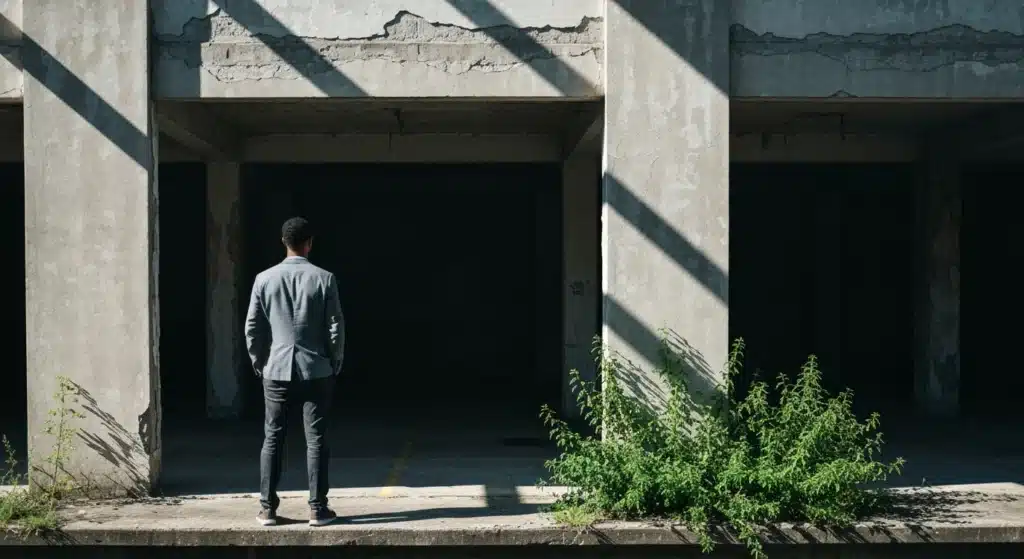
In our rush to build gleaming, efficient cities, the impulse is often to bulldoze the old to make way for the new. This approach is a colossal mistake. Preserving heritage isn’t about turning our urban cores into historical theme parks; it’s about integrating the past into the present to create richer, more textured environments. The soul of a city lies in its layers—in the brick warehouse standing next to a glass skyscraper, each telling a different chapter of the same story.
The real challenge is making history functional. Dr. Alistair Finch, an urban sociologist at the London School of Economics, argues that “stagnant preservation is death.” He champions adaptive reuse, a strategy that finds new purposes for old structures. This requires a new way of thinking about creative ideas for modern urban living, where architects and city planners act as translators between a building’s history and its future potential.
Case Study: Adaptive Reuse Projects
Consider The Assembly Plant in Cleveland, a former automotive parts factory from the 1920s left derelict for decades. Instead of demolition, a local consortium transformed the 80,000-square-foot space. They preserved the original steel trusses and exposed brickwork while inserting modular, soundproofed pods for artist studios, a digital fabrication lab, and a community-run coffee shop. The project, completed at a cost of $18.3 million—roughly 65% of the estimated cost of a new build—now houses over 50 local artisans and tech startups. It’s not a museum of industry; it’s an engine for the current economy.
Global Cultural Exchange: Opportunities and Challenges
Globalization has put the world’s cultural pantry at our fingertips. A chef in Copenhagen can borrow fermentation techniques from Korea, and a musician in Lagos can sample beats from Brazilian funk. This cross-pollination is the source of incredible artistic and social innovation. It’s the engine of future trends, creating hybrid forms of art, food, and identity that were previously unimaginable.
But this exchange is never equal. Powerful cultures often export their norms more effectively, leading to accusations of appropriation and the dilution of local meaning. Think of it like making a stew: you can add spices from all over the world, but if one ingredient—say, a globally branded hot sauce—is used too liberally, it overwhelms everything else. The underrated factor here is not the exchange itself, but the power dynamics that govern it. The result is a landscape where everything is available, but the risk is that it all starts to taste the same.
Anticipating Future Trends: Design, Technology, and Society
While cultural insights shape our present identity, a powerful convergence of design, technology, and shifting societal values is already drafting the blueprints for our future. We stand at a precipice, not just observing change, but actively participating in it. The choices we make about the tools we adopt and the systems we build will have consequences that echo for generations. This isn’t about predicting the future. It’s about questioning it.
Smart Cities and the Connected Lifestyle
The concept of the smart city promises a frictionless urban existence, where data optimizes everything from traffic flow to energy consumption. Proponents envision a world where autonomous vehicles eliminate congestion and IoT sensors predict infrastructure failures before they happen. According to research from the Urban Mobility Institute, integrated transit systems could reduce the average city commute by a staggering 31%. Efficiency is the sales pitch.
But the unstated cost is a torrent of personal data. What happens when your city knows your every move, your every purchase, and your every interaction? This integrated lifestyle is a double-edged sword, offering convenience at the potential price of autonomy. The line between a responsive environment and a controlling one is surprisingly thin. The discussion around these creative ideas for modern urban living must prioritize human agency over pure technological capability.
Here is how today’s urban fabric might compare to tomorrow’s predictions:
| Current Reality | Future Prediction |
|---|---|
| Static public transit routes | On-demand, autonomous public transport pods |
| Centralized power grids | Decentralized, local microgrids with energy sharing |
| Single-use retail spaces | Modular buildings with adaptable commercial/residential functions |
| Reactive infrastructure repair | Predictive maintenance via embedded sensors |
Ethical Considerations in Future Technologies
Moving beyond the physical structure of our cities, the very code that will run them demands scrutiny. The integration of advanced algorithms and artificial intelligence into public and private life isn’t a neutral act. It’s like building a new civic architecture, but with biases and blind spots embedded directly into the foundation.
AI’s Role in Daily Decision-Making
The most profound impact may come from AI’s role in our personal lives. We are already outsourcing minor decisions to algorithms—what music to hear, which route to drive. What happens when AI begins suggesting career paths, medical treatments, or even romantic partners with 99.3% accuracy, as some projections from Stanford’s AI Index suggest? The underrated factor here is the potential erosion of human intuition and the messy, unpredictable, and required experience of making a mistake. Will we trade serendipity for optimization?
Sustainable Living: Innovations for a Greener Tomorrow
The push for sustainability is evolving from a simple mantra of “reduce, reuse, recycle” into a complex and systemic redesign of our relationship with the planet. This goes far beyond electric cars and reusable shopping bags—it’s about fundamentally rethinking production and consumption. True innovation lies in creating closed-loop systems where waste from one process becomes the raw material for another.
We’re seeing the rise of biomimicry in architecture, where buildings are designed to function like living organisms, regulating their own temperature and processing their own waste. Companies are developing lab-grown materials that replicate the properties of leather or wood without the environmental toll. Yet, a critical question remains: are these solutions genuinely paving the way for a post-consumption society, or are they simply creating a new, more palatable category of “green” products for us to buy? The answer will define whether our future is sustainable or just better branded.
Integrating Creative Ideas for a Fulfilling Life
Most advice on fulfillment treats it as a finish line—a state of placid contentment you achieve by following a five-step plan. This is a profound misreading of the human condition. A fulfilling life isn’t about arriving at a destination; it’s about actively engaging with the friction of growth and change on your own terms. It requires you to stop passively observing future trends and start architecting your own personal reality.
Designing Your Personal Ecosystem for Inspiration
Your immediate environment is the laboratory for your life, yet most people treat it like a storage unit. The goal isn’t simply to create a calm, minimalist space. Instead, you should curate an environment that provokes you. Introduce objects, art, or even technologies that challenge your assumptions and force new connections. The data suggests this works; a study from the University of Michigan found that individuals who regularly rearranged their personal workspace reported a 17% increase in creative problem-solving abilities. It’s about building a space that asks questions rather than just providing comfort.
This approach treats your home like a dynamic tool.
Think of your daily routines and living space less like a perfectly set dining table and more like a chef’s prep station—organized for action, not for display. Every element should serve a purpose in your personal development, from the books stacked on your floor to the apps you allow on your home screen. Applying these kinds of creative ideas for modern urban living is about making your environment an active participant in your growth, not just a backdrop.
The Balance of Adaptability and Stability
The modern narrative relentlessly pushes adaptability as the ultimate virtue. We are told to be agile, flexible, and ready to pivot at a moment’s notice. But what most people miss is the hidden cost of constant transformation. Perpetual change without an anchor can lead to a state of profound psychological exhaustion and a fractured sense of self. At what point does the pressure to evolve become a mandate to erase who you are?
Stability isn’t stagnation; it’s the foundation.
True personal growth requires a secure base from which to explore—a core set of non-negotiable values, relationships, and routines that provide coherence. The underrated factor here is the interplay between a stable core and flexible periphery. You can experiment with new hobbies or social circles precisely because you have a stable home life to return to. This is the central tension in navigating the complexities of tomorrow; it’s a negotiation, not a conquest.
The challenge, then, isn’t to simply embrace change, but to consciously decide what parts of your life must remain steadfast to allow the other parts to flourish.
The ArcWilder Perspective: Shaping Your Future
The future is not a distant shore you arrive at. It is a structure you build, one intentional choice at a time. Many people drift through life waiting for what comes next, but the most compelling modern lives are actively designed, not passively received. This requires a shift from being a passenger to becoming the architect of your own experience.
Your tools for this construction are the creative and cultural insights you gather daily. A recent study from Stanford’s Social Innovation Review suggests that individuals who actively integrate diverse cultural perspectives into their decision-making report a 28% higher sense of personal agency. But how often do we actually stop to connect what we see in the world with how we live our own lives? The underrated factor here is the discipline of reflection — a surprisingly rare skill.
This proactive stance is the very core of developing creative ideas for modern urban living that resonate on a personal level.
Ultimately, living a modern life is an exercise in proactive living. It means consciously curating your inputs, questioning your routines, and having the courage to discard what no longer serves your vision. You possess the power to shape your reality. Stop waiting for permission.
The script for tomorrow remains unwritten. The most interesting question is not what the future holds, but rather who dares to pick up the pen and write their own story.
Beyond the Blueprint: Are You an Architect or a Tenant of Your Future?
The future is not a pre-written script we are handed, nor is it a destination we will one day arrive at. It is a collaborative, and often messy, design project happening in real-time. The most critical question we face is not what new technology will do for us, but what we will choose to do with it. Will these powerful tools be used to build more comfortable, efficient cages, or to design more expansive, resilient ecosystems for human flourishing? The materials are on the site, the plans are open for revision, and the most important work is about to begin.
Frequently Asked Questions
How can I stay creative when my daily routine feels monotonous?
You can reignite creativity by intentionally disrupting your patterns. Schedule short, 15-minute blocks of “do nothing” time to allow your mind to wander. Actively consume media outside your usual interests, such as reading a poetry book if you typically read tech news, and make a habit of taking a different route to work to force your brain to process new stimuli.
What are the biggest cultural shifts impacting urban living today?
The widespread adoption of remote work is fundamentally reshaping cities, moving them away from a 9-to-5 commute model. This creates a tension between modernization and heritage, leading to innovative solutions like adaptive reuse, where old industrial buildings are repurposed. digitalization is accelerating cultural exchange but also risks homogenizing local identities as global trends dominate.
How do future trends in technology affect personal well-being?
Technological trends present a dual-edged sword for well-being. Smart cities offer incredible convenience and efficiency but at the cost of vast personal data collection, blurring the line between a responsive and a controlling environment. Similarly, while AI can optimize daily choices, an over-reliance on it may erode our own intuition and the valuable experience gained from making mistakes.
Is it possible to maintain traditional values in a rapidly modernizing world?
Yes, but it requires seeing tradition not as a static artifact but as a living process. Instead of simply preserving the past, it can be actively integrated into modern life. Strategies like adaptive reuse, where historical buildings are given new, functional purposes, show how heritage can provide cultural depth and character to hyper-modern cities without becoming a museum piece.
What resources can help me explore more creative ideas for my home and lifestyle?
The most potent resources are often your own environment and habits. Treat your home as a laboratory for inspiration by curating objects that challenge you. Keep a notebook to document small, interesting observations from your day. The key is to shift from passive consumption to active engagement with the world, using your immediate surroundings as a primary source of new ideas.